Ten days in Georgia on a tight budget
What a tight budget actually buys in Georgia
Georgia is one of the cheaper countries in the region to travel slowly, and ten days is enough to see Tbilisi properly, both of the country’s headline day trips, and a real taste of the west, all without ever booking a private driver or a flight.
The trade-offs are time and comfort rather than sights missed: this route uses hostels instead of hotels, marshrutkas and trains instead of private transfers, and joins group tours rather than private ones for the two destinations — Kazbegi and Kakheti — that are genuinely impractical to reach independently on public transport in a single day. For a version of this same route with more comfort and a car, see Ten days in Georgia, east to west; for the case against renting a car at all entirely, a car-free route works the same way.
Budget realistically for 250–350 € per person for the full ten days, covering hostel beds, two group day tours, all public transport between cities, and simple meals bought from bakeries, markets and cheap taverns rather than tourist-oriented restaurants. See What a week in Georgia actually costs for how this compares to a mid-range trip covering similar ground.
Days 1–3: Tbilisi
Three days in the capital is enough to cover the Old Town, Narikala Fortress and its cable car, the sulphur baths, and Rustaveli Avenue without rushing, and Tbilisi is also the cheapest city on this route — a hostel bed runs 25–40 ₾ a night, khinkali cost 1–1.5 ₾ each, and the metro and city marshrutkas are 1 ₾ a ride. See A self-guided walking route through Tbilisi’s Old Town and Free things to do in Tbilisi for a genuinely useful list of sights that cost nothing, including several viewpoints and courtyards most paid tours skip entirely.
Use one of the three days for a half-day trip to Mtskheta — a public marshrutka from Didube costs a few lari each way and takes around 25 minutes, considerably cheaper than joining an organised tour for a town this close and this easy to navigate alone. See Mtskheta in half a day for a route covering Svetitskhoveli Cathedral and Jvari Monastery on foot and by local marshrutka up the hill.
Day 4: Kazbegi
Kazbegi is the one day trip on this route where an organised tour is genuinely the cheaper option once you account for the private 4x4 needed to reach Gergeti Trinity Church from Stepantsminda — a seat in a shared group tour works out well below hiring a private taxi for the same day.
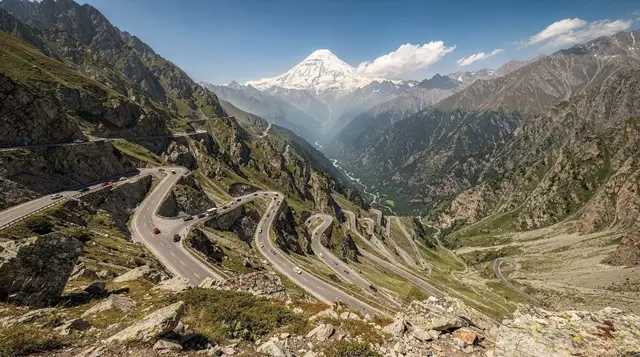
From Tbilisi: Day Trip to Kazbegi covers the full route along the Georgian Military Highway through Ananuri Fortress and Gudauri to Stepantsminda, with the shared 4x4 up to Gergeti included rather than an extra cost on top. A genuinely budget alternative exists for confident travellers: shared marshrutkas run from Didube to Stepantsminda for a fraction of a tour’s price, though you then need to arrange your own onward 4x4 or attempt the two-to-three-hour uphill walk to the church, which eats most of a day trip’s remaining time. See Kazbegi as a day trip: is it too much? for how that trade-off plays out either way.
Day 5: Kakheti
The same logic applies to Kakheti: a group wine tour covering Sighnaghi, Bodbe Monastery and a winery or two is not much more than the cost of the marshrutkas and entry fees required to do it independently, and it removes the need to plan connections between towns that do not have frequent direct transport between them.
Tbilisi: Kakheti Wine Tour with Tastings Lunch covers the standard combination with lunch included, which is worth factoring into the day’s food budget. Independent travellers with more time than money can reach Sighnaghi directly by marshrutka from Tbilisi’s Ortachala or Isani stations and see the hilltop town and Bodbe Monastery on foot, skipping the winery stops and tasting fees, which are the main added cost of the organised version. See A wine tour of Kakheti: how to plan it for both approaches side by side.
Day 6: Tbilisi to Kutaisi
Take the train rather than a private transfer for the roughly three-and-a-half-hour journey west to Kutaisi — tickets run 15–25 ₾ depending on class, making it the single cheapest way to cover this distance in comfort, and considerably more pleasant than a cramped marshrutka for a journey this long.
See Georgian trains, including the night train to Zugdidi and How marshrutkas actually work for whichever option suits your dates better, since train frequency is more limited than marshrutka departures. Arrive in Kutaisi by early afternoon, check into a hostel or budget guesthouse near the centre — expect to pay noticeably less than an equivalent Tbilisi bed here — and spend the rest of the day at Bagrati Cathedral, which is free to enter and an easy walk from most central accommodation.
Day 7: Sataplia, Prometheus Cave and Martvili Canyon
Canyon Cave Tour Sataplia Prometheus Martvili covers all three of the region’s natural highlights — Sataplia’s dinosaur footprints and glass walkway, Prometheus Cave’s show-lit underground system, and Martvili Canyon’s raft trip through a narrow turquoise gorge — in one organised day, which is by far the most economical way to see all three given how spread out they are without a car. Doing this independently is possible but genuinely difficult on a budget: the three sites are not on a single public transport route, and stringing together separate marshrutkas and taxis between them tends to cost close to what the group tour charges once time and hassle are factored in. See Canyons and caves in one day from Kutaisi for what each stop involves and how the day is typically paced.
Day 8: Kutaisi to Batumi
The road journey from Kutaisi to Batumi runs a few hours by marshrutka, making it a manageable travel day with time left over for the Black Sea in the afternoon. Batumi’s marshrutka station connects reasonably often to Kutaisi’s, and fares are low compared with the distance covered. Check into a hostel near Batumi Boulevard, which is free to walk and the city’s best budget activity in its own right — several kilometres of promenade, parks and public art along the sea that costs nothing beyond the ice cream you are likely to buy along the way. See Batumi Boulevard end to end for a route covering the full length without missing the more interesting stretches toward either end.
Day 9: Batumi
A full day in Batumi on a tight budget means the boulevard, the pebble beaches (bring sandals — the stones are uncomfortable barefoot, and it costs nothing to know that in advance), and the old town’s cheaper streets away from the main tourist strip, where a proper Adjarian khachapuri — the boat-shaped version with egg and butter that most other regional styles are compared to — costs noticeably less than the same dish on the boulevard itself.
See Adjarian food in Batumi, beyond the boat-shaped khachapuri for where locals actually eat, and Batumi’s beaches: pebbles, not sand for what to expect if swimming is part of the plan. Skip the cable car and botanical garden if funds are genuinely tight — both are worthwhile but neither is essential to a first visit, and both add a meaningful amount to a day that costs almost nothing otherwise.
Day 10: Back to Tbilisi, or onward
The return to Tbilisi by train or marshrutka takes most of a travel day given the distance covered since day six, so budget it as such rather than planning activities either end. If your flight departs from Kutaisi rather than Tbilisi, note that Kutaisi’s airport is served mostly by low-cost carriers and sits closer to Batumi than Tbilisi does, which is worth checking before committing to a return route that backtracks unnecessarily across the country. See Kutaisi airport: the low-cost gateway for transfer costs either way.
Eating cheaply without eating badly
Food is one of the areas where a tight budget in Georgia does not mean a worse trip — some of the best meals on this route are also the cheapest. Bakery windows selling fresh khachapuri and lobiani (bean-filled bread) by the slice are everywhere in Tbilisi and cost a fraction of a sit-down restaurant meal; Dezerter Bazaar, near the train station, is worth a visit in its own right for cheap fruit, cheese and churchkhela, the strung-nut-and-grape-must sweet sold at every roadside stall in the country.
Dezerter Bazaar, near the train station, is worth a visit for where to start. Taverns away from obviously touristy streets in every city on this route serve a full meal — khinkali, a salad, bread — for 15–20 ₾, noticeably less than anywhere with an English-language menu posted outside, and the quality is rarely worse for it.
Cutting costs further
A few adjustments bring the ten-day total down meaningfully below the 250–350 € estimate without cutting any destination from the route. Travelling with at least one other person to split private taxi fares where they come up — the short Sighnaghi-to-Bodbe hop, for instance — halves that particular cost immediately.
Booking the Kazbegi and Kakheti tours a few days ahead rather than on arrival sometimes unlocks better group rates, and travelling in the September or May shoulder months rather than July and August means both cheaper hostel beds and less competition for seats on the popular group tours. SIM cards or eSIMs bought at Tbilisi airport are inexpensive and worth having for the whole trip, since relying on hostel wifi alone makes coordinating marshrutka connections harder than it needs to be.
Where budget accommodation actually is
Tbilisi’s Old Town has the highest concentration of hostels and is walkable to most sights, but it also carries a small premium over Vera or Marjanishvili, both a short metro ride from the centre and noticeably cheaper for a similar standard of room. See Where to stay in Tbilisi, neighbourhood by neighbourhood for what separates a 25 ₾ dorm bed from a 60 ₾ private room across the country, since the gap is often smaller than it looks once breakfast, included dinner or a better location are factored in.
A day-by-day budget breakdown
Tbilisi’s three days run roughly 40–60 ₾ a day covering a hostel bed, three meals and local transport. The Kazbegi and Kakheti tour days each cost 50–70 € per person all-inclusive of transport, guide and, for Kakheti, tastings — the single biggest expense on the trip, and not worth cutting corners on given how much harder and not necessarily cheaper the independent alternative is.
The Kutaisi leg costs little beyond the 15–25 ₾ train fare and a similarly cheap hostel bed, and the canyon-and-cave day runs 40–60 € per person. Batumi adds a marshrutka fare of roughly 15–20 ₾ and a couple of low-cost days by the sea. Altogether, 250–350 € per person is a realistic full-trip total for someone genuinely watching spending, rising toward the upper end if you add extras like the Batumi cable car or a second Kakheti winery stop.
Packing to keep costs down on the road
A daypack that also works as your only bag for the whole trip avoids checked-luggage fees on a Kutaisi flight home and makes marshrutka travel considerably less stressful, since overhead space and boot room on shared vans is limited and drivers sometimes charge a small extra fee for large bags. A reusable water bottle is worth carrying throughout — Georgian tap water is generally safe to drink in Tbilisi and the larger towns, and Borjomi’s mineral water aside, buying bottled water at every stop adds up over ten days more than it seems like it should. Pack light and layer for whichever month you are travelling in.
What to drop with one less day
If nine days is all you have, the day to cut is day nine, the second full Batumi day — see the boulevard and beach on the afternoon of day eight instead, and travel back to Tbilisi a day earlier. This keeps every other stop intact and only shortens the part of the trip that costs the least and offers the fewest must-see sights, rather than cutting Kazbegi, Kakheti or the Kutaisi canyons, all of which are genuinely harder to substitute.
Frequently asked questions about a Georgia budget trip
Is Georgia actually cheap for backpackers?
Yes, relative to most of Europe — hostel beds, street food and public transport all run well below Western European prices, and the main costs on a trip like this are the two organised day tours rather than daily living expenses.
Can I skip the group tours and do everything independently to save more?
Partly. Tbilisi, Mtskheta and the Kutaisi legs are all straightforward on public transport, but Kazbegi and the canyon-and-cave day genuinely need either a car or an organised tour to cover efficiently in a single day, since the sites within each are not connected by regular public transport.
Is ten days enough to add Svaneti or Mestia on this kind of budget?
Not comfortably. Svaneti needs its own multi-day trip given the travel time involved, and adding it here would mean cutting either Kakheti or the Kutaisi canyons. A dedicated Svaneti trip is a better use of limited time than squeezing it into this route.
How much should I budget per day beyond the tour days?
Roughly 40–60 ₾ covers a hostel bed, three simple meals and local transport in any city on this route, Batumi included, once you are eating at bakeries and taverns rather than boulevard-facing restaurants.
Are marshrutkas safe and easy to use without speaking Georgian?
Yes, once you know the basics of how they work — routes are usually written on a sign in the windscreen rather than announced, and drivers are used to tourists pointing at a destination.
Should I book hostels in advance or turn up and look?
In Tbilisi during July and August, book at least the first night in advance — the best-value hostels near the Old Town fill up. Elsewhere on this route, particularly Kutaisi and Batumi outside peak summer, turning up and comparing options in person is usually fine and can find a better price than booking online.
What is the single best money-saving swap on this route?
Taking the train rather than a private transfer between Tbilisi and Kutaisi — it is both the cheapest and most comfortable option for that specific leg, unlike most other transport choices on this trip where saving money means accepting less comfort. Our marshrutka guide covers the alternative in more detail.
Do I need to tip on a budget trip through Georgia?
A modest tip, 5–10% at sit-down restaurants where service was good, is appreciated but not obligatory, and many cheaper taverns already fold a service charge into the bill. Group tour guides and drivers generally appreciate a small tip at the end of the day, though nothing on this itinerary requires it to keep costs within budget.
Trip-planning essentials on GetYourGuide
Verified deep-linked GetYourGuide tours. Book through these links and we earn a small commission at no cost to you.
Photo: our own image of the location, not the operator’s product photo.