Batumi's beaches: pebbles, not sand
Are Batumi's beaches sand or pebbles?
Pebbles and coarse dark shingle, not sand, along almost the entire Batumi shoreline. The stones range from pea-sized gravel to fist-sized rocks depending on where you stand, and bare feet need a minute to adjust. Ureki, an hour and a half up the coast, is the nearest genuine sand beach.
What the postcards do not show you
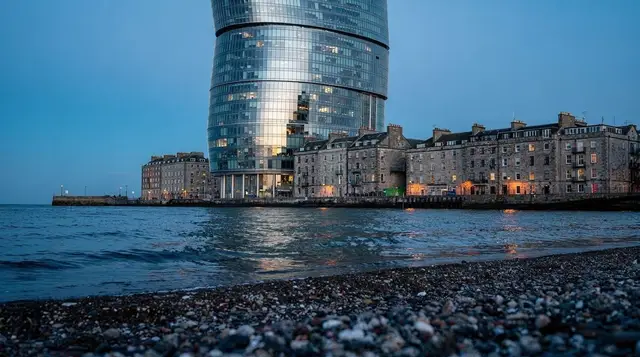
Almost every photograph of Batumi’s seafront is shot from a distance, or from the Alphabetic Tower looking down, and the framing hides the one detail that changes an actual beach day here: the entire shoreline is shingle, not sand. Grey and black stones, some pea-sized, some closer to a fist, run the full length of the city from the harbour past the New Boulevard and on toward Green Cape. First-time visitors who arrive expecting a Black Sea version of a Mediterranean sand beach are usually surprised within the first ten minutes, once they try walking barefoot from a towel to the water.
This is not a flaw exactly, more a fact that should shape how you plan a day here. The water off Batumi is deep close to shore because there is no long, shallow sand shelf to wade across, which some swimmers actually prefer, and the stones mean the water stays clearer than a sand beach would, without the cloudiness that fine sand kicks up when disturbed. But it does mean water shoes, not sunscreen, are the piece of kit visitors most regret forgetting. If you specifically want sand, read on for where to find it, because it is not in Batumi itself.
Batumi: City Highlights Batumi Boulevard Walking Tour is a reasonable way to see the whole seafront in one guided pass before deciding where you want to come back and actually swim.
Reading the shingle, section by section
The stones are not uniform along the coast, and knowing the difference saves a wasted walk. In front of the Old Town and the port, the shingle runs larger and looser, harder underfoot and mixed with more debris after storms, since this stretch sits closest to the river mouths that feed the bay. It is also the least developed section for beach infrastructure — a handful of plastic chairs rather than proper beach clubs — which suits people who want quiet over comfort.
The New Boulevard, running roughly from the port area up past the Alphabetic Tower to Miracle Park, is where almost all the sunbed rental and beach cafés cluster, and the stone here tends to be smaller and more even underfoot, closer to coarse gravel than jagged rock. This is also the section with the most consistent lifeguard coverage in the June-to-September season, and the calmest water, sheltered slightly by the curve of the bay. Past Miracle Park, toward the newer hotel strip, the beach thins and the crowd drops sharply outside July and August, which is worth knowing if the central stretch feels packed on a summer weekend.
What a sunbed actually costs
The beach itself, along its entire length, is public and free — nobody charges to walk onto the shingle or lay your own mat down. What costs money is the row of beach clubs and cafés that line the Boulevard, each renting a pair of sunbeds and an umbrella for the day.
Expect roughly 15-30 lari for a sunbed pair at an ordinary spot, more — sometimes 40-60 lari — at the smarter clubs directly below the Alphabetic Tower or attached to the bigger hotels, where the price buys a slightly quieter patch of beach and table service rather than anything materially different about the water. If the budget matters more than convenience, bringing your own foam mat or beach chair and setting up on any unclaimed stretch of public shingle costs nothing and is entirely normal — Batumi residents do exactly this on weekday evenings after work.
Showers and changing cubicles exist at most of the paid clubs and at a few free public points along the Boulevard, though they are inconsistent outside peak season, when several close for the winter entirely.
Water quality: when it is good and when to skip a day
The Black Sea off Batumi is swimmable and generally clean through the main season, but water quality is not constant. After heavy rain, the Chorokhi River and several smaller streams that enter the bay carry sediment, branches and occasional litter into the water near the port end of the coastline, and visibility drops noticeably for a day or two afterward. Locals simply skip swimming for a day or two after a big storm and wait for the water to clear rather than treating it as a fixed rule — it is a pattern worth watching rather than a permanent hazard. The New Boulevard stretch, further from the main river mouths, tends to clear faster than the harbour end.
Bring water shoes, not just sunscreen
If there is one packing note that actually matters here, it is footwear. The shingle heats up under a July sun to the point where crossing it barefoot at midday is genuinely uncomfortable, and the stones near the waterline, kept wet and slightly rounded by the waves, are still sharp enough underfoot to slow down anyone without shoes. A simple pair of rubber water shoes, sold cheaply at souvenir stalls and pharmacies along the Boulevard for around 20-40 lari, removes the problem entirely and is worth buying on day one rather than gritting your teeth through a week.
A beach mat or folding chair also earns its weight far more here than on a sand beach, since a towel alone tends to slide and bunch on loose stones and never quite lies flat.
If you actually want sand: Ureki and Kobuleti
Batumi is not the only beach option on this stretch of coast, and if sand specifically is the priority, it is worth the extra travel time. Ureki, about 55 km north of Batumi and covered in full in Ureki and its magnetic black sand, has genuinely fine black sand said locally to carry magnetic minerals, and a much gentler, shallower entry into the water than Batumi’s shingle — better suited to small children.
Kobuleti, closer at around 20 km from central Batumi, splits the difference: its shore is a coarser mix that reads more as sand than pure pebble, with a longer, less crowded stretch than the Batumi Boulevard. The full comparison is in Kobuleti: the quieter coast.
Batumi: to Kobuleti Black Sea Coast Private Tour with Guide covers a day trip to Kobuleti with a guide and driver, useful if you would rather not work out the marshrutka schedule yourself.
How the Boulevard beach came to look this way
The shingle itself is not an accident of geology so much as a product of what the Adjara coast has always been: a narrow strip of land between the Black Sea and the Lesser Caucasus foothills, with rivers like the Chorokhi and the Adjaristsqali dropping straight off the mountains and dumping stone rather than fine sediment into the bay. Sand beaches need slow-moving rivers and wide deltas to grind rock down over millennia; Batumi’s rivers are short and fast, which is also why the water deepens quickly offshore instead of shelving out gently the way it does further along the coast at Kobuleti and Ureki, where different river systems and longer, flatter deltas produce a genuinely different shoreline.
The modern Boulevard itself dates to the Soviet period and was expanded considerably after Georgian independence, with the palm plantings, fountains and much of the current promenade dating from a redevelopment push in the 2010s that turned what had been a working seafront into the tourist-facing strip visitors see today. The stones underfoot, though, have not changed.
Getting to the right stretch without wasting a morning
Batumi’s centre is compact enough that most hotels sit within a 10-15 minute walk of some part of the beach, but which stretch you land on by chance from a given hotel varies a lot in character. Anyone staying near the Old Town or the port should expect the rougher, less developed southern shingle unless they specifically walk or taxi up toward the Alphabetic Tower.
A short taxi ride — typically 5-10 lari within the city on Bolt or Yandex Go — or a 20-25 minute walk along the Boulevard itself gets you to the calmer, better-serviced New Boulevard stretch, and it is worth making that walk once on the first day simply to see the difference before committing to a regular spot. Marshrutkas also run along Rustaveli Avenue parallel to the coast and are the cheapest way to shuttle between the Old Town and the northern beach clubs, though taxis are cheap enough here that most visitors do not bother working out the routes.
A realistic beach-day budget, three ways
A no-cost day is entirely possible: bring your own mat, use the free public showers where they exist, and buy khachapuri and water from one of the small shops set back from the Boulevard rather than the beachfront cafés, which charge a noticeable premium for the view. A mid-range day — ordinary sunbeds, lunch at a Boulevard café, a couple of soft drinks — runs somewhere in the 30-60 lari range per person once food is added to the sunbed cost.
At the top end, a full day at one of the beach clubs attached to the larger hotels near the Alphabetic Tower, with table service, better sunbeds and sometimes a small pool alongside the sea access, can run 80-150 lari per person in peak season. None of these tiers buys meaningfully better swimming water — the difference is entirely about comfort, shade and how much walking you want to do to find a toilet.
Crowds, month by month
July and August are unambiguously the busiest months, when Georgian domestic tourism peaks alongside international visitors and the New Boulevard sunbeds fill by mid-morning on weekends. June and the first half of September offer nearly the same sea temperature — see When the Black Sea is warm enough to swim for the specific range — with noticeably thinner crowds and lower sunbed prices at the independent clubs, which is the window most repeat visitors aim for. Outside that stretch, from October through May, the Boulevard stays walkable and pleasant but the beach itself empties almost entirely and most of the seasonal cafés and sunbed operators shut down until spring.
Is the beach actually worth the time?
It is worth being honest about this rather than selling the shingle as something it is not. Batumi’s beach is a decent, swimmable stretch of coast with a genuinely excellent promenade behind it, but it is not a scenic highlight of a Georgia trip in the way Svaneti’s mountains or Kakheti’s vineyards are, and visitors coming purely for a classic sand-and-sunbathe holiday will likely be more satisfied at Ureki or, further afield, on a Mediterranean coast. Where Batumi earns its place is as a change of pace after days of monasteries and mountain driving elsewhere in Georgia — a couple of easy, warm days by the sea, with a lively evening scene attached, rather than a beach destination in its own right.
Getting on the water instead of just beside it
For visitors who find the shingle underwhelming as a place to lounge, Batumi’s beach culture leans heavily toward being on the water rather than lying beside it. Jet ski rental, parasailing and short speedboat rides operate from stands along the New Boulevard through summer, and a genuine boat trip out into the bay — sometimes advertised with dolphin sightings, though these are never guaranteed — is one of the more memorable ways to see the coastline from a different angle. The full rundown of options, including jet ski and parasailing operators, is in Boat trips and dolphin watching from Batumi.
Batumi: Exclusive Black Sea Adventure Private Boat Trip leaves from the Boulevard area and is bookable on the day if weather allows, though July and August afternoons get busy enough that morning slots are worth reserving ahead.
A quieter alternative is Batumi: Sunset Cruise with a Glass of Wine, timed for the hour when the shingle empties out and the Alphabetic Tower lights up along the shore — arguably a better use of a Batumi evening than another hour on the stones.
The Boulevard itself, beyond the sand question
Even readers who came only for a swim tend to end up walking the Boulevard, a roughly 7 km seafront promenade lined with fountains, sculpture — including the moving Ali and Nino statue — palm plantings and cafés that is arguably Batumi’s single best free attraction regardless of what the beach looks like underfoot. The full route, landmark by landmark, is in Batumi Boulevard end to end, and it pairs naturally with an evening at one of the beach-adjacent restaurants once the day’s heat has passed.
Two days is enough to see the coast properly
For visitors weighing whether Batumi deserves an overnight stay or works as a long day trip from Tbilisi, Batumi in two days lays out a realistic plan that balances beach time against the Old Town, the Boulevard and at least one trip out of the city. Given that Tbilisi to Batumi is itself a 5-6 hour drive or roughly an hour by air — covered fully in Tbilisi to Batumi: plane, train or road — most visitors find a single day trip too rushed to be worth the transit time, and Tbilisi or Batumi? is worth reading before deciding how to split a short Georgian trip between the two.
Beyond the water: what fills an evening
Once the sun drops and the shingle stops being the day’s focus, the Boulevard’s cafés and the Piazza in the Old Town take over, and Batumi after dark: casinos and clubs covers the city’s other identity as Georgia’s gambling and nightlife hub, distinct enough from the daytime beach scene that it is worth reading separately if that side of Batumi interests you. Adjarian food in Batumi, beyond the boat-shaped khachapuri is the better companion piece for anyone planning meals around a beach day, since the region’s cooking differs from what is served in Tbilisi in ways worth knowing before you order.
Wind, waves and when the sea turns rough
The Black Sea off Batumi is usually calm through summer, but the Adjara coast catches strong southwesterly winds a handful of times each season, most often in spring and autumn shoulder months rather than deep summer, that can whip up waves large enough to close swimming to a red-flag warning for a day or two and cancel the smaller boat trips entirely. Lifeguards on the New Boulevard raise coloured flags during the main season — green for calm, yellow for caution, red for no swimming — and it is worth actually checking rather than assuming the water is safe simply because the sun is out, since the shingle bottom means rough water breaks close to shore rather than out at a predictable distance.
Accessibility on the shingle
The loose stone surface is the main obstacle for anyone with mobility limitations or a stroller. A handful of the larger beach clubs near the Alphabetic Tower have laid wooden boardwalk sections down to the waterline in recent seasons, which is worth asking about by name when booking a sunbed if step-free beach access matters, since the ordinary shingle is genuinely difficult to cross with wheels or an unsteady gait. The paved Boulevard itself, by contrast, is flat, wide and entirely accessible, which is part of why so much of Batumi’s beach life happens on benches and café terraces along it rather than down on the stones.
The honest verdict
Batumi’s beach is a genuinely pleasant place to spend an afternoon, and the deep, clear water close to shore has real advantages over a shallow sand beach for adult swimmers. But arriving expecting sand, as many first-time visitors do from photographs alone, sets up a disappointment that is entirely avoidable with the right expectations and a pair of water shoes. If sand specifically matters to your trip, build in the extra hour to Ureki or the shorter hop to Kobuleti rather than assuming Batumi itself will deliver it — it will not.
Frequently asked questions about Batumi’s beaches
Does Batumi have any sand beaches?
No. The city’s entire seafront is grey and black shingle. For sand, head to Ureki, about 55 km north, or Kobuleti, which is closer to sand than Batumi’s stones.
Is the sea in Batumi clean enough to swim in?
Generally yes in season, though water quality dips for a day or two after heavy rain, especially near the port end of the shore.
What should I bring to a Batumi beach?
Water shoes matter more than sunscreen — the shingle gets hot and sharp-edged underfoot. A beach mat also helps, since towels do not lie flat on loose stones.
Are Batumi’s beaches free?
The shingle itself is free and public. Sunbeds and umbrellas from the beach clubs typically cost 15-30 lari for a pair, more near the Alphabetic Tower.
Which part of Batumi’s beach is best for swimming?
The New Boulevard stretch, between the Alphabetic Tower and Miracle Park, has the calmest water and the most lifeguard presence in summer.
Is Batumi beach good for children?
It works, but the shingle drops off faster than a sand beach, so supervise young children closely. Water shoes help a lot with reluctant toddlers.
When is the best time to swim in Batumi?
Late June through early September. See When the Black Sea is warm enough to swim for the month-by-month range.
Black Sea coast trips on GetYourGuide
Verified deep-linked GetYourGuide tours. Book through these links and we earn a small commission at no cost to you.
Photo: our own image of the location, not the operator’s product photo.