A week in Georgia: the real receipts
What actually adds up over a week
Every guide to visiting Georgia comes with a headline number — a range that spans budget hostel to boutique hotel and is therefore true and useless at once. What follows instead is one specific week, kept as honestly as a phone full of receipt photos allows: seven nights based in Tbilisi, two day trips out of the city, no rental car, and no attempt to spend as little as possible or to treat myself. The point isn’t that this is the price of a week in Georgia.
It’s that seeing where the money actually went is more useful than a single average, because your version will move the numbers around without changing the shape of them much. Slower travellers, different neighbourhoods and a different mix of day trips would all shift these figures, sometimes by a lot. For the wider version of this exercise, with seasonal variation and city-by-city comparisons, see What a week in Georgia actually costs.
Accommodation: 385 ₾ for six nights
A mid-range guesthouse room in Vera, walking distance from the old town but away from the nightlife noise, ran 65 ₾ a night for a double with breakfast — cheese, bread, jam, instant coffee, always the same, always fine. That’s toward the lower end of mid-range; a comparable room in a converted Sololaki townhouse would have added another 20-30 ₾ a night for the address alone. Hostels start around 25-30 ₾ for a dorm bed and go lower outside summer.
The neighbourhood-level breakdown of what each area of the city actually offers is in Where to stay in Tbilisi. One night was spent in Kazbegi, which pushed the accommodation total to 385 ₾ across the full seven nights — call it 55 ₾ a night averaged out, though the two nights either side of the mountain trip were the cheap ones subsidising it.
Food: 312 ₾, and khinkali did most of the damage
Georgian food is inexpensive per item and dangerous in aggregate, because ordering for a group means the table fills with plates that are each individually 8-15 ₾. A lunch of khinkali (five dumplings, 1-1.5 ₾ each), a small khachapuri and a beer came to about 22 ₾. A proper evening meal in a taverna — lobio, a salad, mtsvadi, bread, a carafe of house wine — landed between 28 and 38 ₾ per person depending on the place and how much wine got ordered.
The full breakdown of what things actually cost is in Khinkali: how to order and how to eat them and Every kind of khachapuri, region by region; the etiquette around splitting bills and whether service is already included is covered in Restaurant etiquette, service charges and tipping. Coffee and pastries for working mornings added roughly 8 ₾ a day. One deliberately nice dinner, at a restaurant recommended in Where to eat in Tbilisi, came to 95 ₾ for two with a bottle of Saperavi — the single biggest line item of the week outside the day trips.
Getting around: 84 ₾, almost all of it in single lari notes
City transport barely registers next to everything else. The metro is 1 ₾ a ride with a Metromoney card, and short Bolt rides across town run 5-12 ₾ depending on traffic and time of day — late-night airport-adjacent surges aside. A week of mostly walking, occasional metro and the odd Bolt when carrying bags added up to 84 ₾, which is a number that would double or triple for someone staying further from the centre or unwilling to walk twenty minutes uphill to Sololaki. Full logistics, including how the Metromoney card works and where Bolt beats a marshrutka, are in Tbilisi metro, buses and the Metromoney card and Taxis, Bolt and Yandex Go.
Cash, cards and the habits that kept the total down
Cards work almost everywhere in Tbilisi now, including at khinkali houses and market stalls that would once have been cash-only, but cash still moved faster at Dezerter Bazaar and with marshrutka drivers, who don’t carry much change for a 50 ₾ note. Withdrawing 300 ₾ at a time from a bank-branded ATM rather than a standalone one avoided the worst of the withdrawal fees; the difference between a Bank of Georgia machine and a generic currency-exchange ATM on Rustaveli Avenue can be several lari per withdrawal once the conversion margin is included.
The full mechanics of this, including which card networks get the best rates, are in Lari, ATMs and paying by card. One habit that genuinely saved money: checking a menu’s prices before sitting down near Freedom Square, where a few tourist-facing restaurants quietly charge 30-40% more than an equivalent place two streets back in the old town, without the food being noticeably better.
What didn’t make the budget line
Two things sat outside the running total and are worth naming, because they’re the kind of spending that quietly doubles a week if left unplanned. A few small souvenirs — a bottle of chacha, a jar of tklapi and a hand-painted magnet — came to about 45 ₾ from a proper shop rather than the first stall at Narikala, which tends to charge double for the same items. A local SIM with a generous data allowance was another 20 ₾ for the week, bought at the airport on arrival rather than hunted down in town. Neither is essential, but both are the kind of small, repeated spend that a “big three” budget (accommodation, food, transport) tends to leave out entirely.
The Kazbegi day trip: 45 ₾ shared marshrutka versus what a tour actually buys
Kazbegi was the one trip taken as an organised day tour rather than the DIY marshrutka-from-Didube route, partly for the mountain-road driving and partly for time — a marshrutka to Stepantsminda alone takes about three hours each way before you’ve done anything at either end, and the return schedule can leave you stranded if the last one fills up without you.
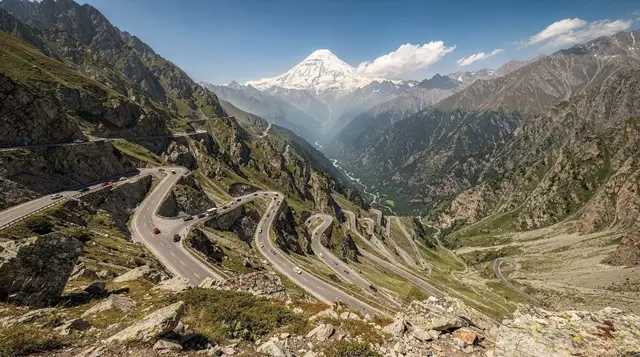
From Tbilisi: Day Trip to Kazbegi covered the return drive along the Georgian Military Highway, stops at Ananuri and the Russia-Georgia Friendship Monument, and enough time at Gergeti Trinity Church to walk up rather than take the 4x4 taxis that circle the car park. At current pricing this runs noticeably more than the 45 ₾ round-trip marshrutka fare, but it removed the scheduling risk and the need to negotiate a taxi up to the church, which alone runs 100-150 ₾ split between however many people are in the jeep. For the DIY version, cross-reference against Kazbegi as a day trip: is it too much?, which is honest about how rushed a single day feels compared with an overnight in Kazbegi and Gergeti.
Kakheti: a wine day that earned its cost
The second day trip went to Kakheti, and here the organised option made more sense on value rather than just convenience, because a private wine day involves cellar visits that are hard to arrange independently without a car and some Georgian.
Wine Tour to Kakheti Sighnaghi Bodbe Wine Tasting included transport, tastings at two wineries and a stop in Sighnaghi, and worked out cheaper per tasting than trying to book two separate cellar visits independently would have. A qvevri tasting flight alone typically runs 15-30 ₾ per person at a serious winery, before food; doing that twice in one day without a driver arranged in advance isn’t realistic. Anyone weighing this exact choice should read Group or private wine tour in Kakheti? before booking.
Mtskheta and the sulphur baths: the two smaller splurges
A half-day in Mtskheta filled a slow Tuesday — twenty-five minutes from Tbilisi by marshrutka for about 1 ₾, or covered as part of From Tbilisi: Mtskheta Walking Tour Along the Aragvi River for anyone who’d rather have Svetitskhoveli and Jvari explained than looked up separately. The other splurge was a private room at an Abanotubani sulphur bathhouse: Tbilisi: Sulfur Bath with Wine and Kisa Scrub came to well above the 60 ₾ floor price for a basic private room, but included the kisa scrub and a bottle of wine, and felt worth it after four days of walking. A plain private room without the extras is genuinely cheaper — the full pricing structure, including how public pools differ from private rooms, is in Tbilisi’s sulphur baths: prices, private rooms and what to expect.
The total, and what it doesn’t include
Accommodation 385 ₾, food 312 ₾, city transport 84 ₾, plus the two day trips and the baths pushed the full week past 1,100 ₾ — somewhere around 370-380 € at the exchange rates through early 2026. That figure excludes the international flight, travel insurance and any souvenirs, and it reflects one traveller who ate well, took two guided day trips instead of budget marshrutkas, and had one proper splurge on the baths.
Cutting the baths, doing both day trips independently by marshrutka and eating at bakery windows more often would have brought the same week closer to 650-700 ₾. Neither number is more correct than the other — see the fuller range across trip styles in What a week in Georgia actually costs, and for currency logistics, Lari, ATMs and paying by card.
Frequently asked questions about a week’s real spending in Georgia
How much does a week in Georgia actually cost?
For the exact week described here — mid-range accommodation, eating well, two organised day trips and a private sulphur bath — the total came to just over 1,100 ₾, roughly 370-380 €. A more frugal version of the same week, doing day trips independently, comes in closer to 650-700 ₾.
Is Georgia cheap compared with the rest of Europe?
Yes, noticeably, particularly for food and city transport. A metro ride is 1 ₾ and a filling lunch can be had for under 15 ₾. Accommodation and organised day trips narrow the gap but rarely erase it.
Do organised day tours cost much more than doing it yourself by marshrutka?
Often two to three times the marshrutka fare, but the comparison isn’t quite fair — a tour also buys entry logistics, cellar access and driving on mountain roads that are genuinely more comfortable left to someone else.
What’s the single biggest optional expense in a week like this?
The private sulphur bath room with extras. A basic private room is a reasonable splurge on its own; adding wine and a scrub roughly doubles the cost of the visit.
Should I budget in lari, euros or dollars?
In lari. Card machines and ATMs are everywhere in Tbilisi and prices are quoted in ₾; converting mentally to euros is only useful as a sanity check, not for planning a daily spend.
Does this budget include the flight to Georgia?
No — the total above covers only in-country spending for seven days. International flights and travel insurance are separate and vary too widely by origin city to fold into a single figure.
Trip-planning essentials on GetYourGuide
Verified deep-linked GetYourGuide tours. Book through these links and we earn a small commission at no cost to you.
Photo: our own image of the location, not the operator’s product photo.