A wine tour of Kakheti: how to plan it
What is the best way to do a Kakheti wine tour from Tbilisi?
Most visitors join a small-group tour from Tbilisi that covers two or three wineries plus a lunch stop, which is cheaper and simpler than hiring a private driver for a single day. Kakheti is roughly two hours from Tbilisi by road, so a one-day trip means real time on the road, and anyone visiting more than one town — Sighnaghi and Telavi both — is better off staying a night in the region instead of rushing back.
Kakheti is a region, not one stop
Kakheti is where most of Georgia’s wine is actually grown — the Alazani valley alone accounts for a large share of the country’s vineyards — and it is easy to arrive expecting one tidy “wine country” experience and find instead a whole region spread across two river valleys, dozens of villages and two very different towns as a base: Sighnaghi, a restored hilltop town built for tourism, and Telavi, a working regional capital that happens to sit in the middle of the vineyards. Deciding which of the two, or both, anchors your trip changes almost everything else about the day.
This guide covers how to structure a Kakheti wine day realistically — transport options, which villages reward a detour, roughly what to expect to pay, and when to go — rather than listing every winery in the region, since Telavi and the Alazani valley wineries and The best wineries within two hours of Tbilisi already do that for their respective areas.
From Tbilisi: Kakheti Wine Region Tour with Tastings is the most straightforward starting point if you have not planned anything yet: a full day from Tbilisi with several tastings built in and no logistics to arrange yourself.
Group tour, private driver or self-drive
Three ways to see Kakheti’s wine country exist, and each suits a different traveller.
A small-group tour picks you up in Tbilisi, drives the roughly two hours to Kakheti, stops at two or three pre-arranged wineries, usually includes a lunch, and returns you to Tbilisi by evening. It is the cheapest per-person option and requires no planning, but the itinerary is fixed and you share the pace with a coach or minivan of other travellers.
Tbilisi: Kakheti Wine Tour with Tastings Lunchis built this way. At the wider end of the scale, some operators run itineraries stacking as many as nine separate tastings into one day, aimed squarely at travellers who want to sample widely rather than spend real time at two or three cellars — worth knowing exists, though it trades depth for breadth in a way that suits some travellers and not others.
A private driver for the day costs more but removes the fixed itinerary — you choose the wineries, and can linger at one and skip another. This suits anyone who has already read up on specific producers, or who wants to combine wine with a Sighnaghi and Bodbe sightseeing stop without following someone else’s schedule. See Group or private wine tour in Kakheti? for a fuller comparison of the trade-offs.
Self-drive is the option worth thinking twice about. Georgia’s drink-driving limits are strict, and a day built around tastings is a genuine conflict with driving yourself back. If you are set on a rental car for the wider trip, see Renting a car in Georgia, but plan the wine-tasting stretch of the day around a driver, not the wheel.
What a Kakheti wine day actually includes
A typical group day starts early, since the drive alone takes the best part of two hours each way. Expect one winery stop late morning, a lunch — often at a family guesthouse doing home cooking rather than a restaurant — and a second winery stop in the afternoon before the drive back. Some itineraries, like From Tbilisi: Kakheti Wine Tour with Telavi Vineyard Visit, build in a look at Telavi itself or a monastery stop alongside the tastings, which is worth checking for before you book if heritage sites matter to you as much as wine does.
Tastings themselves are usually small pours of several wines rather than full glasses, sometimes paired with bread, cheese or churchkhela. If wine in qvevri, the traditional clay vessel, is new to you, Qvevri wine explained is worth reading before you go — cellars assume a level of familiarity with the method that first-time visitors often do not have, and a five-minute read beforehand makes the explanations on-site land better.
A realistic one-day itinerary, hour by hour
Knowing roughly how the day breaks down helps set expectations before you book. A typical group tour picks up in Tbilisi between 8am and 9am, since the road to Kakheti takes the better part of two hours and operators want a full day of light and tasting time on the other end. The first stop, usually a winery around Sighnaghi or Telavi depending on the route, tends to land mid-morning, around 11am, with a cellar walk-through and a first round of tastings lasting perhaps an hour.
Lunch typically follows early afternoon, often at a family guesthouse rather than a restaurant, and can run long by the standards of a normal travel day — Georgian hospitality treats a shared meal as something closer to a small supra than a quick stop, with several courses and toasts rather than a plate and a bill. Budget an hour and a half here rather than the thirty minutes a Western lunch stop might take.
A second winery or a heritage stop — Sighnaghi’s old town, Bodbe Monastery, or Telavi’s fortress, depending on the operator — usually fills the mid-to-late afternoon, before the drive back to Tbilisi begins around 5pm or 6pm, putting most groups back in the city by early evening. Private-driver days follow a looser version of the same shape, with the difference that you decide how long each stop actually runs, which is the main advantage of paying more for one.
Sighnaghi and the Alazani valley versus Telavi and the north bank
Kakheti splits roughly into two wine-touring bases, and the choice between them matters more than which specific wineries you pick.
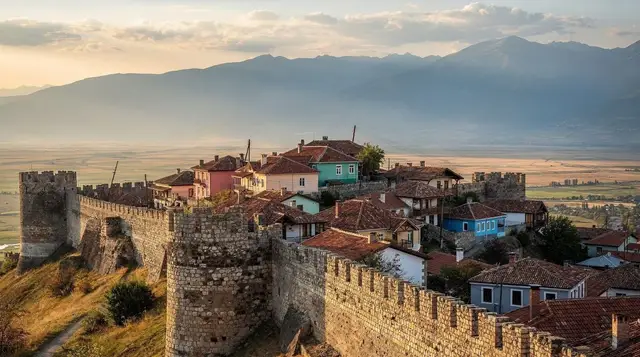
Sighnaghi, on a ridge above the Alazani valley, is the more polished option: cobbled streets, a restored old town wall, views across the valley to the Caucasus on a clear day, and Bodbe Monastery a short drive below it. It is also the base most group tours use, since it doubles as a heritage stop alongside the wine. Kvareli, a little further east, adds the region’s most unusual wine attraction — see The Khareba wine tunnel at Kvareli, a former Soviet ammunition tunnel repurposed as a wine cellar.
Telavi, the regional capital on the opposite side of the valley, feels less curated and more lived-in, and sits closer to a denser cluster of family-run cellars in villages like Akhmeta and along the road toward Alaverdi Cathedral and the royal citadel of Gremi. It suits travellers who want the wineries themselves to be the main event rather than a stop between sightseeing, and is covered in full in the companion guide linked above.
Trying to cover both sides in a single day trip from Tbilisi is possible but tight — most people who attempt it end up with barely an hour at each stop. A night in the region resolves this, and A weekend in Kakheti is built around exactly that trade-off.
What it costs, in lari
Tour prices scale with the number of stops, the meal included and whether the tour is shared or private, and vary enough between operators that a single figure is not useful here — a lunch built into a group tour is broadly comparable to what a sit-down taverna meal costs on its own in Tbilisi, and private-driver days cost more than group tours by a clear margin, roughly the difference between hiring a car for a day and buying one seat on a minibus. Tastings themselves are usually the cheapest part of the day; some family cellars pour a first tasting for free and only charge if you buy a bottle afterwards, others charge a small fee that goes toward the pour regardless of purchase. Ask before you sit down if it matters to you.
When to go: rtveli and the rest of the year
Kakheti’s wine calendar peaks around rtveli, the grape harvest, which usually falls across September and into October depending on the year and the grape variety. Cellars are at their busiest and most interesting during rtveli, and some let visitors join the pressing itself — see Rtveli: joining the grape harvest for what that actually involves and how to arrange it.
Outside harvest season, tastings still happen year-round; spring and early summer bring green vineyards and fewer other visitors, while winter tastings move indoors and lose nothing in substance, even if the vines themselves look bare. Georgia in autumn covers how the wider travel season interacts with the harvest calendar in more depth.
Getting Saperavi and the qvevri method straight before you go
Two things come up at almost every Kakheti tasting: qvevri, the buried clay vessel used for fermentation and ageing, and Saperavi, the region’s flagship red grape. Neither is complicated, but both get explained quickly on-site, often assuming some prior context — see the qvevri guide linked earlier, and Saperavi: how to read a Georgian red, which both cover the basics in more depth than a winery guide typically has time for mid-tasting.
Etiquette at a family cellar
Georgian wine tasting comes with a social layer that catches some visitors off guard. At a family cellar in particular, expect the host — often the winemaker themselves, not a hired guide — to pour, explain and toast in roughly that order, and to talk with real pride about wine that has, in many cases, been made by the same family for generations. Toasts follow a loose structure of their own: a first toast to the guests, another to family or ancestors, and often more as the tasting goes on, led informally by whoever is hosting rather than a strict tamada ceremony of the kind seen at a full supra.
You are not expected to finish every glass poured, and tipping a small amount out or simply leaving a glass part-full is normal and not considered rude, particularly if you have several stops left in the day. Buying a bottle at the end is appreciated but not obligatory at most cellars that pour a free first tasting; at cellars that charge for the pour, the tasting fee usually stands on its own. If photography is important to you, ask before pointing a camera at the qvevri room specifically — most hosts are happy to show it off, but a few smaller, more traditional cellars prefer a question first.
Mistakes worth avoiding
Booking a tour that promises four or five wineries in one day is the most common regret reported by travellers — the stops blur together and the drive time eats into what should be tasting time. Skipping food is another: tastings on an empty stomach go badly, and most itineraries build lunch in for exactly that reason, so choose one that does if yours does not. Finally, treating Kakheti purely as a wine errand and skipping Sighnaghi’s old town or Telavi’s fortress misses half of what makes the region worth the two-hour drive in the first place.
Tbilisi: Kakheti Wine Tour with Telavi and Gremi is a reasonable middle ground for anyone trying to balance wine, a monastery stop and Telavi itself without overloading the day.
Combining Kakheti with the rest of a Tbilisi day-trip circuit
Kakheti gets grouped with Georgia’s other classic day trips from Tbilisi — the Georgian Military Highway north to Kazbegi, David Gareja’s cave monasteries near the Azerbaijan border — mostly because all three appear on the same “best day trips” lists, not because they combine well on the same day. Each is roughly two hours from Tbilisi in a different direction, and a single day has room for one of them properly, not two.
Attempting Kakheti and David Gareja together, in particular, is a mistake worth flagging directly: the roads run through different parts of the country, and an operator offering to combine them is usually cutting the time at both to something closer to a photo stop than a visit. See The best day trips from Tbilisi, ranked honestly for how Kakheti stacks up against the alternatives, and David Gareja or The Georgian Military Highway, kilometre by kilometre if you are choosing between them for a different day of the same trip rather than trying to fit everything into one.
Booking ahead: group size, timing and cancellation
Group tours typically run in minivans seating somewhere between eight and sixteen people, and during rtveli — the September and October harvest window covered above — popular departures can sell out several days ahead, particularly on weekends when both local and international demand peak together. Booking a few days in advance rather than the morning of is sensible in high season; outside rtveli, availability is generally easier to find on short notice.
Most group tours offer free cancellation up to 24 hours before departure, worth checking at booking time since terms vary by operator, especially useful given how weather-dependent a day built around outdoor cellar visits and a hilltop old town can be. Private drivers booked directly tend to have looser cancellation terms but less flexibility to simply swap you onto a different date if plans change, since you are the only booking rather than one seat among many.
What to wear and pack for the day
Cellar floors are often uneven stone or packed earth, and courtyards at family wineries are rarely paved, so comfortable flat shoes matter more here than smart-casual ones. Even in summer heat, underground and semi-underground cellars stay noticeably cool, so a light layer is worth carrying even if you leave Tbilisi in a T-shirt. Sighnaghi’s old town walls and Bodbe’s grounds both involve real time outdoors with little shade, so sun protection is worth packing if your day includes either stop.
A small bag or tote is genuinely useful if you plan to buy a bottle at a cellar that pours a free tasting — most operators will let you carry it back on the minivan, but it is not something the tour itself provides. A taverna lunch eaten independently in Sighnaghi’s old town, if you skip a tour’s included meal, costs roughly the same 25-40 ₾ as anywhere else in Georgia.
Frequently asked questions about Kakheti wine tours
How far is Kakheti from Tbilisi?
Sighnaghi is around two hours by road; Telavi and the villages along the Alazani valley are a little closer. Both work as a long day trip, but combining them in one day leaves little time at either.
Do I need a car to visit Kakheti wineries?
No. Marshrutkas reach Telavi and Sighnaghi, but not the wineries themselves, most of which sit on back roads outside town. A tour, a hired driver, or a self-drive rental are the three realistic options.
How many wineries can you actually visit in one day?
Two is comfortable, three is a full day, and four starts to feel repetitive as the cellars blur together. Fewer, better stops beat a long list.
Is a group tour or a private driver better?
A group tour is cheaper and needs no planning, but the itinerary is fixed. A private driver costs more but lets you choose your own stops and pace.
What is the best time of year for a Kakheti wine tour?
September and October, during rtveli, the grape harvest. Spring and early summer are quieter and greener; winter tastings move indoors but lose nothing in substance.
Can you do a Kakheti wine tour without drinking much?
Yes — pours are small, tipping a glass out is normal, and nobody expects a full glass finished at every stop. If you are driving yourself, though, plan the tasting day around a hired driver instead, given Georgia’s strict drink-driving limits.
Is Kakheti only about wine?
No. Sighnaghi’s old town and Bodbe Monastery, Telavi’s fortress, and Alaverdi Cathedral and Gremi further north are worth the trip on their own, wine aside.
Qvevri wine tasting and vineyard tours on GetYourGuide
Verified deep-linked GetYourGuide tours. Book through these links and we earn a small commission at no cost to you.
Photo: our own image of the location, not the operator’s product photo.