What a week in Georgia actually costs
How much does a week in Georgia cost?
A backpacker sharing hostel dorms and eating khinkali on the street can get through a week on roughly 700-900 lari (around 230-300 euros), excluding flights. A mid-range trip with private guesthouse rooms, taxis when useful and a couple of paid tours lands closer to 1,800-2,500 lari. Comfort, with hotels and private drivers, starts around 3,500 lari and climbs from there.
Why “how much does Georgia cost” has three different answers
Ask ten travellers what a week in Georgia cost them and you will get ten different numbers, and almost none of it comes down to where they went. It comes down to three choices: where they slept, whether they booked private drivers or joined shared transport, and how much alcohol and wine tasting they built into the trip. Georgia is genuinely one of the least expensive countries in Europe or the Caucasus to travel in, but “cheap” and “free” are not the same thing, and it is easy to spend a comfortable-trip budget on a backpacker itinerary if you book private transfers for every day trip without noticing.
This guide breaks a week down into three realistic tiers — budget, mid-range and comfortable — with prices in lari (₾ / GEL), the only currency that matters once you land, alongside a rough euro figure using 1 € ≈ 2.9-3.0 ₾. None of these numbers include international flights, which vary too much by origin city to generalise. For the fuller picture on where the money actually leaves your wallet at the till, what things cost in Georgia in 2026 and a week in Georgia: the real receipts both walk through actual purchases rather than averages.
Accommodation: the biggest swing factor
A hostel dorm bed in Tbilisi runs roughly 25-40 ₾ a night, a private room in a family-run guesthouse 60-100 ₾, and a clean mid-range hotel room 150-300 ₾. Outside Tbilisi, guesthouses in places like Kazbegi, Mestia or Sighnaghi often include breakfast and sometimes dinner in the price, which changes the comparison — 70-90 ₾ for a room that comes with a home-cooked supra-style meal is a different proposition to a bare hotel room at the same price. Guesthouses, hostels and hotels: what you get covers what actually differs between these options beyond the price tag.
Location changes the number too. A guesthouse in Vera or Chugureti costs less than an equivalent room in the Old Town or on Rustaveli Avenue, and the saving is rarely worth the extra walk once you account for how central Tbilisi already is. Where to stay in Tbilisi, neighbourhood by neighbourhood breaks down which areas suit which budget without sacrificing convenience. Booking a week ahead rather than the same day also matters more in Georgia than in a lot of destinations, since the best-value family guesthouses tend to fill first and the gap left behind is a pricier hotel.
Food: where Georgia is at its cheapest
Food is where Georgia’s low cost of living shows most clearly. A khinkali costs 1-1.5 ₾ each, and a generous plate of ten is a filling meal for well under 15 ₾. A khachapuri, depending on the region and style, runs 8-15 ₾, and street bakery windows selling fresh bread and pastries rarely charge more than a few lari for something that works as breakfast or a snack. Khinkali: how to order and how to eat them is worth reading before your first meal, since it has ordering conventions that are easy to get wrong as a first-timer, and the same applies to khachapuri’s regional variants.
A sit-down meal at an ordinary taverna, with a main course, bread, a salad and a glass of house wine, typically comes to 25-40 ₾ per person — noticeably less than an equivalent meal in most of Western Europe. Wine by the glass at a casual restaurant rarely exceeds 8-15 ₾, and a bottle of decent qvevri wine from a shop costs a fraction of what the same quality would fetch abroad. Restaurants aimed squarely at tourists in the Old Town charge more, sometimes double, without the food being any better, which is one of the more common ways visitors overpay without realising it.
Tbilisi: Street Food Sightseeing Tour with Local Markets is a useful way to get your bearings on where locals actually eat and shop for food in the first day or two, before you have built up a sense of which restaurants are aimed at tourists and which are not. Service charges are sometimes already built into the bill at nicer restaurants, so it is worth checking before adding a tip on top.
Transport: cheap in the city, pricier between regions
Within Tbilisi, transport costs are close to negligible. The metro is 1 ₾ a ride on a Metromoney card, city marshrutkas are also around 1 ₾, and a short Bolt ride across town rarely exceeds 12 ₾. Tbilisi metro, buses and the Metromoney card and taxis, Bolt and Yandex Go both explain how to use these systems without overpaying, which matters because unmetered street taxis at the airport and near major sights do try to charge tourist rates.
Getting between regions is where the budget stretches. An intercity marshrutka to Kazbegi, Kutaisi or Kakheti costs relatively little, usually well under 30 ₾, but the schedule is fixed and the comfort level basic. How marshrutkas actually work explains the system in detail, since it has no formal timetable published online and relies on local knowledge of departure points. A private driver for a full day out of Tbilisi, by contrast, typically costs 250-500 ₾ for the car regardless of how many people are in it, which is excellent value split among four people and expensive solo.
Car rental itself is moderately priced by European standards but comes with genuine caveats about road conditions and insurance excess — worth researching before assuming a rental car is automatically the cheapest way to see the country, since fuel, parking and the higher accident excess common to Georgian rental contracts add up.
Activities and tours: the flexible part of the budget
This is the category with the widest range, because it is entirely optional and entirely up to how much you want to see beyond what is walkable from your accommodation. A shared group day trip — Kazbegi, Kakheti wine country, Mtskheta and Gori are the three most common — usually runs 60-120 ₾ per person including transport and sometimes a meal or tasting.
Tbilisi: Hopon Hopoff Discovery Bus Tour is one of the lower-cost ways to get an overview of Tbilisi’s spread-out sights on your first day, useful for orientation before you decide which neighbourhoods deserve a slower, on-foot visit later in the trip.
A private full-day tour with a driver and guide costs substantially more — often 250-500 ₾ for the vehicle — which makes sense for groups of three or four but adds up fast for a solo traveller doing several of these across a week. Sulphur baths in Abanotubani, covered fully in Tbilisi’s sulphur baths: prices, private rooms and what to expect, range from a few lari for a shared public pool to 60-150 ₾ an hour for a private room, another category where the spread between “cheapest option” and “comfortable option” is enormous.
Old Tbilisi Highlights Walking Tour with Wine 10 Tastings bundles an Old Town walk with several wine tastings for a single ticket price, a reasonable way to combine sightseeing and a first taste of Georgian wine without booking separate activities. For a hands-on alternative, Boshuri Khinkali Cooking Class with Local Family puts the cost of a meal and an afternoon’s activity into one line rather than two.
Three tiers, put together
Budget (roughly 700-900 ₾ / 230-300 € for a week): hostel dorms or the cheapest private guesthouse rooms, cooking or eating street food and taverna meals rather than restaurants, moving by marshrutka and metro, and joining shared group day trips rather than private ones. This is a realistic, comfortable-enough way to see Tbilisi, Mtskheta and one or two day trips without feeling like you are constantly counting coins.
Mid-range (roughly 1,800-2,500 ₾ for a week): private guesthouse or three-star hotel rooms, a mix of taverna and nicer restaurant meals, some taxi use alongside public transport, and a combination of one or two shared group tours plus a single private day, perhaps to Kazbegi or Kakheti. This tier gets noticeably more comfortable without becoming extravagant, and is where most first-time visitors who are not deliberately backpacking end up.
Comfortable (3,500 ₾ and up for a week): hotel rooms in the four-star range, restaurant meals without checking prices, private drivers for every excursion, and add-ons like a private wine tasting or a spa afternoon. Georgia at this tier still costs meaningfully less than an equivalent trip through Western Europe, which is one of the reasons the country has become popular with travellers who want a five-star feel at a three-star price.
Regional costs beyond Tbilisi
Costs shift once you leave the capital, and not always in the direction people expect. Kazbegi and Svaneti guesthouses charge similar rates to Tbilisi but often include meals, which can make them better value overall despite the higher headline price. Batumi in peak summer sees hotel prices climb closer to European coastal-resort rates, while the same rooms in shoulder season drop substantially. Svaneti and Tusheti both typically require a 4x4 or jeep tour rather than a normal car, which adds a fixed cost that does not scale down for a solo traveller.
Kakheti day trips, by contrast, are some of the best value in the country: a shared wine-region tour including several tastings and a meal rarely runs much above 100 ₾ per person, a fraction of what an equivalent wine-country day costs in France or Italy.
Where money quietly leaks away
A handful of habits inflate a Georgia budget without anyone noticing at the time. Eating every meal in restaurants directly on the Old Town’s main tourist streets, rather than walking two minutes further to where locals actually eat, is the single most common one. Taking unmetered taxis hailed on the street near the airport or major landmarks instead of using an app is another — scams, overcharging and minor annoyances covers the handful of situations where this happens most often, none of them dangerous, all of them avoidable with a little awareness.
Booking a private driver for every single day trip, rather than mixing in shared tours where a group already exists, is the third — sensible for a family or a group of four, expensive for one or two people doing it repeatedly across a week. And currency exchange at airport kiosks rather than an ATM or a bank-branch exchange point tends to shave a noticeable percentage off every conversion, covered in lari, ATMs and paying by card.
Georgia against its neighbours and against Western Europe
Compared with Armenia, prices in Georgia run broadly similar for food and transport, with Tbilisi’s accommodation market slightly more developed and therefore slightly pricier at the budget end. Compared with Western Europe, the gap is much larger: a meal, a hotel room or a taxi ride in Georgia typically costs a third to a half of the equivalent in France, Germany or the UK, which is a large part of why the country has built a reputation as a value destination without feeling like a compromise on quality — the wine, the food and the mountain scenery are not “budget” versions of anything, they are simply priced for the local economy rather than the international one.
Costs that are easy to forget when budgeting
A handful of smaller expenses rarely make it into a first-pass budget but add up over a week. A local SIM card or eSIM with a reasonable data allowance costs relatively little and is worth arranging on arrival rather than relying on hotel wifi throughout. Travel insurance is not a Georgian expense as such, but it is worth budgeting for separately if you plan any hiking above the valley floor, since mountain rescue in Georgia is not automatically free and standard policies vary widely in what altitude and activity they actually cover.
Museum and monastery entry fees are individually small — often just a few lari, and monasteries themselves are free to enter, though photography inside sometimes carries a separate small fee — but across a week of sightseeing they add a modest, steady drain that is easy to underestimate in advance. Souvenirs are the most elastic category of all: a bottle of wine, a piece of Minankari enamel jewellery or a hand-thrown ceramic piece can cost anywhere from a few lari to a genuine splurge.
Bottled water, entry to viewpoints with a small fee, and the odd taxi when a marshrutka schedule does not line up all belong in the same bucket — individually trivial, collectively worth padding your daily estimate by 10-15 ₾ per person to avoid the trip feeling tighter than planned by day five.
A sample day at each tier
Putting a single day into concrete numbers makes the tiers easier to picture than a weekly total alone. At the budget tier, a typical Tbilisi day might run: 30 ₾ for a dorm bed, 20 ₾ across three meals of khinkali, khachapuri and street bakery items, 5 ₾ on metro and marshrutka fares, and 60 ₾ for a shared group tour that day — a little over 115 ₾ total, comfortably under 40 €.
At the mid-range tier: 90 ₾ for a private guesthouse room, 70 ₾ across a taverna lunch and a slightly nicer dinner with wine, 15 ₾ on a couple of Bolt rides, and 100 ₾ for a private half-day activity or a private bathhouse room — around 275 ₾, roughly 90-95 €. At the comfortable tier, a 150-300 ₾ hotel room, 150 ₾ or more on restaurant meals without checking the bill closely, and a 350 ₾ private driver for the day push the total well past 600-700 ₾, which is where the tiers begin to diverge sharply rather than gradually.
Group size changes the maths more than anything else
Because private drivers and cars are priced per vehicle rather than per person, group size is one of the single biggest levers on real-world cost. A 300 ₾ private day trip to Kazbegi is a stretch for one traveller and excellent value split four ways, which is why solo travellers in Georgia lean more heavily on shared group tours and public transport than couples or families do — a pattern covered in more depth in travelling Georgia solo. Families travelling with children face the opposite pull: a private car often works out cheaper than four separate seats on a shared tour once meals and flexibility are factored in, alongside simply being easier with young children in tow.
The honest bottom line
If you are choosing between tiers, the biggest lever by far is accommodation and private transport, not food — you would have to eat at expensive restaurants every single meal to meaningfully move the needle the way one extra private driver day does. A week built around guesthouses, a mix of public transport and the occasional shared tour, and taverna meals with the odd nicer dinner, sits comfortably in the mid-range tier without feeling like you are cutting corners anywhere that matters. For a fuller week-by-week structure at each budget level, see ten days in Georgia on a tight budget and one week in Georgia.
Frequently asked questions about What a week in Georgia actually costs
Is Georgia cheap compared to Western Europe?
Yes, noticeably. A restaurant meal, a taxi ride and a hotel room in Tbilisi all cost roughly a third to a half of the equivalent in Western European capitals. Wine, spirits and cigarettes are particularly cheap by comparison, which surprises a lot of first-time visitors.
How much cash should I carry in Georgia?
Cards work in most Tbilisi restaurants, hotels and shops, but small guesthouses, marshrutka drivers, market stalls and rural bathhouses are often cash-only. Carrying 100-200 lari in small notes covers most gaps, topped up from ATMs as you go rather than exchanging a large sum at once.
What is the single biggest cost variable in a Georgia trip?
Accommodation choice and how many private day trips you book. Two travellers spending identically on food and transport can end up with total costs 2-3 times apart depending on whether they sleep in hostel dorms or hotel rooms, and whether they join shared group tours or book private drivers for every excursion.
Are Georgian tours and activities expensive?
Not by European standards. A shared group day trip out of Tbilisi typically runs 60-120 lari per person including transport, and a walking tour with tastings is often similar. Private full-day tours with a dedicated driver cost more, usually 250-500 lari for the car regardless of group size, which is where costs can rise fast for solo travellers.
Does the cost of Georgia change much by season?
Accommodation prices in Tbilisi, Kazbegi and Batumi rise in July and August and around New Year, sometimes by 30-50%, while shoulder-season months such as May, June, September and October give the best combination of good weather and normal prices. Winter outside ski resorts is the cheapest time to travel.
Should I budget separately for the mountains?
Yes. Svaneti, Tusheti and Kazbegi all involve either longer private transfers or 4x4 jeep hire, which cost more per day than anything in Tbilisi or Kakheti. A Svaneti add-on with guesthouse stays and a jeep day can add several hundred lari to an otherwise modest trip.
Trip-planning essentials on GetYourGuide
Verified deep-linked GetYourGuide tours. Book through these links and we earn a small commission at no cost to you.
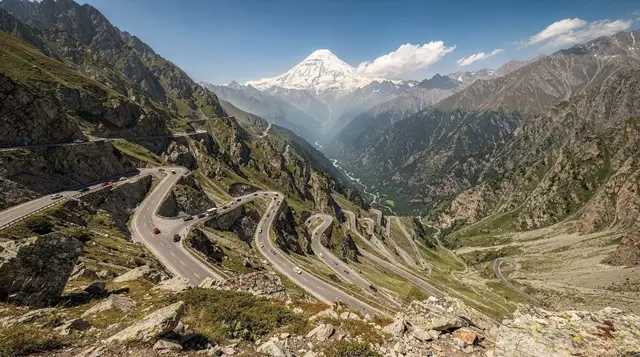
Photo: our own image of the location, not the operator’s product photo.