Tbilisi or Batumi: which deserves more of your time?
Should I spend more time in Tbilisi or Batumi?
Tbilisi, for most itineraries. It has the old town, the sulphur baths, the museums, the wine bars and the day-trip access to Kazbegi and Kakheti that make up the bulk of what draws people to Georgia. Batumi earns two or three days as a seaside detour, not as a base — its Black Sea boulevard and casino strip are a different, lighter kind of trip.
Two Georgian cities, two different trips
“Tbilisi or Batumi” is a slightly misleading question, because they rarely compete for the same days of a trip. Tbilisi is the country’s capital, its transport hub and, for most travellers, the place where the bulk of a Georgian itinerary actually happens — the old town, the sulphur baths of Abanotubani, the wine bars, the museums, and the base from which Kazbegi and Kakheti are reached as day trips.
Batumi is a Black Sea resort city 350 km to the west, closer in spirit to a seaside break than to the rest of the Georgian itinerary around it. The honest question is not which city to pick, but how many of a limited number of days to give to each — and for a lot of visitors, the answer is that Batumi does not deserve as many as they assume.
What each city actually gives you
Tbilisi’s draw is density and depth. Within a compact old town you get Narikala Fortress and its cable car, the sulphur bath houses, the winding Sololaki stairwells, Rustaveli Avenue’s museums and theatres, and a restaurant and wine bar scene that has grown fast enough over the last decade to have its own identifiable style — natural, orange and amber wines poured in rooms that would not look out of place in Berlin or Lisbon. It is also the only realistic base for day trips to the Georgian Military Highway, Mtskheta and the Kakheti wine region, none of which are reachable in a day from Batumi.
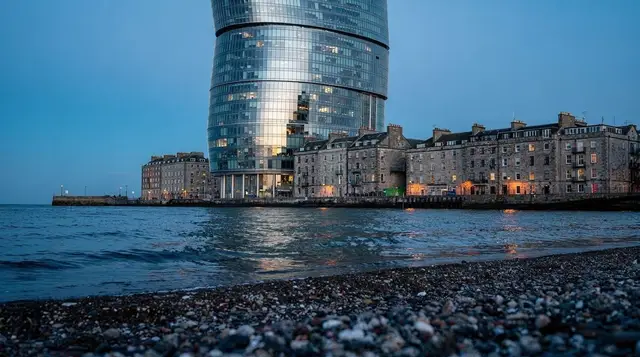
Batumi’s draw is narrower and more specific: a two-kilometre pebble boulevard, a skyline of glass towers and casinos built during a construction boom in the 2010s, the boat-shaped Adjarian khachapuri, and a genuinely warm Black Sea in July and August. It reads less like a historic Georgian city and more like a resort economy layered on top of one — worth seeing for the contrast, but not a substitute for the old town experience Tbilisi offers.
Side by side
| Tbilisi | Batumi | |
|---|---|---|
| Character | Historic capital, hills and courtyards | Black Sea resort, high-rise skyline |
| Days to allocate | 3–5, as your base | 2–3, as a detour |
| Best for | Old town, wine, baths, day trips | Beach, boulevard, casinos, nightlife by the sea |
| Food | Deepest and widest in the country | Adjarian khachapuri, seafood, fewer options overall |
| Beaches | None | Pebble, not sand; warm June–September |
| Getting there | Main international airport | 1-hour flight or 5–6 hour train/road from Tbilisi |
| Day-trip access | Kazbegi, Kakheti, Mtskheta all reachable | Batumi’s own hinterland (Adjara mountains, Turkish border) |
| Nightlife | Widest range: techno, wine bars, rooftop bars | Casinos, beach clubs, more seasonal |
Walkability and how the two cities actually feel on foot
Tbilisi’s old town, Sololaki and the lower stretch of Rustaveli Avenue form a compact, walkable core where most of a first-time visit’s highlights sit within twenty minutes of each other on foot, broken up by genuine hills — the climb up to Narikala is steep enough that the cable car exists for a reason, not as a novelty. Newer districts like Vake and Saburtalo spread further out and lean on the metro or a Bolt ride, but the tourist core rewards walking more than almost anywhere else in the Caucasus.
Batumi is flatter and more spread out along its seafront: the boulevard itself is roughly two kilometres end to end, comfortable on foot or by rented bike, but the casino district, the port area and Batumi’s own old town sit at greater distances from each other than Tbilisi’s equivalent sights do, which makes the city feel more like a series of separate zones stitched together by taxi than a single continuous centre.
Tbilisi as a base, not a stop
The case for putting most of your days in Tbilisi is less about the city being “better” than Batumi in the abstract and more about logistics. Every classic Georgian day trip — Kazbegi and the Georgian Military Highway, the monasteries of Mtskheta, the wine villages of Kakheti — starts from Tbilisi and returns to it the same evening. If your itinerary includes any of these, and most first-time trips to Georgia do, Tbilisi effectively has to be your base regardless of how you feel about Batumi.
Old Tbilisi Highlights Walking Tour with Wine 10 Tastings is a reasonable first afternoon if you want an oriented walk through the old town before exploring on your own, and it gets you a sense of the layout before you commit longer stretches of time to museums, baths or specific neighbourhoods. For a fuller first stop, Tbilisi in one day and Tbilisi in three days both lay out realistic plans depending on how long you have.
Three to five days in Tbilisi is enough to cover the old town properly, take at least one sulphur bath (private rooms run 60–150 ₾ per hour depending on the bathhouse — see Sulphur baths guide), fit in a wine bar crawl, and still leave room for one or two of the classic day trips. Fewer than three days and something gets rushed; more than five and most visitors are better off moving that time to Kakheti, Svaneti or Batumi itself.
What Batumi is actually for
Batumi is not a bad city — it is a specific kind of trip that happens to sit inside Georgia’s borders. The boulevard is genuinely pleasant for an evening stroll, the alphabet tower and the moving Ali and Nino statue are worth ten minutes each, and the casino district gives Batumi a different energy after dark than anywhere else in the country.
Best of Batumi Guided City Tour Tasting of Georgian Wine covers the highlights efficiently if you only have a day or two and want the context without researching it yourself, and Batumi: City Highlights Batumi Boulevard Walking Tour is a lighter, boulevard-focused option for an evening.
Where Batumi does not compete with Tbilisi is depth: there is no old town in the historic sense, no equivalent density of museums or churches, and the food scene, while good for Adjarian specialities, does not match Tbilisi’s range. See Batumi in two days for a realistic plan that does not try to stretch the city further than it goes, and Batumi’s beaches for what the pebble coast actually looks and feels like before you build a beach-holiday expectation around it.
The beach question
If a beach holiday is genuinely part of the plan, it is worth being clear-eyed about what the Black Sea coast offers. The sand is pebble, not the fine white sand of a Mediterranean resort, and the water, while pleasantly warm from June through September, does not have the turquoise clarity that sells postcards elsewhere. Ureki, an hour south of Batumi, has a genuine curiosity — magnetic black sand — but is a quieter, more modest resort town than Batumi itself. Travellers arriving with Aegean or Adriatic expectations tend to be disappointed; travellers arriving for a change of pace after a week of mountains and monasteries tend to enjoy it on its own terms.
Getting between them
Four options connect the two cities: a roughly one-hour domestic flight, a five-to-six-hour direct train (including a comfortable overnight sleeper option), a marshrutka along the same route for 25–35 ₾, or a private transfer, which costs more but removes the uncertainty of a shared minibus schedule. Tbilisi: to Batumi Train Ticket is the way most independent travellers actually make the trip — the daytime train runs along the Rioni valley and gives you scenery the flight skips entirely. The full comparison of all four methods, with current running times, is in Tbilisi to Batumi: plane, train or road.
Flying saves the better part of a day if your schedule is tight, which matters if Batumi is one stop among several rather than the main event. The train or the road is worth choosing if you have a spare day and want the journey itself to count for something — the Rioni valley section in particular is worth watching from the window rather than sleeping through.
Who should give Batumi more time than Tbilisi
There are legitimate reasons to flip the usual ratio. Travellers on a beach-first trip who see the rest of Georgia as a bonus rather than the point, families who want a few relaxed days by the sea after a demanding stretch of driving, and anyone specifically drawn to Adjara’s mountains — the Machakhela gorge, Mtirala National Park, the waterfalls inland from the coast — will get more out of basing themselves in Batumi for a stretch. In that case, Tbilisi becomes the arrival and departure point rather than the centre of gravity, and that is a reasonable way to structure a trip if it matches what you actually want from it.
Cost: which city is more expensive
Batumi is not dramatically pricier than Tbilisi, but the mix of costs is different. A mid-range hotel in Batumi during July and August runs noticeably above the 150–300 ₾ a comparable room costs in Tbilisi outside peak season, because the city’s hotel stock is built around a short, intense summer season and prices accordingly. Restaurant prices along the boulevard itself carry a tourist-strip premium that is easy to avoid by walking two or three streets back, where a full Adjarian khachapuri and a plate of mtsvadi still costs 25–35 ₾, close to Tbilisi taverna prices.
Casinos are the one genuinely Batumi-specific cost that does not exist in Tbilisi at all, and they are designed to extract far more than a coffee or a khachapuri ever will — worth knowing before you sit down, not after. Transport between the cities adds 20–120 ₾ depending on whether you take a marshrutka, the train or a flight, which is a modest line item against the total cost of even a budget week in Georgia (see What a week in Georgia actually costs for the fuller picture).
Weather and the right time to visit each
Tbilisi and Batumi run on genuinely different climates, which should factor into when you visit each. Tbilisi has a continental climate — hot, dry summers, cold winters, and the best weather for walking the old town falling in spring and autumn, when temperatures sit in the high teens to mid-twenties and the midday heat does not make hillside stairs and fortress climbs unpleasant. Batumi, on the coast, is subtropical and considerably wetter — it has some of the highest rainfall totals in Georgia, and autumn and winter bring a grey, damp stretch that does the boulevard no favours.
The Black Sea itself is only comfortably swimmable from roughly June to September, which narrows the sensible window for a beach-focused Batumi visit far more than it narrows the window for Tbilisi sightseeing. A trip built around late spring or early autumn suits Tbilisi and the mountains well but arrives in Batumi during its quieter, cooler months; a July or August trip suits Batumi’s beach season but hits Tbilisi at its hottest and driest, when shade and air conditioning start to matter more than they do in May.
Combining the two without shortchanging either
The itinerary mistake that comes up most often is trying to fit Batumi in as an afternoon add-on to a Tbilisi-centred week, which almost never works once transfer time is accounted for. A one-hour flight sounds trivial until you add airport transfers on both ends, and a same-day return leaves closer to three or four usable hours in the city than a full day.
The trips that work best give Batumi its own one- or two-night block, positioned either right after Kutaisi (if the itinerary runs west along the Imereti canyons and Gelati Monastery) or as the final stop before flying home, so that the change of pace from mountains and monasteries to a seafront evening actually registers as a change of pace rather than another rushed transfer. Ten days in Georgia, east to west and A ten-day Georgian road trip both structure this kind of route explicitly, ending on the coast rather than doubling back through Tbilisi a second time.
A realistic split for a first trip
For a first visit to Georgia of seven to ten days, the ratio that tends to work is roughly four to five nights in and around Tbilisi (including day trips to Kazbegi and Kakheti), one to two nights in Kutaisi or Svaneti if the itinerary stretches that far west, and two to three nights in Batumi at the tail end of the trip, treated as a deliberate change of pace rather than an equal partner to the capital. One week or two in Georgia walks through how this scales if your trip is shorter or longer than that, and Georgia trip cost gives a sense of what the extra nights in Batumi add to a budget.
The honest bottom line
If forced to choose only one, choose Tbilisi — it has more to see, better food, and it unlocks day trips that a Batumi base cannot reach. But most itineraries do not need to choose: the sensible split is Tbilisi as the base for the bulk of the trip, with two or three nights in Batumi added at the end as a genuinely different kind of stop, not a second capital. Anyone who tries to give the two cities equal weight usually ends up short-changing one of Kazbegi, Kakheti or the old town — all three better reasons to be in Georgia than a casino skyline on the Black Sea.
Frequently asked questions about Tbilisi or Batumi
Is Batumi worth visiting if I only have one week in Georgia?
It is worth two nights if you can fit them, ideally at the end of the trip as a change of pace, but not at the expense of Kazbegi or Kakheti, which are more distinctly Georgian experiences. See One week or two in Georgia for how the maths works with a seven-day trip.
How do I get from Tbilisi to Batumi?
A one-hour flight, a five-to-six-hour train or an overnight sleeper, or a five-to-six-hour marshrutka or private transfer along the highway. The full breakdown, including prices, is in Tbilisi to Batumi: plane, train or road.
Is Batumi like a European beach resort?
In parts, yes — the boulevard, the casinos and the tower-block skyline read closer to a Black Sea Las Vegas than to a Mediterranean resort town. The beaches themselves are pebble, not sand, and the water is warm but unremarkable by Mediterranean standards.
Which city has better food, Tbilisi or Batumi?
Tbilisi, by range and depth — natural wine bars, khinkali houses, fine dining and everything between. Batumi’s Adjarian khachapuri, the boat-shaped version with an egg and butter in the centre, is a specific reason to eat there, but the overall restaurant scene is thinner.
Can I do Batumi as a day trip from Tbilisi?
Not sensibly. Even by plane, a same-day return leaves only a few hours in the city once you account for transfers. Batumi needs at least one overnight to be worth the journey.
Is Tbilisi or Batumi better for nightlife?
Tbilisi, decisively, for anyone interested in the techno scene, wine bars or a broader range of venues. Batumi’s nightlife leans toward casinos and beach clubs, which is a narrower and more seasonal offer.
Black Sea coast trips on GetYourGuide
Verified deep-linked GetYourGuide tours. Book through these links and we earn a small commission at no cost to you.
Photo: our own image of the location, not the operator’s product photo.