Tbilisi to Batumi: plane, train or road
What is the best way to get from Tbilisi to Batumi?
The overnight train is the best value for comfort, covering the roughly six-hour journey while you sleep for around 20-45 GEL depending on class. Flying takes under an hour but costs more and depends on limited daily flights; a shared marshrutka or private transfer takes 5-6 hours by road and offers the most flexibility on departure time.
Four ways to cover the same 370 km
Tbilisi and Batumi sit roughly 370 km apart, and every reasonable way of covering that distance — plane, train, shared marshrutka, private transfer or a self-driven rental — is genuinely viable, which is precisely what makes the choice worth thinking through rather than defaulting to whichever option comes up first in a search. Unlike Georgia’s mountain routes, where road condition or a closed pass can rule out an option outright, every choice here is realistically open year-round, which shifts the decision from what is possible to what actually suits your budget and schedule best. This guide compares all four on time, cost and comfort, plus what changes once you factor in wanting to break the journey in Kutaisi along the way.
The overnight train: the best value for comfort
Georgian Railway runs both day and night services between Tbilisi and Batumi, covering the roughly 5.5-6 hour journey with sleeper compartments in several classes on the overnight train, priced from around 20 GEL for a shared compartment up to 45 GEL or so for more private options. The night train departs Tbilisi in the late evening and arrives in Batumi in the early morning, which for most visitors is the single best-value way to cover this distance: you lose no waking daylight hours to travel, arrive with a full day ahead of you in Batumi, and pay a fraction of what a flight costs for broadly the same total time commitment once you count getting to and from an airport.
Tbilisi: to Batumi Train Ticket covers the standard Tbilisi-Batumi train ticket, bookable for either the day or overnight service depending on how you would rather spend the journey.
Flying: fastest in the air, slower door to door
Domestic flights cover the distance in 40-90 minutes depending on the specific route and aircraft, the fastest option by a wide margin once airborne. The catch is everything around the flight itself: limited daily departures mean this is not a turn-up-and-fly route, fares of 50-150 GEL run well above the train or marshrutka for a shorter but less flexible journey, and the time saved in the air is partly eaten by the standard airport arrival and check-in buffer on both ends. For a business trip or anyone genuinely pressed for time, flying still wins; for most leisure travellers, the total door- to-door time saving over the night train is smaller than the price difference suggests.
Marshrutka: cheapest, most frequent
Shared marshrutkas depart from Didube station through the day, generally every hour or so during peak periods, covering the route in 5-6 hours for 25-35 GEL a seat. This is the option with the most departure flexibility — no need to book days ahead, simply turn up at Didube and catch the next van — at the cost of a less comfortable ride than the train and a schedule dependent on traffic along the Tbilisi-Gori-Kutaisi-Batumi highway, which can add time on a busy summer weekend.
Private transfer: door to door, on your schedule
A private car or minivan for the same route costs more than a shared marshrutka but removes the wait-for-a-full-van uncertainty and gets you directly between specific addresses rather than bus stations, useful for anyone travelling with luggage, young children, or simply preferring not to share a five-hour journey with strangers.
From Tbilisiprivate Transfer Service to Batumi covers a direct private transfer between the two cities, door to door, on a schedule you set rather than one fixed by a shared van filling up.
Tbilisi: Private Transfer to Batumi with Guided Tour extends the same private transfer into a guided outing, worth considering if you would rather have commentary and flexibility for photo stops built into the drive rather than a straightforward point-to-point transfer.
Self-driving: flexible, but a long day behind the wheel
The highway route is well-paved and mostly divided motorway for much of its length, covering the distance in 5-6 hours depending on how many stops you make. Self-driving gives full control over timing and stops, particularly appealing if you want to break the journey in Kutaisi partway through rather than travelling straight through — see Renting a car in Georgia for rental specifics, and Driving in Georgia: rules, roads and habits for what the highway driving itself involves, including the Rikoti Pass section near Kutaisi where the road climbs briefly through hills before dropping back toward the coast.
Gudauri: Transfer Service Tbilisi Kutaisi Batumi is worth knowing about even for self-drivers as a fallback, covering the same Tbilisi-Kutaisi-Batumi corridor for anyone whose plans change partway through a trip and need a transfer rather than continuing to self-drive.
Breaking the journey in Kutaisi
Because the Tbilisi-Batumi highway runs directly through Kutaisi, splitting the trip into two shorter legs — Tbilisi to Kutaisi, then Kutaisi to Batumi a day or more later — is a straightforward way to see Kutaisi’s own sights without a dedicated separate trip there. This works naturally with the marshrutka, private transfer or self-drive options, all of which pass through Kutaisi anyway; it is less naturally compatible with the direct train or flight, which bypass Kutaisi entirely. See Day trips from Kutaisi if a stopover of a day or two appeals.
Cost and time side by side
For a solo traveller prioritising value, the overnight train wins clearly: a low fare, no lost daylight hours, and a level of comfort well above a daytime bus seat, all for a fraction of what a short-notice flight would cost for a similar total time commitment once airport buffers are counted. For a group of three or four prioritising door-to-door convenience, a private transfer often costs little more per person than the shared marshrutka once split, while saving the uncertainty of a shared van’s schedule.
For anyone with more money than time, flying is the only option that meaningfully compresses the total journey, though even then the airport buffers on both ends narrow the gap more than the raw flight time suggests, particularly once check-in and the transfer to and from each airport are added on top of the flight itself. The marshrutka remains the cheapest option outright and the one with the least advance planning required.
What changes in winter
Unlike Georgia’s high mountain routes, the Tbilisi-Batumi highway stays at relatively low elevation throughout and does not face the seasonal closures that affect the Georgian Military Highway or the Abano and Goderdzi passes. Fog and rain around the Rikoti Pass near Kutaisi can slow road travel somewhat in winter, and the coastal stretch into Batumi sees more rain generally between November and March, but none of this meaningfully disrupts the train or flight schedules, both of which run close to their normal timetables year-round. Winter is, if anything, a period when the train’s sleeper comfort becomes more appealing relative to a cold, dark road journey.
Which one should you actually book
If comfort per lari matters most, book the overnight train. If you are travelling with a group and want door-to-door convenience without the planning of self-driving, book a private transfer. If your schedule is tight and dates are flexible enough to catch one of the limited daily flights, fly. If you are budget-conscious, flexible on timing, and happy with a standard bus seat, the marshrutka from Didube remains the cheapest way to make the trip. See Flying into Tbilisi or Kutaisi? if your route into Georgia in the first place might change this calculation, and Tbilisi or Batumi? if you are still deciding how much time to split between the two cities at all.
What the train experience actually involves
Georgian Railway’s Tbilisi-Batumi service runs from Tbilisi Central Station, easily reached by metro, with the overnight train typically departing in the evening and arriving in Batumi as the city wakes up. Sleeper carriages come in a few classes: shared four-berth compartments at the cheaper end, and smaller two-berth or single compartments for a premium, with bedding provided as standard on the overnight service.
The rolling stock varies by service — some carriages are newer and more comfortable than others — and while it will not match a Western European sleeper train’s polish, it is a reliable, well-used route that most Georgians themselves travel on regularly rather than a tourist novelty. Buying tickets a few days ahead, either online or at the station, is sensible in peak summer when the route runs busier with both tourists and Georgians heading for their own coastal holidays.
Booking flights: what to expect
Georgia’s domestic flight network between Tbilisi and Batumi is modest, with a handful of daily departures rather than an hourly shuttle, operated by Georgian Airways and occasionally supplemented by seasonal services. Booking a few weeks ahead generally secures the better fares within the 50-150 GEL range quoted above; last-minute bookings, particularly in peak summer, can run considerably higher. Batumi’s own airport, a short distance from the city centre, makes the arrival end of a flight noticeably more convenient than a bus or train station further from the seafront, worth factoring in if your accommodation sits close to the airport side of town rather than the older centre nearer the boulevard.
The marshrutka experience at Didube
Didube station, Tbilisi’s main hub for marshrutkas heading west and north, is a large, somewhat chaotic bus yard where vehicles for Batumi, Kutaisi, Kazbegi and much of the rest of the country depart from clearly marked but not always obviously signed bays — arriving with some time to spare and asking a driver or the ticket booth directly to confirm the right vehicle is worth doing rather than assuming signage alone will guide you there, since the yard handles dozens of destinations simultaneously and mistakes are easy to make in a hurry.
Marshrutkas to Batumi generally depart once full rather than on a strict timetable, though on this well-travelled route the wait is rarely long, particularly in the morning and early afternoon. Seats are standard bus seating rather than the more spacious minivan configuration used on some shorter routes, and the 5-6 hour journey includes at least one roadside stop for a toilet break and snacks, usually somewhere around the Kutaisi area roughly halfway through.
Comparing this route to other Georgian long-distance journeys
At 370 km, Tbilisi to Batumi is one of the longer point-to-point journeys within Georgia, comparable in distance to reaching Svaneti but covered entirely on paved, well-maintained road rather than the mountain switchbacks and unpaved sections that make routes like Getting to Svaneti considerably more demanding for the same rough travel time. This is part of why Tbilisi-Batumi supports a wider range of comfortable options — a proper sleeper train, frequent flights, a well-paved motorway — than Georgia’s mountain routes generally do, and why the choice here comes down more to preference and budget than to which option is physically possible.
Arriving in Batumi: which station or terminal matters
The train arrives at Batumi’s central railway station, walkable to much of the seafront and old town within 15-20 minutes or a short taxi ride. The bus and marshrutka terminal sits a little further out, generally requiring a short taxi into the centre. Batumi’s airport, as noted above, is the closest of the three arrival points to the city centre itself. None of the three differences are large enough to be decisive on their own, but worth factoring in in combination with your accommodation’s location when choosing between options that otherwise look similarly matched on price and time.
Booking tickets: online, app or in person
Georgian Railway tickets can be bought online through the railway’s own booking site, occasionally with English-language support that is more limited than a fully polished international booking platform, or in person at Tbilisi Central Station’s ticket counters, generally the more straightforward option for anyone uncomfortable navigating the online system.
Domestic flights book through the airline’s own site or a general flight aggregator, both handling card payment without issue. Marshrutka seats are rarely booked ahead at all — the standard approach is simply arriving at Didube and buying a seat on the next departing van — though private transfers and the guided options covered above are booked online in advance like any other tour product.
Luggage and what to bring for the journey
The train allows generous luggage per passenger, enough for a full suitcase plus hand luggage without extra charge, stored either under the berth or on a rack depending on the carriage. Flights carry the standard checked and cabin baggage limits typical of any domestic route, worth checking against the specific airline before travelling if you are carrying anything bulky.
Marshrutkas and private transfers generally handle luggage without issue in a boot or rear compartment, though a shared van can fill up on a busy day, so travelling light is a minor advantage on that option specifically. For any daytime option, food and water for the journey are worth carrying, since stops are infrequent enough that relying entirely on them for a meal is not ideal.
Timing the trip around Batumi’s own weather
Batumi’s Black Sea climate is considerably wetter than Tbilisi’s through autumn and winter, and pairing your choice of transport with the season is worth a moment’s thought: the overnight train arriving early morning gives a full day to settle in and check conditions before committing to outdoor plans, while a late-arriving flight or transfer leaves less daylight to adjust if the coast turns out wetter than expected. See When the Black Sea is warm enough to swim if beach weather is part of the reason for the trip, since Batumi’s swimming season is considerably shorter than its reputation as a summer destination might suggest.
Continuing on from Batumi
For travellers using Batumi as a staging point for onward travel rather than a final destination, the same city connects on to the Turkish border at Sarpi a short distance south, and to Kutaisi and its own airport back along the route just travelled. Building this onward leg into your choice of transport from Tbilisi is worth doing at the planning stage — arriving by private transfer or self-drive keeps a rental car available for a further coastal excursion, while arriving by train or flight means arranging fresh transport for whatever comes next.
Frequently asked questions about getting from Tbilisi to Batumi
See the FAQ block above for train timings, flight costs, marshrutka fares and what winter changes about the route — the short version is that the overnight train offers the best combination of price and comfort for most travellers, with a private transfer the natural upgrade for groups and flying the option worth its premium only when time genuinely outweighs cost. Whichever way you choose, this is one of the more comfortable long-distance journeys Georgia has to offer, entirely paved and well served, a contrast to the more demanding mountain routes covered elsewhere on this site.
How long does the train from Tbilisi to Batumi take?
Around 5.5-6 hours, with day trains and an overnight sleeper both running. The night train departs Tbilisi late evening and arrives in Batumi early morning, letting you sleep through most of the journey rather than losing a full day to it.
How much does a flight from Tbilisi to Batumi cost?
Domestic flights run roughly 40-90 minutes depending on the route, with fares typically 50-150 GEL depending on how far ahead you book and the airline. Flight frequency is limited to a handful of departures a day, so this is not a turn-up-and-fly route.
Is it faster to drive or take the train from Tbilisi to Batumi?
Driving takes 5-6 hours on the highway, similar to the train’s total time, but without the ability to sleep through it. The train is generally judged more comfortable for the same time investment, particularly the overnight service.
How much does a marshrutka from Tbilisi to Batumi cost?
A shared marshrutka runs roughly 25-35 GEL per seat, departing from Didube station through the day, taking 5-6 hours depending on traffic and stops along the Tbilisi-Kutaisi-Batumi highway.
Does the Tbilisi-Batumi road pass through Kutaisi?
Yes, the main highway route runs Tbilisi-Gori-Kutaisi-Batumi, and many transfers and marshrutkas make it possible to break the journey in Kutaisi if you want to see it along the way rather than travelling straight through.
Is the overnight train to Batumi safe and comfortable?
Yes, it is a well-used, standard service with sleeper compartments in various classes, generally considered safe and reasonably comfortable by regional rail standards, though older rolling stock on some services is more basic than Western European sleeper trains.
What changes about this route in winter?
The train and flights are largely unaffected by winter weather. Road travel can slow through occasional fog or rain on the Rikoti Pass section near Kutaisi, though this route does not close the way Georgia’s high mountain passes do, since it stays at a much lower elevation throughout.
Black Sea coast trips on GetYourGuide
Verified deep-linked GetYourGuide tours. Book through these links and we earn a small commission at no cost to you.
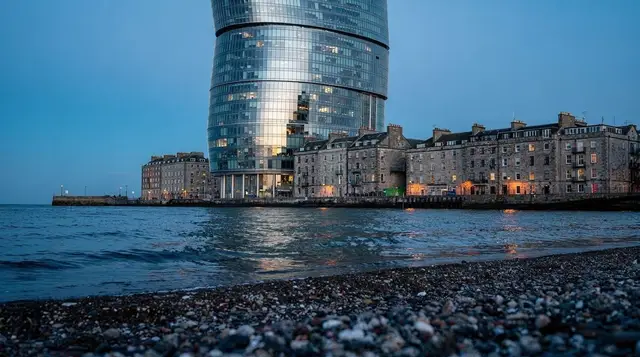
Photo: our own image of the location, not the operator’s product photo.