Tbilisi in three days
How should I plan three days in Tbilisi?
Day one covers the Old Town, Narikala Fortress and the sulphur baths. Day two covers Rustaveli Avenue, Sololaki and an evening of wine bars or nightlife. Day three is a day trip out of the city — Mtskheta, which takes half a day, or Kakheti wine country, which takes a full one.
Why three days works better than one or two
One day in Tbilisi covers the highlights at a rush; three days lets the city breathe and adds exactly one day trip out of it, which is the natural shape most first-time visitors settle into once they see how compact the centre actually is. This plan splits the three days by neighbourhood and pace rather than by a checklist of sights: a full day in the Old Town and around the fortress, a second day on Rustaveli and in Sololaki with an evening out, and a third day given entirely to a trip beyond the city.
Before you land: what to sort out first
A few things are worth arranging before day one rather than mid-trip. Most nationalities get up to 365 days visa-free entry to Georgia, but check your specific nationality against the visa and entry rules rather than assuming. A local SIM or eSIM makes navigating the day trips on day three considerably easier than relying on hotel wifi, and cash in lari is worth having on hand for the sulphur baths, markets and smaller restaurants that do not always take cards — see Lari, ATMs and paying by card.
If you are arriving jet-lagged, it is worth building a slower first morning into day one rather than pushing straight into a full Old Town walk on no sleep; the itinerary below holds together fine started at 11am instead of 9am, just with less daylight margin at the end.
Day one: Old Town, Narikala and the baths
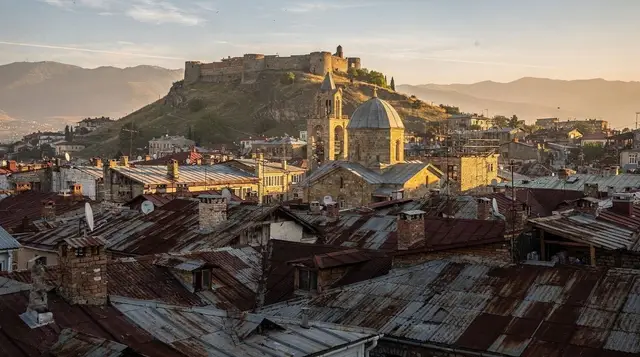
The first day follows the same ground as Tbilisi in one day: a realistic plan — start at Freedom Square, walk the Old Town core covered in A self-guided walking route through Tbilisi’s Old Town, ride the cable car up to Narikala Fortress for the panorama, then finish the afternoon at the sulphur baths in Abanotubani. With three days rather than one, there is no need to rush any of it — take the extra time at the fortress for photographs, or linger longer over the private bath room rather than watching the clock.
Old Tbilisi Highlights Walking Tour with Wine 10 Tastings is worth considering for this first day specifically, since it combines the Old Town walk with wine tastings along the way, a pleasant way to ease into the trip on day one before more independent days follow.
Day two: Rustaveli, Sololaki and an evening out
The second day moves to different ground entirely. Rustaveli Avenue in the morning covers the Parliament building, the Georgian National Museum and the Opera and Ballet Theatre — pick two of the three rather than trying to do all of them justice in one morning. In the afternoon, walk into Sololaki, where Art Nouveau apartment buildings and painted stairwells reward slow, deliberate wandering rather than a checklist approach.
Tbilisi: Sololaki Tour with Hidden Gems Funicular is useful here if you want the neighbourhood’s less obvious courtyards and doorways pointed out, since many of the best details in Sololaki are genuinely easy to walk past without a guide’s eye.
In the evening, Tbilisi’s wine bar scene has grown substantially in the last decade, and day two is a good time to use it — see Tbilisi wine bars worth a second glass and the newer natural wine bars for where to go, or A night out in Tbilisi if a livelier evening is the goal instead.
Day three: Mtskheta or Kakheti
The third day is where a car or a booked tour matters. Two realistic options cover most travellers’ priorities:
Mtskheta, Georgia’s ancient capital and a UNESCO World Heritage town, is 25 minutes from Tbilisi and fits comfortably into a half day, leaving the afternoon free to return to the city for anything missed on days one or two. See Mtskheta in half a day for the full plan, including Svetitskhoveli Cathedral and Jvari Monastery above the river confluence.
Kakheti wine country takes the full day — roughly two hours’ drive each way — and suits travellers for whom wine, not monasteries, is the priority. See A wine tour of Kakheti: how to plan it for how a day of wineries, a qvevri cellar visit and lunch in Sighnaghi or Telavi typically runs.
Tbilisi: Top 20 Highlights Guided Walking Tour with Tastings is a reasonable pick if you would rather spend day three back in the city at a more relaxed pace with wine tastings woven into a shorter guided walk, rather than committing to a full day trip.
Evening options for each night, ranked
Three evenings in a row invites some variety. Night one, after a physically demanding day of walking and the sulphur bath, a straightforward dinner near your accommodation without much ambition beyond good food is usually the right call — energy tends to run low by that point. Night two, with day two’s lighter pace, is the better night for a proper wine bar crawl or a livelier evening out, since you are not also nursing tired legs from a fortress climb.
Night three, back from a full day trip, again favours something low-key — a final dinner rather than a big night out, particularly if an early departure the next morning is on the cards. Matching the evening’s ambition to how the day has actually gone, rather than planning all three nights the same way in advance, tends to produce a better trip than a rigid schedule.
What about Kazbegi?
Kazbegi is the day trip most first-time visitors ask about, and the honest answer is that it does not fit comfortably into a three-day trip built around the city itself. The round trip runs close to six hours on the road alone, which leaves it competing directly with Mtskheta or Kakheti for the same single free day rather than adding to it. If Kazbegi’s mountain scenery is the priority over Old Town depth, consider restructuring this plan to two city days and one Kazbegi day instead — see Kazbegi as a day trip: is it too much? for an honest read on whether that trade-off is worth making.
Adjusting the plan for food, family or a slower pace
Travellers prioritising food over sightseeing can swap day two’s Sololaki afternoon for a cooking class or a longer, guided food walk instead — see Cooking classes in Tbilisi and a guided food walk for what each involves. Families travelling with children should expect this plan’s pace to loosen considerably, with more café breaks and less standing at viewpoints; see Tbilisi with children and rainy-day backup plans for backup options if energy or weather does not cooperate on any given afternoon.
For travellers who would rather slow the whole three days down further, it is entirely reasonable to spread this same itinerary over four days instead, adding a rest morning or extending Sololaki and the wine bar evening into its own full day rather than compressing both into one afternoon and evening. Nothing here is so tightly timed that a day of slack breaks it.
What a typical day costs on this plan
Rough daily costs, per person, on a mid-range budget: 15 to 25 GEL for breakfast and coffee, 25 to 40 GEL for two more meals, 5 to 15 GEL for local transport (metro, Bolt or the cable car), and then a variable amount depending on the day — a sulphur bath room split between two runs roughly 40 to 70 GEL per person on day one, while day three’s Kakheti day trip adds 60 to 150 GEL per person for a guided option, or considerably less for an independent marshrutka and self-arranged tastings. None of this includes accommodation, which varies enormously by neighbourhood and season — see What a week in Georgia actually costs for the fuller national picture this three-day city trip fits inside.
Where to stay for this plan
Basing yourself in or near the Old Town, or in Sololaki just above it, keeps both of the first two days within easy walking distance and puts you close to transport links for the third day’s trip out of the city. See Where to stay in Tbilisi, neighbourhood by neighbourhood for a full comparison of areas, including which ones suit a shorter walk back after a late dinner.
What to book ahead versus decide on the day
Not everything on this plan needs advance booking, and treating all of it the same way either wastes time reserving things that do not need it or risks missing out on the ones that do. A Kakheti wine day trip or a private day-three guide is worth booking a few days ahead, particularly in summer weekends when demand from both visitors and Tbilisi residents overlaps; see A wine tour of Kakheti: how to plan it for how far ahead that specific booking typically needs to happen.
A sulphur bath room, by contrast, can usually be arranged the same day outside peak summer evenings, though turning up with a rough backup bathhouse in mind avoids a wasted walk if your first choice is fully booked. The Old Town walking tour and Sololaki tour referenced in this plan are flexible enough to book a day or even a few hours ahead in most seasons. Mtskheta needs no advance booking at all if you are going independently by marshrutka, only if you are joining a specific guided departure.
Packing your day bag for three days of walking
This itinerary is walking-heavy across all three days, and a few small additions to a day bag make a real difference. Comfortable, already broken-in shoes matter more here than almost anything else on a packing list, given the Old Town’s cobblestones and the climb toward Narikala on day one alone. A reusable water bottle, refillable at cafés or the hotel, saves both money and plastic across three days of walking in warmer months.
Cash in lari is worth carrying for the sulphur baths, smaller restaurants and market stalls that do not reliably take cards, alongside a card for larger purchases. See Packing for Georgia, season by season for the fuller list adjusted to whichever month you are travelling in, since what belongs in a day bag shifts meaningfully between a July trip and a January one.
If energy runs low: what to cut first
Three consecutive days of sightseeing catches up with some travellers by day two or three, and it is worth deciding in advance what gives first rather than pushing through a tired afternoon out of obligation. The Opera and Ballet Theatre and the Georgian National Museum on day two are the easiest cuts, since Rustaveli Avenue’s exteriors are worth seeing regardless of whether you go inside either building.
On day three, a half-day Mtskheta trip trims more easily than a full Kakheti day if energy rather than interest is the limiting factor, since it can be compressed to Svetitskhoveli Cathedral alone without the fuller Jvari Monastery detour. What should not be cut, if only one thing survives a tired day, is unhurried time in the Old Town itself on day one — it is the part of this plan most visitors remember afterwards, more than any single paid attraction layered on top of it.
This plan versus a rushed two-day version
Compressing this itinerary into two days is possible but changes its shape more than it might seem to at first. A two-day version generally means combining day one’s Old Town and Narikala with part of day two’s Rustaveli walk, and then choosing either Mtskheta or a wine bar evening rather than getting both — the day trip, Sololaki and a proper evening out rarely all fit into a compressed second day without turning it into a rush.
For travellers genuinely limited to two days, dropping Sololaki in favour of keeping the day trip usually produces a more satisfying trip than trying to touch everything briefly, since Sololaki rewards unhurried wandering more than most items on this list and suffers more than most from being rushed. See One week or two in Georgia? for how this three-day city block fits into a longer trip if two days in Tbilisi specifically feels too tight either way.
The reverse question comes up almost as often: is four days better than three? For most first-time visitors, the honest answer is that a fourth day adds diminishing returns inside the city itself, since the core sights are genuinely covered by day three, but it is a reasonable add if you would rather slow the whole plan down than compress it, as suggested earlier in this guide, or if you are tempted to swap Mtskheta for Kakheti on day three rather than choosing between them. A three-day trip stays the more efficient shape for most travellers; a fourth day is worth adding for pace rather than for coverage.
Frequently asked questions about spending three days in Tbilisi
Is three days enough time in Tbilisi?
Three days is enough to see the city itself properly and add one day trip, which is the most realistic and satisfying way to structure a first visit. Longer stays add more day trips rather than more city time, since the city core is genuinely compact.
Should I do Mtskheta or Kakheti as my day trip from Tbilisi?
Mtskheta if you have half a day and want UNESCO monasteries close to the city; Kakheti if you have a full day and wine is a priority. Both are covered fully in their own guides.
Do I need a car for three days based in Tbilisi?
No. The city itself is fully walkable and served by metro and Bolt, and both Mtskheta and Kakheti day trips are easily booked as a guided tour or a shared marshrutka without renting a car yourself.
What should I do on my second day in Tbilisi if I have already done the Old Town?
Rustaveli Avenue in the morning, then Sololaki’s Art Nouveau streets in the afternoon, finishing with dinner and wine bars in the evening — a different pace and different neighbourhoods from day one’s Old Town walk.
Can I fit Kazbegi into a three-day Tbilisi trip?
Only if you are willing to give it the whole third day and accept a long round trip — about three hours each way. It is doable but leaves no time for Mtskheta or Kakheti on the same trip; most visitors save Kazbegi for a return visit or a longer itinerary.
How much does a three-day trip to Tbilisi cost?
Budgeting 100 to 180 GEL per person per day for food, local transport, one bath and museum entries is realistic on a mid-range budget, before accommodation and before a full-day guided tour, which typically adds 60 to 150 GEL per person for the day trip.
Where should I stay for a three-day trip focused on the Old Town and Rustaveli?
Somewhere in or near the Old Town or Sololaki puts both of the first two days within walking distance of everything on this plan.
Old Town walking tours on GetYourGuide
Verified deep-linked GetYourGuide tours. Book through these links and we earn a small commission at no cost to you.
Photo: our own image of the location, not the operator’s product photo.