Mountain safety in Georgia: rescue, weather and signal
The cloud that came down in twenty minutes
We had blue sky over Gergeti Trinity Church when we started up from Juta, and by the time we reached the ridge the whole valley below had disappeared under cloud that seemed to have formed out of nothing. It burned off an hour later, and nothing bad happened, but it was a clean demonstration of something every guidebook mentions in passing and every hiker underestimates in practice: the Caucasus makes its own weather, fast, and the forecast on your phone from the valley floor is not a reliable guide to what is happening a thousand metres higher up.
The mountain rescue service, and its real limits
Georgia’s mountain rescue operations sit under the Emergency Situations Management Service, reachable on the national emergency number 112, which has English-speaking operators. What matters practically is that rescue capacity is limited and concentrated around the more visited ranges — Kazbegi and, to a lesser extent, Svaneti — and a helicopter response depends on weather being clear enough to fly, which in the mountains is exactly the condition most likely to be absent when someone actually needs rescuing.
In more remote areas like Tusheti or the passes above Khevsureti, help can be many hours away even once contacted. None of this means the mountains are unusually dangerous by international standards, but it does mean the margin for error is real, and self-sufficiency matters more here than it might on a well-signed trail in the Alps.
Weather changes faster than the forecast
Caucasus weather is genuinely more volatile at altitude than most first-time visitors expect, and it is the single biggest factor behind the mountain rescue callouts that do happen — not falls, but people caught out by cloud, sudden cold, or a storm rolling in on what had been a clear morning. A reasonable rule that guides here actually follow: check conditions the morning of, not the night before, and be willing to turn back if cloud is building over a ridge you need to cross, since visibility can drop from clear to near zero within half an hour on an exposed route.
Mobile signal: where you have it, and where you don’t
Coverage from Georgia’s main networks reaches most valley towns — Stepantsminda (Kazbegi), Mestia, even Juta has patchy signal — but it thins out fast once you climb onto an actual trail or cross a ridge, and it disappears completely in stretches of Tusheti and parts of Svaneti beyond Mestia and Ushguli. An eSIM or local SIM bought in Tbilisi is worth having for the towns, but treat any signal above them as a bonus rather than something to plan around; see SIM cards, eSIM and mobile data for how coverage actually works across the country. Telling someone your planned route and return time before you set out still matters more than a phone signal that may or may not be there.
Guides versus going alone
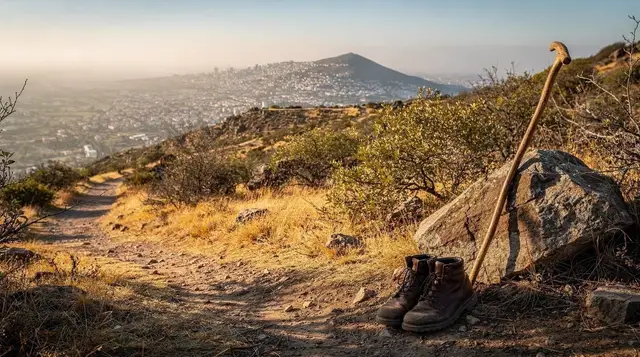
Day hikes near Tbilisi, well-marked stretches around Kazbegi, and the main Mestia–Ushguli route are realistic to do independently if you have reasonable fitness and read the route notes properly beforehand. Anything involving a river crossing, a pass above 2,800m, or a route with limited waymarking — Tusheti, Khevsureti, most of the terrain around Shatili — is where hiring a local guide stops being a comfort and starts being the sensible choice, since local knowledge of that week’s conditions is worth more than any guidebook description. Guides, gear and mountain rescue in Georgia covers what a guide actually adds and what equipment is worth bringing regardless.
Juta: Hiking Tour with Gudauri Ananuri Zhinvali is a reasonable way to try a genuinely mountainous day walk with a guide before deciding whether you want to attempt anything more remote independently.
The passes that close, and why that matters for planning
The Abano Pass into Tusheti and the Goderdzi Pass toward Adjara are both closed by snow from roughly October to June, which is not a minor seasonal inconvenience but a hard limit on when certain hikes are even reachable at all — turning up in April expecting to walk into Tusheti is planning against the mountain rather than with it. When the mountain passes open and close and When the Georgian hiking season actually opens both lay out the realistic windows region by region, and they are worth checking before you commit to a specific trek months in advance.
Climbing Kazbek is not a hike
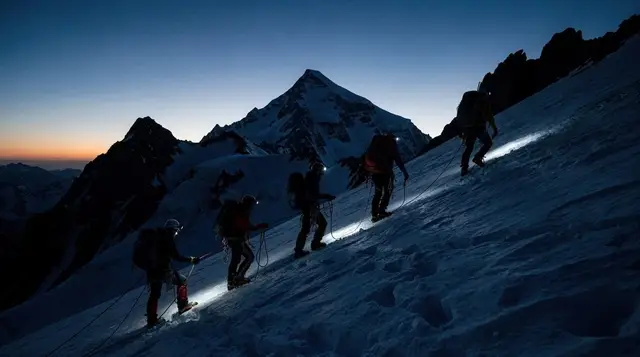
It is worth separating the walk to Gergeti Trinity Church, which is a genuinely accessible day hike for a reasonably fit visitor, from climbing Mount Kazbek itself, a 5,054m glaciated peak that requires mountaineering equipment, glacier travel skills or a roped guide, proper acclimatisation over several days, and — because the mountain sits close to the Russian border — awareness of the border zone permit rules that apply in that specific area.
People conflate the two more often than you would expect, assuming a summit attempt is a harder version of the church walk rather than an entirely different undertaking. Climbing Mount Kazbek: what it takes sets out the realistic version of what is involved, and Hiking to Gergeti Trinity from Stepantsminda covers the walk that most visitors are actually looking for.
From Stepantsminda Mount Kazbek Guided Climb with Meals is aimed at people who have done the research and want a properly guided attempt, not a casual add-on to a Kazbegi day trip.
Svaneti and Tusheti: different risks from Kazbegi
Svaneti’s main danger is remoteness rather than technical difficulty — the Mestia to Ushguli route is walkable by a reasonably fit hiker over several days, but weather can strand you between villages, and river levels after rain or snowmelt can make crossings that were easy the week before genuinely risky.
The Mestia to Ushguli trek, day by day and Eight days hiking Svaneti cover the route in enough detail to plan properly, and Mestia has the wider picture of the region’s main base. Tusheti, reached only by the Abano Pass in season, is more isolated again, with fewer guesthouses and longer stretches between them — Trekking in Tusheti is honest about how much more self-sufficiency that route demands compared with Svaneti.
Day hikes near Tbilisi are not entirely risk-free either
It is tempting to assume anything reachable in a morning from Tbilisi is inherently low-risk, but several of the popular short hikes — Juta toward the Chaukhi massif, the trails around Kazbegi — still gain real altitude quickly and are still subject to the same fast-changing mountain weather described above, just on a smaller scale and shorter timescale.
Day hikes you can do from Tbilisi and Juta, the Chaukhi massif and the Abudelauri lakes both flag where the terrain gets more serious than the “day trip from the capital” framing might suggest, and Shatili, Mutso and the Khevsureti road is at the more remote end of what still gets marketed as an accessible excursion.
River crossings deserve more caution than they get
Several routes in Svaneti and Tusheti involve fording a stream or small river rather than crossing a bridge, and the water level on these can change dramatically within a single day depending on snowmelt and recent rain upstream — a crossing that was ankle-deep in the morning can be knee-deep and genuinely forceful by afternoon. Locals and guides read this instinctively; visitors often do not, and a surprising number of minor mountain incidents in Georgia trace back to a river crossing attempted at the wrong time of day rather than anything more dramatic. If a crossing looks higher or faster than it did on someone else’s trip report, waiting an hour or turning back costs far less than it seems to in the moment.
Group size, and telling someone your actual plan
Solo hiking is common and generally fine on the well-trodden routes, but it removes your margin for error if something goes wrong on a quieter stretch — a twisted ankle with no signal and no one due to notice you are overdue is a genuinely different situation from the same injury with a hiking partner or a guesthouse owner who knows roughly where you are and when to worry.
Guesthouses along the Mestia–Ushguli route and in Kazbegi are generally used to hikers telling them the day’s plan; doing so costs nothing and gives someone a starting point if you do not turn up when expected. It is a habit worth carrying over from routes with no signal to ones where you have it, since a phone with a bar of signal and nobody expecting a check-in is not much safer than no phone at all.
Building a buffer day into the itinerary
The itineraries on this site, and most sensible trip plans, build in at least one buffer day around any serious mountain component — Kazbegi, Svaneti, a multi-day trek — precisely because weather can close a pass, delay a marshrutka, or turn a planned hiking day into a wait-it-out day. Arriving in Mestia with a same-day onward flight booked from Tbilisi is the kind of plan that works nine times out of ten and leaves you stranded on the tenth. Ten days in Georgia, east to west and the Svaneti-specific itinerary linked above both build in that slack deliberately rather than assuming best-case weather throughout.
Insurance and what it should actually cover
Standard travel insurance does not automatically cover mountain rescue, glacier travel, or trekking above a certain altitude — check the policy wording specifically for “mountaineering,” “off-piste,” or an altitude ceiling before assuming a Kazbek attempt or a multi-day Svaneti trek is covered the same way a city break would be. Health, pharmacies and insurance goes into this in more detail, and it is worth doing before you book rather than after something goes wrong.
Frequently asked questions about mountain safety in Georgia
Do I need a guide to hike in Georgia? Not for the well-marked, popular routes near Kazbegi or the main Mestia–Ushguli trail if you are reasonably experienced, but for Tusheti, Khevsureti, glacier routes, or anything with river crossings, a local guide is a genuinely sensible precaution rather than an optional extra.
What number do I call in a mountain emergency in Georgia? 112, the national emergency number, which has English-speaking operators and connects to the Emergency Situations Management Service that coordinates mountain rescue.
Will my phone work on Georgian hiking trails? Patchily at best. Valley towns like Stepantsminda and Mestia have decent coverage, but signal drops out quickly once you climb onto a ridge or trail, and large stretches of Tusheti and remote Svaneti have none at all.
When do the mountain passes in Georgia close? The Abano Pass to Tusheti and the Goderdzi Pass toward Adjara both typically close from around October to June due to snow, which effectively closes off the routes that depend on them for that period.
Is climbing Mount Kazbek dangerous for an inexperienced hiker? Yes, if attempted without proper preparation. It is a glaciated 5,054m peak requiring mountaineering skills or a roped, guided ascent, several days of acclimatisation, and awareness of border zone rules near the summit — it should not be treated as a harder version of the Gergeti Trinity Church walk.
Mountain hikes on GetYourGuide
Verified deep-linked GetYourGuide tours. Book through these links and we earn a small commission at no cost to you.
Photo: our own image of the location, not the operator’s product photo.