Guides, gear and mountain rescue in Georgia
Do you need a guide to hike in Georgia?
Not for the well-marked trails around Tbilisi, Borjomi or the shorter Kazbegi and Svaneti routes. For anything glaciated, like climbing Kazbek, or in restricted border zones like parts of Tusheti, Khevsureti and Lagodekhi, a local guide is either required by the permit process or strongly advisable given route-finding and rescue realities.
The practical side of hiking in Georgia
Georgia’s mountains are increasingly well set up for hikers, but the support system is thinner and more regionally concentrated than in the Alps or the better-known parts of the Himalaya, a gap that catches out visitors who assume the country’s rapid growth as a hiking destination means the infrastructure has caught up everywhere at the same pace. It has not, and the difference between a well-supported region and a genuinely remote one can be significant even within the same day’s drive.
Guides, technical gear rental, mountain huts and rescue services all exist, but knowing where to find each of them, and where the gaps are, matters more here than in places where a rescue helicopter is a given and a gear shop is on every corner. This guide covers the practical layer that sits behind every other hiking guide on this site: who to hire, what to rent, what permits to arrange, and what happens if something goes wrong. None of it is complicated once laid out clearly, but almost none of it is obvious to a first-time visitor working entirely from route descriptions and photographs.
Driver, guide or both — they are not the same thing
One of the more common points of confusion for first-time visitors is the difference between a private driver and a mountain guide. A driver gets you to a trailhead, waits or returns at an agreed time, and generally has no responsibility for or expertise in the hike itself — perfectly adequate for well-marked, moderate routes like the short trails in Borjomi-Kharagauli National Park or the valley walks around Kazbegi.
A mountain guide, by contrast, walks the route with you, makes real-time decisions about route-finding, pacing and turning back, and for technical objectives carries and manages safety equipment. Many tours marketed simply as “guided” in fact provide a driver-guide who does both jobs reasonably well for moderate terrain but is not a substitute for a certified mountaineering guide on something like Climbing Mount Kazbek — worth clarifying directly with an operator before booking if the route in question is a technical one.
When you actually need a guide
For the well-marked, moderate trails — Tbilisi National Park and Birtvisi, the short loops in Borjomi-Kharagauli National Park, the lower-altitude parts of the Kazbegi and Svaneti valleys — a guide is a comfort, not a necessity, and plenty of experienced hikers manage these routes independently with a downloaded map and reasonable route-finding skills.
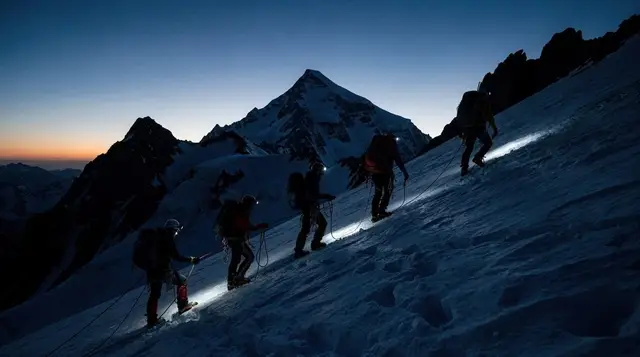
That changes for anything glaciated or in a restricted border zone. Climbing Mount Kazbek involves genuine crevasse risk that route-finding skill alone does not solve — a certified mountain guide who knows the current state of the glacier is the standard, sensible approach, including for climbers with mountaineering experience elsewhere who simply do not know this particular mountain. From Tbilisi: Kazbegi Mountain Tour with Professional Guide and From Stepantsminda Mount Kazbek Guided Climb with Meals both put you with a guide for exactly this kind of terrain.
Border-zone permits: Tusheti, Khevsureti and Lagodekhi
Several of Georgia’s more remote hiking regions sit close enough to the country’s borders with Russia that parts of them fall inside a restricted border zone, requiring a specific permit arranged in advance, separate from any national park entrance fee or registration. This applies to sections of Trekking in Tusheti, the road and trails around Shatili, Mutso and the Khevsureti road, and the upper reaches of the Black Rock Lake trek in Lagodekhi.
None of these permits are available on the spot at a trailhead — they need to be sorted with the relevant authorities before travelling, which in practice means building extra lead time into any trip to these regions rather than treating the permit as a formality to handle on arrival.
Water, food and self-sufficiency on the trail
Most of Georgia’s day-hiking trails pass no shops or reliable water sources beyond the trailhead itself, which makes carrying enough water and food a basic requirement rather than an afterthought, even for routes that look short on a map.
On multi-day treks — Trekking in Tusheti, the Mestia to Ushguli trek, or the Black Rock Lake route in Lagodekhi — food resupply depends entirely on the region: Tusheti and the Svaneti trek pass through villages with guesthouses that serve meals, while Lagodekhi’s route has no resupply at all once you leave town, meaning every meal has to be carried in from the start. Stream water is generally used untreated by rangers and locals on most routes, but treating or filtering it remains the safer default for visitors, particularly lower down where livestock may share the same water sources.
Renting gear in Tbilisi
Outside Tbilisi, gear rental options thin out considerably — Mestia and Stepantsminda both have some local rental availability tied to their guiding operations, but neither should be relied on as a substitute for arriving properly equipped, particularly for anything technical. A handful of outdoor shops in central Tbilisi rent hiking and camping equipment — boots, tents, sleeping bags rated for mountain nights, and for more serious objectives, technical mountaineering gear such as crampons, ice axes and harnesses.
Stock is more limited than in a major European mountain hub, and sizes for boots in particular can be hit or miss, so anyone with unusual sizing or brand preferences is safer bringing their own footwear from home. Booking specialised gear ahead in peak summer, when both local guiding operations and rental shops are busiest, avoids arriving to find nothing left in your size.
Mountain rescue: what actually happens
Georgia’s mountain rescue operates under the Ministry of Internal Affairs’ Emergency Management Service, reached through the national emergency number 112, which handles calls in both Georgian and English. What happens after that call depends heavily on where you are: rescue teams and, where weather allows, helicopters can reach the Kazbegi and Svaneti areas reasonably quickly by Georgian mountain standards, but the most remote sections of Tusheti, Khevsureti and the Lagodekhi border trek can mean a wait of many hours for help to arrive, simply because of distance and terrain.
This is not meant to discourage travel to those regions — it is meant to explain why route planning, telling someone your itinerary, and carrying appropriate gear matter more there than on an afternoon walk near Tbilisi.
Insurance: read the policy, not just the price
Standard travel insurance frequently excludes mountaineering, high-altitude trekking above a specified elevation, or any activity classed as adventure sport without a specific add-on — and a policy that looks fine for a city break can leave a Kazbek climb or a multi-day Svaneti trek completely uncovered for search, rescue or medical evacuation. See Health, pharmacies and insurance for what to check before buying a policy, and treat this as essential admin for any of the routes covered on this site above the level of a short valley walk, not an afterthought to sort out after booking flights.
Phone signal and staying findable
Above the main valley floors in Svaneti, Tusheti, Khevsureti and much of the Kazbegi backcountry, phone signal becomes patchy and then disappears altogether, often with little warning about exactly where coverage will end, since it depends more on the surrounding terrain blocking the signal than on distance from a town. Treat any multi-day or remote route as effectively offline: download maps in advance, carry a paper backup if the route is unfamiliar, and tell your guesthouse or a guide your planned route and expected return time before setting out, even for routes that feel casual, like a day hike out of Mestia or Stepantsminda.
Navigation: what to actually rely on
Trail marking quality varies enormously across Georgia, from the well-signed, numbered network in Borjomi-Kharagauli National Park to routes in Khevsureti and parts of Svaneti where markers are occasional at best and route-finding leans heavily on local knowledge or a downloaded GPS track.
Offline mapping apps that store routes for use without signal are worth setting up before leaving Tbilisi, since app stores and map downloads themselves may not work once you are in an area with poor connectivity. A paper map as backup is not old-fashioned advice here so much as sensible redundancy, given how completely a phone battery or a software glitch can remove your only navigation tool on a remote route with no signal to fall back on.
What a guide actually costs, roughly
Guide day rates in Georgia vary by region, season and the technical demands of the route, generally higher for glacier travel and mountaineering-certified guides than for a walking guide on moderate terrain, and higher again in peak season when demand is highest. Multi-day treks and technical climbs are usually sold as packages that bundle the guide’s fee with hut costs, equipment hire and sometimes meals, which makes the headline price harder to compare directly against a simple day rate but easier to budget for as a single trip cost.
Group size affects per-person cost considerably — a private guide split across a group of four costs each person meaningfully less than the same guide hired for a solo hiker, which is worth factoring in when comparing prices between operators offering different group sizes for what looks like a similar itinerary.
Weather forecasts you can actually trust
General weather apps built for city forecasts are notoriously unreliable for Georgia’s mountain regions, where local topography creates microclimates that a broad regional forecast simply cannot capture — a clear forecast for Kazbegi town says very little about conditions at 3,000m an hour’s climb away.
Mountain-specific forecast sources, where available, and above all the on-the-ground judgement of a local guide who has watched that day’s cloud build over the preceding hours, are worth more than any app. This gap between forecast and reality is one more reason guided trips on technical or high-altitude routes carry real value beyond simply route-finding — a guide reading the sky is often ahead of any forecast a hiker could check on their phone.
Solo hiking versus a group
Solo hiking is realistic and common on Georgia’s well-marked, moderate trails, but becomes a genuinely different risk calculation on remote or technical routes, where an injury or a missed turn with nobody else present can turn a manageable problem into a serious one, particularly in areas with the patchy phone signal described above. This does not mean solo hikers should avoid Georgia’s remoter regions outright, but it does mean being more conservative about route choice, turning back earlier when conditions look uncertain, and being especially rigorous about telling someone your plans, compared with hiking the same route as part of a group.
Putting it together for a longer trip
Anyone planning to combine several of Georgia’s bigger hiking regions in one trip — Svaneti: Trekking Tour 6 Day from Mestia to Ushguli alongside From Tbilisi: Tusheti 3 Day Jeep Tour with Accommodation, for instance — should treat guides, gear and permits as three separate pieces of planning rather than one, since each region’s requirements differ. When the Georgian hiking season actually opens is worth reading alongside this guide, since season and access requirements overlap constantly: a border permit sorted for June is no help if the pass itself is still closed by snow.
Checking a guide’s actual qualifications
Not every person offering to guide a hike or climb in Georgia holds a recognised mountaineering certification, and for anything involving glacier travel or technical terrain, this is worth checking directly rather than assuming. Reputable operators are generally open about their guides’ qualifications and happy to answer specific questions — how many times has this guide been up Kazbek this season, what certification do they hold, what is the plan if weather forces a turnaround.
A guide or operator who is vague or dismissive of these questions is a reasonable warning sign, particularly for a technical objective where the guide’s judgement is genuinely the main thing being paid for. For moderate, non-technical hikes this matters less, since the main risk is route-finding rather than technical hazard, but it is still worth asking basic questions about local experience before setting off with an unfamiliar operator.
A packing checklist by trip type
For a short day hike near Tbilisi or in Borjomi-Kharagauli’s lower trails: sturdy walking shoes, water, sun protection, a light waterproof layer and a fully charged phone with an offline map downloaded. For a moderate one-day mountain route, such as the valley trails around Kazbegi or the shorter Svaneti walks: add proper boots, layered clothing for temperature swings, trekking poles if you use them, and more water and food than the distance alone would suggest, given the effort of sustained ascent.
For a multi-day trek with hut or guesthouse stays, such as Tusheti or the Mestia to Ushguli route: add a sleeping bag liner or full sleeping bag depending on what the huts provide, a headlamp, basic first aid supplies, and cash in small denominations, since card payment is unreliable to non-existent once away from the larger towns. For a technical climb like Kazbek: everything above, plus the mountaineering- specific equipment covered earlier in this guide, almost always arranged through the guiding operation rather than sourced independently.
First aid and basic self-sufficiency
Carrying a basic first aid kit — blister plasters, painkillers, any personal medication, a bandage and antiseptic — is sensible on any route beyond a short city-adjacent walk, simply because professional help, if needed, can be a long way off. Blisters are the single most common minor injury reported on Georgia’s longer treks, almost always avoidable with properly broken-in boots and good socks, and worth treating immediately rather than pushing through, since an untreated blister early on a multi-day route can genuinely derail the rest of the trip.
Knowing the basics of treating minor sprains and understanding when a symptom warrants turning back rather than continuing matters more here than in places with denser mountain infrastructure, where a minor injury is rarely more than an inconvenient wait for help.
Frequently asked questions about guides, gear and rescue in Georgia
The questions below cover where to find a guide, what to rent, and how rescue and permits actually work.
Where can you hire hiking or camping gear in Tbilisi?
A small number of outdoor shops in Tbilisi rent boots, tents, sleeping bags and technical mountaineering equipment such as crampons and ice axes, mostly concentrated in the city centre and popular with both local climbers and visitors. Stock and availability vary by season, so booking ahead in peak summer is sensible for anything specialised.
How do you find a certified mountain guide in Georgia?
Guiding operations based in Stepantsminda, Mestia and other trekking hubs, along with tour operators offering the guided climbs and treks listed throughout this site, are the most straightforward route. For technical objectives like Kazbek, confirm the guide’s specific mountaineering certification rather than assuming any local guide covers glacier travel.
What do you do if someone gets hurt on a Georgian mountain trail?
Georgia’s mountain rescue falls under the Ministry of Internal Affairs’ Emergency Management Service, reachable via the national emergency number 112, which operates in Georgian and English. Response times vary hugely by how remote the location is, and in the highest, least accessible areas can take many hours.
Does travel insurance cover mountain rescue in Georgia?
Only if the policy specifically includes mountaineering, high-altitude trekking or helicopter evacuation, which standard travel insurance often excludes above a certain altitude or for unguided technical activity. Checking the policy wording before a trip involving Kazbek, Tusheti or Svaneti’s higher routes is essential, not optional.
Which parts of Georgia need a border-zone permit for hiking?
Sections of Tusheti, Khevsureti and Lagodekhi’s Black Rock Lake route run close to Georgia’s borders with Russia and require a border permit arranged in advance through the relevant authorities, separate from any national park entrance registration.
What phone signal can you expect on Georgian mountain trails?
Patchy to non-existent above the main valleys in Svaneti, Tusheti, Khevsureti and much of the Kazbegi backcountry. Treat remote trekking routes as offline by default, and tell someone your planned route and return time before setting out.
Mountain hikes on GetYourGuide
Verified deep-linked GetYourGuide tours. Book through these links and we earn a small commission at no cost to you.
Photo: our own image of the location, not the operator’s product photo.