Day hikes you can do from Tbilisi, without a mountain trip
What is the best day hike from Tbilisi without hiring a driver for the whole day?
Tbilisi National Park's marked trails above the Tbilisi Sea are the easiest to reach independently — a bus or taxi to the park entrance, then several hours of forest walking with no need to book anything. Birtvisi Canyon and the Kojori-Kiketi forest need a car or private transfer but reward the extra effort.
Not every hike near Tbilisi means an early start and a driver
Georgia’s headline hikes — Kazbek, Svaneti, Tusheti — all mean leaving Tbilisi for at least a night, often several hours of driving each way, and for anyone on a short city break or squeezing hiking around meetings, wine tastings or a packed sightseeing schedule, that is simply not on the table. That puts them out of reach for a short city break, or for any day when you would rather walk for a few hours than spend most of it in a car.
Tbilisi itself sits at the edge of a genuinely hilly landscape, and a handful of routes within an hour or two of the centre give a real taste of Georgian forest and ridge walking without the logistics of a mountain trip. None of these compete with Climbing Mount Kazbek or Trekking in Tusheti for scale, and none should be sold to you as if they did — this is a guide to pleasant, accessible walking, not an alternative to Georgia’s big treks.
Why Tbilisi has this much hiking on its doorstep
Tbilisi sits in a natural bowl where the Mtkvari river cuts through a range of low hills, and that geography is exactly why the city has so much walkable terrain within a short drive: ridgelines rise directly from the eastern and western edges of the built-up area, and the surrounding countryside climbs quickly toward the Trialeti range to the southwest and the drier, hillier ground toward Kakheti to the east. None of this is high-mountain terrain — elevations on every route below stay under 1,500m — but it means a genuine change of scenery, air and pace is rarely more than an hour from the city centre, which is unusual for a capital of Tbilisi’s size.
Tbilisi National Park: the easiest option
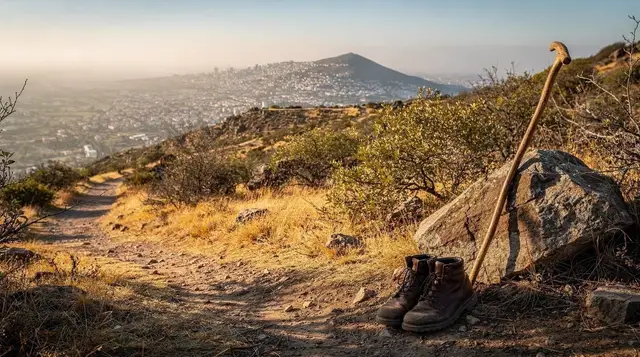
Tbilisi National Park wraps around the reservoir known as the Tbilisi Sea, on the city’s northern edge, and is the only hike on this list that is genuinely simple to reach without a car: a taxi or a combination of metro and marshrutka gets you to an entrance, where marked trails head up through oak and hornbeam forest onto low ridges with views back over the reservoir and, on a clear day, the city itself.
Trails range from an hour’s loop to half-day routes, all well within an unplanned day trip, and there is no fee or registration required the way there is for Georgia’s protected mountain reserves. It is not dramatic scenery by Georgian standards, but it is real forest, genuinely quiet on a weekday, and the most realistic option for anyone without their own transport or the appetite to book one.
Birtvisi Canyon: the best payoff for the effort
Birtvisi, about an hour southwest of Tbilisi near the town of Marneuli, is a narrow limestone canyon holding the ruins of a medieval fortress wedged into the rock — used historically as a refuge because its approach is so hard to reach, a fact you feel in your legs on the walk in.
The trail follows the canyon floor and then climbs steeply to the fortress remains, a round trip of two to three hours depending on how far you push into the canyon system beyond the ruins, and it is the closest thing to a proper canyon hike within a single day of Tbilisi. Rock climbers also use parts of Birtvisi, and it is one of the few spots this close to the capital where you might see roped climbers on the sandstone walls above the trail.
Birtvisi Canyon One Day Hiking Tour covers transport and a guided route through the canyon and up to the fortress, useful if you would rather not navigate the unmarked stretches yourself, since Birtvisi’s trail network is less consistently signed than Tbilisi National Park’s.
Public transport does not really reach Birtvisi in a practical way — this is a car or booked-transfer destination, not one to attempt by marshrutka. If self-driving, see Driving in Georgia for what unmarked rural roads are actually like.
Kojori and Kiketi: forest air above the city
Kojori sits in the hills southwest of Tbilisi, around 40 minutes by car, at an elevation that makes it noticeably cooler than the city in summer — historically why wealthier Tbilisi residents built summer houses there, a pattern that continues today with weekend dachas dotted through the pine forest. A ruined fortress crowns the ridge, more atmosphere than dramatic architecture, and pine forest trails link Kojori to the neighbouring village of Kiketi, giving a couple of hours of gentle, shaded walking with occasional views back toward the city on clearer days.
This is not a dramatic hike by any measure — think escape from the heat rather than mountain scenery — but it works well paired with lunch at one of the simple guesthouses along the road, and it needs no advance planning beyond arranging transport. The loop between the two villages is gentle enough for most fitness levels and children old enough to manage a couple of hours of walking, which makes it a reasonable family alternative to the steeper ground at Birtvisi.
Sabaduri Forest: pine woods and a quieter pace
East of Tbilisi toward Kakheti, Sabaduri Forest is a large stretch of pine plantation that has become a popular weekend spot for Tbilisi residents — walking, horse riding and, in recent years, a growing number of small guesthouses and restaurants along its edges. As a hike it is gentler and less varied than Birtvisi, mostly flat forest track rather than canyon or ridge, but it suits anyone who wants an easy, low-effort walk combined with a meal rather than a full hiking day.
Weekends see it noticeably busier with local families than any of the other routes on this list, which is worth knowing if a quiet walk is the priority — a weekday visit changes the character of the place considerably. It also sits on the route toward Kakheti, making it a reasonable stop if you are driving out that way regardless of wine plans — see A wine tour of Kakheti: how to plan it for how the two combine.
Mtatsminda ridge: a walk that starts in the city itself
The funicular up Mtatsminda is well known as a viewpoint and amusement park, but the ridge above it continues into a genuine walking trail along the top of the hill that forms Tbilisi’s western skyline, with views down over Sololaki and across to the Old Town on one side and toward the Trialeti range on the other. It is short — an hour or two there and back along the ridge — but unusual in that it starts within the city itself, no transport needed beyond the funicular fare, and unusual again in being one of the only walks on this list where sunset is arguably the best time to go, with the whole city lighting up below as the ridge trail catches the last of the light.
See Mtatsminda Park and the funicular for how to get up there and what the amusement park side involves if you are travelling with children who might not want a ridge walk on top of the funicular ride, and The best viewpoints in Tbilisi for how this spot compares with the city’s other lookout points.
What to pack for a half-day out of the city
None of these routes demand technical gear, but a few basics make a real difference. Proper walking shoes rather than city trainers matter most at Birtvisi, where the canyon floor can be uneven and occasionally wet, and at Tbilisi National Park after rain, when clay sections of trail turn slick.
Water is worth carrying rather than assuming you will find a shop along the way — none of these routes pass reliable places to buy a drink once you are past the trailhead, with the partial exception of Sabaduri, where guesthouses dot the forest edge. Sun protection matters more than it might seem for a “short” walk: Kojori and Sabaduri both have long open stretches between patches of shade, and Tbilisi’s summer sun is stronger at altitude than the city centre suggests.
Weather and timing through the year
Spring and autumn give the most comfortable conditions for all five routes, with clear light and temperatures that make a two-to-three-hour walk genuinely pleasant rather than a test of endurance. Summer heat in the city (and in the lower, more open parts of Kojori and Sabaduri) is real by midday, which is why an early morning start, finishing before the worst of the afternoon heat, works better than setting off after lunch — this matters more here than for Georgia’s higher mountain trails, where the elevation itself keeps temperatures down.
Winter does not close any of these trails outright, but snow and ice on the Mtatsminda ridge and the shaded sections of Tbilisi National Park can make footing genuinely tricky, and a dry, cold winter day is a much better bet than one following recent snowfall.
Guided or independent: what actually changes
Tbilisi National Park, the Mtatsminda ridge and Kojori-Kiketi are all straightforward to do independently, with marked paths and, for the first two, enough foot traffic that getting badly lost is unlikely. Birtvisi is the one route on this list where a guide earns its cost for most first-time visitors — the approach to the fortress ruins is not consistently signed, and the canyon’s side passages can be genuinely confusing without local knowledge, which is exactly the gap the guided options above are built to close.
Sabaduri sits somewhere in between: easy to wander independently, but a guide or driver saves the hassle of navigating the network of forest tracks to find the more interesting corners rather than just the roadside edge most visitors see.
Combining two shorter walks in one day
Because none of these hikes fill a full day on their own, pairing two is a realistic way to get more out of a single outing — Kojori and neighbouring Kiketi combine naturally into one loop, as noted above, and a morning at Tbilisi National Park followed by an afternoon at Mtatsminda works well for anyone staying centrally, since both are reachable without a long transfer between them. Trying to combine Birtvisi with anything else in the same day is less realistic, given the hour’s drive each way on top of the walk itself — better treated as its own half-day or full-day outing rather than one leg of a longer itinerary.
What these day hikes cannot substitute for
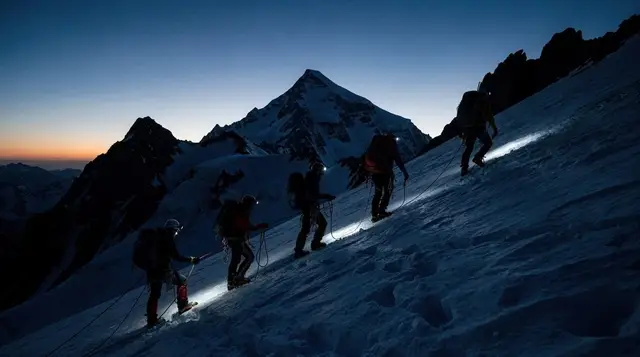
None of the routes above involve real elevation gain, glacier terrain or the kind of weather exposure that defines Georgia’s serious mountain hiking. They are a good way to test boots, get a first feel for Georgian trail marking, or simply spend a few hours outdoors without committing a full day or an overnight stay. If the appetite is there for something bigger afterwards, When the Georgian hiking season actually opens and Guides, gear and mountain rescue in Georgia cover what changes once you move up to Kazbegi, Svaneti or Tusheti — different season windows, different gear, and in some cases a guide that stops being optional.
Electric Mountain Biking Around Tbilisi is worth a mention for anyone who wants to cover more ground than walking allows in a single afternoon — the same hills around the city on an e-bike rather than on foot, which suits a shorter visit or a warmer day.
What these hikes cost
Independence is close to free: Tbilisi National Park charges no entrance fee, the Mtatsminda ridge walk costs only the funicular fare up (and you can walk back down for nothing), and Kojori-Kiketi needs nothing beyond transport out and back. Birtvisi and Sabaduri, if arranged through a driver or guided tour rather than self-driven, run to the cost of a half-day private transfer, generally more affordable split across a small group than for a solo traveller. None of these compare in price to a full-day guided excursion further out of the city, which is part of the appeal — a rewarding few hours outdoors without the cost or commitment of a longer trip.
Getting to each trailhead
Tbilisi National Park is reachable by public transport plus a short taxi; everywhere else on this list is realistically a car or private transfer trip. If you are without your own vehicle, Taxis, Bolt and Yandex Go covers ride-hailing costs for a half-day hire, which for Birtvisi or Sabaduri often works out cheaper and simpler than renting a car for a single outing. For anyone staying longer and planning several of these trips, Renting a car in Georgia explains what a short rental actually costs and what to check before signing.
Pairing a hike with the rest of a short Tbilisi stay
Half a day on one of these trails leaves the rest of the day free, and most pair naturally with a lower-key activity back in the city — see Free things to do in Tbilisi, Tbilisi in one day or The best viewpoints in Tbilisi for how to fill the rest of the time. If the hike turns out to be a highlight of the trip and there is time for something longer, The best day trips from Tbilisi, ranked honestly covers the wider set of options beyond hiking, including places where a day trip risks feeling rushed.
A note on safety, even on an easy walk
None of these routes carry the objective hazards of Georgia’s high-mountain trails — no glacier, no serious exposure, no realistic risk of getting badly lost for more than an inconvenient half-hour. That said, phone signal drops out in patches of Tbilisi National Park and more consistently at Birtvisi and in parts of Sabaduri, so treating even a short local walk with basic sense — telling someone roughly where you are going, carrying a little more water than feels necessary, checking the weather for afternoon thunderstorms in summer — costs nothing and avoids the small number of ways an easy walk can turn into an unpleasant afternoon.
Anyone planning to move on from these routes to something bigger should read Guides, gear and mountain rescue in Georgia for what changes once the stakes get higher.
Making the most of a limited window
Even a single free morning is enough to get real value from one of these routes, provided the choice matches the time available — Tbilisi National Park or the Mtatsminda ridge for two or three hours, a full half-day set aside for Birtvisi given the drive. Treating a short window realistically, rather than trying to force Birtvisi’s canyon walk into a rushed hour between other plans, is what separates a genuinely enjoyable outing from one that leaves you feeling like you neither properly hiked nor properly saw the city that day.
Frequently asked questions about day hikes from Tbilisi
The questions below cover access, difficulty and how these shorter walks compare with Georgia’s bigger mountain routes.
Can you hike near Tbilisi without a car?
Yes, to a point. Tbilisi National Park is reachable by public bus and taxi, and Mtatsminda’s ridge trail starts from the funicular, both walkable independently. Birtvisi Canyon and the Sabaduri forest are harder without a car or a booked transfer, since public transport thins out fast once you leave the city.
How far is Birtvisi Canyon from Tbilisi?
About an hour by car to the trailhead near the village of Birtvisi, then a walk of two to three hours round trip to the ruined fortress and back, depending on how far into the canyon you go.
Are there hikes in Georgia that do not need any planning?
Tbilisi National Park comes closest — turn up, pick a marked trail from the entrance map, and walk. Everything further out (Birtvisi, Sabaduri, the Kojori forest loop) benefits from at least checking a route in advance, since signage away from the capital’s park is patchier.
Is Kojori worth a hiking day trip?
The pine forest above Kojori and neighbouring Kiketi is pleasant rather than dramatic — cooler air, quiet trails, a fortress ruin — and works well as a half-day escape from summer heat rather than a destination hike in its own right.
How difficult are the day hikes near Tbilisi?
Mostly easy to moderate. None involve technical terrain or serious elevation gain compared with Georgia’s high-mountain trails, which makes them a reasonable way to test fitness and gear before attempting somewhere like Kazbegi or Svaneti.
Can you combine a day hike near Tbilisi with wine tasting?
Sabaduri forest and the Birtvisi area both sit within reach of Kartli’s smaller wineries, and it is common for private tours to combine a short walk with a tasting stop, though a dedicated Kakheti day trip covers wine far better than anything this close to the capital.
Mountain hikes on GetYourGuide
Verified deep-linked GetYourGuide tours. Book through these links and we earn a small commission at no cost to you.
Photo: our own image of the location, not the operator’s product photo.