A wine-lover's week: Kakheti, Kartli and Racha
Why a week beats a single Kakheti day trip
Most visitors to Georgia experience its wine as a single rushed day trip to Kakheti — two or three tastings, a Sighnaghi walk, back to Tbilisi by dinner. That day is a fine introduction, but it covers a fraction of what Georgian wine actually is: eight thousand years of continuous winemaking, qvevri fermentation that predates every other wine tradition on earth, and regional styles that differ as much as Burgundy differs from the Rhône.
This itinerary spends a full week on wine specifically, moving from Kakheti’s volume and variety through Kartli’s quieter, less-visited vineyards near Tbilisi to Racha’s high-altitude Khvanchkara in the west — three regions with three distinct winemaking identities, rarely covered together on the same trip. If wine is one part of a broader Georgia trip rather than the whole point of it, A wine tour of Kakheti: how to plan it covers the single-day version instead.
A car is genuinely useful here, since this itinerary visits smaller family cellars that group tours rarely stop at and that have no reliable public transport connection. That said, designate a driver for tasting days or hire a local driver for at least the Kakheti leg — this is one trip where self-driving between tastings undermines the point of the itinerary.
See Renting a car in Georgia for the practicalities, and Group or private wine tour in Kakheti? for when booking a guided day makes more sense than driving yourself between cellars. Budget 600–900 € per person for the week at a mid-range level, including the car, mid-range accommodation, several tastings and one or two more formal wine dinners; see What a week in Georgia actually costs for the baseline this scales from.
Day 1: Tbilisi, a primer before the regions
Before heading into Kakheti, spend a day in Tbilisi tasting widely rather than deeply — the city’s natural wine bars and tasting rooms let you sample producers from across the country side by side, which is a useful reference point before you meet individual winemakers in their own cellars later in the week. See Wine tasting without leaving Tbilisi and Natural wine bars in Tbilisi for where to start.
Read Qvevri wine explained: 8,000 years in a clay pot and Saperavi: how to read a Georgian red the same evening if you want the context in your head before the regional tastings begin — Saperavi is the grape you will meet most often over the following days, and understanding what distinguishes a qvevri-aged bottle from a European-style one changes how you taste everything that follows.
Days 2–3: Kakheti, the heartland
Kakheti produces roughly 70% of Georgia’s wine and is the region most people mean when they say “Georgian wine”. Base yourself in Telavi or Sighnaghi for two nights and spread the tastings across both towns rather than rushing through as a single day trip would.
Telavi: Family Winery Tour Wine Tasting and Cooking Classpairs a family cellar visit with a cooking element, useful on the first of the two days; on the second, Kakhetian Authentic Wine Tasting and Traditional Dinner builds toward a full traditional dinner with a tamada leading toasts, which is worth experiencing at least once on a dedicated wine trip. See Telavi and the Alazani valley wineries and The supra and the tamada explained for what the toasting tradition actually involves and why it is not simply drinking with extra steps.
Spend part of the second day in Kvareli specifically, home to some of Kakheti’s more distinctive producers and to a wine-storage tunnel carved into the hillside during the Soviet era, still used by a major regional winery today — see Kvareli for the wider village context. If timing allows a visit during September or October, the grape harvest, rtveli, turns several of the region’s cellars into genuinely hands-on events rather than passive tastings; see Rtveli: joining the grape harvest for how to arrange one.
Day 4: Kartli, the overlooked middle
Most itineraries skip Kartli’s wine entirely, treating the region as a corridor between Tbilisi and Kazbegi rather than a destination of its own, but it holds smaller, quieter vineyards worth an unhurried day, particularly around Mtskheta and further southwest toward Ateni, known for its own distinct Chinuri white grape tradition.
This is a lighter day than Kakheti’s two — one or two tastings rather than a packed schedule — and pairs well with revisiting Mtskheta’s monasteries if you have not already seen them; see Svetitskhoveli Cathedral, Mtskheta and, for a quieter alternative to the well-trodden Jvari route, Betania and Shiomgvime: two monasteries most visitors miss. Kartli’s wine scene is genuinely less developed for tourism than Kakheti’s, so treat this day as exploratory rather than expecting the polish of an established tasting room circuit.
Day 5: travel day to Racha
Racha sits roughly four hours from Tbilisi via Kutaisi, and this is best treated as a dedicated travel day rather than squeezed in after a morning tasting elsewhere. The drive itself, through river gorges as you climb into the Racha highlands, is one of the more dramatic in the country and worth allowing daylight hours to properly see rather than rushing through after a late start. Arrive in Ambrolauri or a nearby guesthouse village by evening.
Day 6: Racha and Khvanchkara
Racha is Georgia’s semi-sweet wine outlier — Khvanchkara, its best-known wine, is a naturally sweet red made without added sugar, the fermentation stopped by the region’s cold high-altitude autumn before all the grape sugar converts, a method almost nobody else in Georgia uses at scale.
From Kutaisi: Racha Day Trip with Wine Testing covers a standard visit to one or two producers in the region. See Racha and Khvanchkara: Georgia’s semi-sweet outlier for the technical explanation of what makes the style different, and treat this as the region where your expectations should shift the most — after several days of dry Saperavi and amber qvevri whites in Kakheti, Khvanchkara tastes like a genuinely different tradition, not a variation on the same one.
Day 7: back to Tbilisi, with a wine haul to pack
The return drive to Tbilisi via Kutaisi runs four to five hours depending on your Racha base; treat it as a full travel day, and use the last evening in Tbilisi for a final dinner rather than more tasting. If you are bringing bottles home, note that airline liquid limits apply beyond carry-on, and pack any wine you are checked-baggage-carrying with care — Georgian bottles are not always wrapped for transit the way retail wine-shop bottles are. See Buying Georgian wine to take home for customs allowances and what is realistic to bring back given airline restrictions.
Where to stay for a wine-focused trip
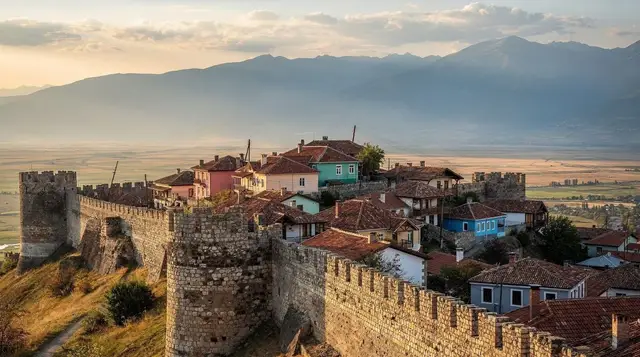
In Kakheti, choose between Telavi, the regional capital with the widest choice of mid-range hotels and easiest access to the Alazani valley wineries, or Sighnaghi, smaller and more atmospheric with sweeping valley views from the town walls, but with fewer accommodation options overall. Either works well as a two-night base for days two and three; some travellers split the two nights between both towns instead, which adds variety at the cost of an extra check-in.
In Racha, guesthouse choice narrows considerably — Ambrolauri has the most options, generally family-run and often including a home-cooked dinner featuring the host’s own wine, which is arguably a better introduction to Khvanchkara than any formal tasting room. See Guesthouses, hostels and hotels: what you get for what differs between guesthouse and hotel accommodation in smaller wine towns specifically.
A more detailed budget for the week
Kakheti’s two days are the most tasting-heavy of the trip: expect 60–90 € per person for the two organised tastings and wine dinner combined, plus accommodation of 100–180 ₾ a night for a mid-range double in Telavi or Sighnaghi. Kartli’s lighter day adds relatively little — perhaps 30–50 ₾ per person for one or two informal tastings, since the region’s smaller cellars often charge less than Kakheti’s more tourism-oriented operations.
The Racha leg is the most expensive addition proportionally: the drive itself costs in fuel and time rather than tastings, but accommodation and the Khvanchkara tasting together run 80–120 € per person across the two days, reflecting the region’s smaller supply of guesthouses and the specialty nature of the wine itself. Add the car rental (25–40 € a day) and ordinary meals throughout, and a mid-range wine traveller should plan on 600–900 € per person for the full week — travellers who skip Racha and stay within Kakheti and Kartli can expect closer to 400–550 €.
What to know before your first tasting
Georgian tastings differ from a typical European wine-region visit in a few specific ways worth knowing before day two. Pours tend to be generous rather than the small measured tastes common elsewhere, and declining a top-up is entirely normal and not considered rude. Food, usually bread, cheese and cold cuts at minimum, almost always accompanies a tasting rather than being offered separately, which is worth knowing if you are trying to pace yourself across several stops in a day.
And a toast, once offered, is genuinely part of the experience rather than an optional formality — see The order of toasts at a supra if a fuller dinner is on the itinerary and you want to understand the sequence before you are in the middle of it.
Common mistakes on a Georgia wine trip
The most common mistake is treating this like a European wine-region day, cramming in four or five cellars and arriving at each rushed and slightly worn down by the previous pour — two, or at most three, well-chosen stops a day leaves room to actually talk with the winemaker, which is usually the more memorable part of the visit anyway. The second is skipping the smaller, less tourism-polished cellars in favour of only the larger, easily bookable wineries — the smaller family operations, harder to find and less used to visitors, are frequently where the most distinctive qvevri wine comes from.
The third is assuming amber (skin-contact) wine is simply “white wine done differently” rather than tasting it with fresh expectations; it behaves closer to a light red in texture and tannin than to a conventional white, and judging it against a Sauvignon Blanc benchmark misses what makes it interesting. See Amber wine: the skin-contact whites Georgia never stopped making for more on what to expect.
What to drop if you only have five days
Cut Racha before Kartli — the Racha detour adds two full travel days for one region’s distinct style, while Kartli fits into a single day without extending the trip’s footprint. If Racha genuinely matters to you and time is tight, consider cutting Kartli instead and spending an extra day in Kakheti, which still gives you exposure to the country’s two most contrasting wine styles (Kakheti’s dry Saperavi and amber whites against Racha’s semi-sweet Khvanchkara) without the middle region.
Chacha, the wine trip’s other spirit
No Georgian wine itinerary is complete without at least one encounter with chacha, the pomace brandy distilled from leftover grape skins and stems after pressing — effectively Georgia’s answer to grappa or marc, though usually stronger and less refined at the family level. It appears unannounced at more tastings than you might expect, often offered as a closing toast rather than something you order, and etiquette generally expects at least a small sip rather than an outright refusal, though nobody will force a second.
See Chacha: what it is and how not to overdo it for how it is traditionally made and, more usefully, how to pace yourself if you are tasting wine and chacha in the same afternoon — the two do not mix well if you are not careful about order and quantity.
Buying wine to take home along the route
Each region on this itinerary sells wine differently. Kakheti’s larger wineries have proper retail setups geared toward visitors, including export-friendly packaging; Kartli’s smaller cellars often sell informally, sometimes decanted into repurposed plastic bottles rather than anything designed for travel, which is worth knowing if you plan to check the bottles in luggage.
Racha’s Khvanchkara is the hardest to find reliably outside the region itself, so if a particular producer’s version impresses you there, that is the moment to buy it rather than assuming you will find it later in a Tbilisi wine shop. See Buying Georgian wine to take home for customs limits and how to pack bottles for the flight home without losing half of them to a cracked cork or a badly sealed cap.
Frequently asked questions about a Georgia wine itinerary
Is a week too long for a wine-focused trip to Georgia?
Not if you want more than a single-region overview. A week lets you experience Kakheti’s range, Kartli’s quieter, less commercial cellars and Racha’s genuinely different style, rather than only the version of Georgian wine most day-trip tours show.
Do I need to know a lot about wine to enjoy this itinerary?
No. Georgian wine culture is built around hospitality as much as technical tasting notes, and most cellars, family-run or larger, are used to guiding visitors with no prior knowledge through what they are drinking and why it is made the way it is.
What is the difference between Kakheti and Racha wine?
Kakheti focuses on dry reds (chiefly Saperavi) and amber, skin-contact whites fermented in qvevri. Racha is known instead for Khvanchkara, a naturally semi-sweet red where fermentation stops early due to the region’s cool autumn climate — a genuinely different style rather than a regional variation on Kakheti’s approach.
Should I book tastings in advance or show up at wineries?
Advance booking is strongly recommended for smaller family cellars, many of which are not set up for walk-in visitors and may simply not be home. Larger, tourism-oriented wineries in Kakheti are more flexible about same-day visits, but booking ahead avoids disappointment everywhere on this route.
Is it possible to visit Georgian wine regions without drinking much, for a designated driver?
Yes — most tastings offer spit buckets and small pours, and Georgian hosts generally respect a guest who explains they are driving, though social pressure to accept “just one more” toast is real at a full supra. Hiring a local driver for at least the Kakheti leg removes this tension entirely.
When is the best time for a wine-focused Georgia trip?
September and October, for the grape harvest (rtveli) itself, when cellars are at their most active and some offer hands-on participation. Late spring is a reasonable alternative if fitting the trip around a September–October harvest window is not possible.
Can I combine this itinerary with the more famous sights, like Kazbegi or Svaneti?
Not comfortably within the same seven days — this itinerary is deliberately wine-focused rather than trying to also cover the mountain highlights. If both matter to you, Ten days in Georgia, east to west or Two weeks in Georgia build in a Kakheti wine day alongside Kazbegi and the rest of the country, though neither goes as deep into the regional wine styles as this dedicated itinerary does.
Qvevri wine tasting and vineyard tours on GetYourGuide
Verified deep-linked GetYourGuide tours. Book through these links and we earn a small commission at no cost to you.
Photo: our own image of the location, not the operator’s product photo.