Racha and Khvanchkara: Georgia's semi-sweet outlier
What is Khvanchkara wine?
Khvanchkara is a naturally semi-sweet red wine made in Racha, a mountainous region west of Kutaisi, from two local grapes, Aleksandrouli and Mujuretuli. The sweetness comes from the region's cool climate slowing fermentation before all the grape sugar converts to alcohol, not from added sugar, which distinguishes it from most commercial semi-sweet wine.
The one Georgian wine most visitors have already heard of
Long before most travellers can name a single Georgian grape, they have often heard this name in passing, usually without knowing where in the country it actually comes from.
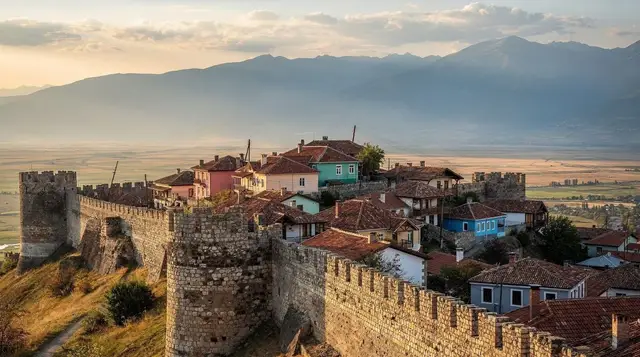
Ask a non-wine-obsessed visitor to name a Georgian wine before they arrive, and Khvanchkara is often the one name they already know, usually through its long-standing reputation as a wine served at official Soviet-era occasions. What most arrivals do not know is where it actually comes from: Racha, a quiet mountain region west of Kutaisi that most Kakheti-focused itineraries never reach, and a wine style genuinely different from the dry reds that dominate the rest of the country.
This guide covers what makes Khvanchkara distinctive, what else Racha produces, how a visit here compares to the far better-known Kakheti wine trail, and — honestly — whether the drive out there is worth it if wine is your only reason for going.
Why Khvanchkara is sweet, and why that is not a shortcut
Khvanchkara is made from two local grapes, Aleksandrouli and Mujuretuli, and its defining characteristic is residual sweetness: a real, noticeable sugar level that puts it closer to an off-dry red than to the bone-dry Saperavi that dominates Kakheti. The sweetness is not stirred in afterward. Racha’s cooler mountain climate can stop fermentation naturally before all the grape sugar converts to alcohol, leaving genuine residual sweetness behind — a climate and timing effect rather than an additive, and a distinction Racha producers are quick to draw against cheaper, artificially sweetened wines sold under similar-sounding names elsewhere.
Caucasus Wine Cellars Tour in Microzones of Racha Lechkhumi visits several small producers across Racha’s different microzones, which is the clearest way to taste how much variation exists within what tourism material often flattens into a single “Khvanchkara” story.
Aleksandrouli and Mujuretuli: the grapes behind the name
Khvanchkara is not a single grape variety but a blend, traditionally of Aleksandrouli and Mujuretuli, both native to Racha and grown almost nowhere else in significant quantity. Aleksandrouli contributes most of the wine’s colour and body, while Mujuretuli is typically used in a smaller proportion to soften and round out the blend. The precise ratio varies by producer, which is part of why two bottles labelled Khvanchkara from different cellars can taste noticeably different from one another — more or less sweet, more or less full-bodied — despite sharing a name and a region.
Because both grapes are grown almost exclusively in this one part of Racha, and because the natural stop in fermentation that creates the wine’s sweetness depends on the specific cool microclimate here, Khvanchkara is a genuinely place-bound wine in a way few Georgian styles are — attempts to replicate it elsewhere with the same grapes generally produce a different, usually drier result, since the climate is doing real work, not just the varieties themselves.
Racha is not a one-wine region
Khvanchkara gets the name recognition, but Racha’s cellars also produce dry reds and whites, including Saperavi grown in the region’s cooler conditions — see Saperavi: how to read a Georgian red for the grape itself — alongside Tvishi, a similar semi-sweet white made nearby using the same natural-sugar principle. A cellar visit in Racha usually pours several of these side by side, not just the famous name, and the dry versions are often the more interesting tasting for anyone who has already spent a day in Kakheti and wants to see how differently the same country’s wine can turn out under a different climate.
Racha beyond the glass
Wine is not the only reason Racha gets a mention on a Georgia itinerary. The region is also known within Georgia for its smoked pork, mountain cheese and honey, all of which tend to appear alongside a cellar tasting rather than being a separate stop — a Racha wine visit is often as much a food experience as a wine one, more so than the average Kakheti stop.
The region’s scenery, too, is a genuine draw on its own: quieter, greener and less developed for tourism than most of Kakheti, which is part of what makes the longer drive feel worthwhile to travellers who prioritise a slower pace over ticking off a list of producers. A wine-lover’s week: Kakheti, Kartli and Racha is built around exactly this combination — the country’s three distinct wine identities in one trip — for anyone with enough time to do all three properly rather than choosing one.
How a Racha cellar visit differs from Kakheti
Expect a smaller-scale, more informal visit than a typical Kakheti stop. Racha’s wine industry is considerably smaller than Kakheti’s, and most producers are genuinely small family operations rather than businesses built around tour groups, which means fewer polished visitor facilities but often a more direct conversation with whoever actually made the wine. Tastings tend to move at a slower, less scripted pace, and a visit here rewards travellers who are comfortable with a more improvised itinerary than the fixed stops a Kakheti group tour typically offers.
Getting there, honestly
Racha sits several hours further into the mountains beyond Kutaisi itself, which is already a substantial drive from Tbilisi in its own right. That makes Racha a poor fit for a single day trip out of Tbilisi — the driving alone would eat most of the day — but a realistic and worthwhile add-on for anyone already spending time in western Georgia around Kutaisi.
Private Tour from Kutaisi Tskhrajvari Racha and Wineryand From Kutaisi: Racha Day Trip with Wine Testing both run from Kutaisi rather than Tbilisi for exactly this reason. For a longer stay, From Tbilisi: 2 Day Racha Lechkhumi Adventure with Guide covers wine alongside Racha’s mountain scenery over two days rather than rushing it into one.
Mountain roads into Racha can be affected by winter weather, so a spring-through-autumn visit is the more reliable window if wine access, rather than snow scenery, is the priority — check conditions with your operator or driver before committing to a winter date, since a closed pass can turn a planned day trip into a cancelled one with little notice.
Harvest timing in a cooler climate
Racha’s cooler mountain climate, the same factor behind Khvanchkara’s natural sweetness, also means the grape harvest here can run slightly later than in warmer Kakheti, depending on the specific variety and the year’s weather. Rtveli, the general Georgian term for the harvest, still falls broadly across September and into October in Racha, but exact timing is more weather-dependent than in Kakheti’s more predictable lowland climate, so a visit planned specifically around the harvest is worth confirming with a local operator closer to the date rather than booking purely off a calendar guess made months in advance.
Rtveli: joining the grape harvest covers the general mechanics of the harvest, most of which apply here too, even if Racha’s specific timing runs a little later than the Kakheti examples it focuses on.
Why the name travels ahead of the region itself
Khvanchkara’s reputation as a name recognised well beyond Georgia’s borders owes a great deal to its long-standing association with formal Soviet-era occasions, a reputation that has outlasted the politics that built it and still shapes how the wine is marketed and talked about today, inside Georgia and out. That reputation is worth treating as background colour rather than a claim about quality specifically — plenty of excellent Khvanchkara is made by small producers with no connection to that history, and the association mostly explains why the name is familiar rather than why any particular bottle is worth buying.
Is it worth the detour?
Honestly, it depends on what else is on your itinerary. If you are already touring Kutaisi and the canyons nearby — see Day trips from Kutaisi and Canyons and caves in one day from Kutaisi — adding Racha extends a trip you are already making and rewards it with wine, mountain scenery and a noticeably quieter pace than Kakheti’s more visited villages.
As a dedicated trip purely for wine from Tbilisi, Kakheti is the shorter drive with a far larger concentration of cellars, and remains the more efficient choice for a first-time visitor, unless Racha’s scenery and relative quiet are specifically what draw you.
If you have already done a Kakheti day and are curious how differently the same country’s wine can turn out under a different climate, or if a slower pace and fewer other travellers matter to you as much as the wine itself, Racha earns the extra hours on the road. Travellers weighing all three of Georgia’s main wine identities against each other — Kakheti’s scale, Kartli’s history around Mtskheta, and Racha’s outlier style — are, in effect, choosing between breadth, convenience and character, and there is no wrong answer among the three provided the choice matches how much time is actually available.
What to actually order at a Racha cellar
A good Racha tasting does not stop at a single glass of Khvanchkara. Ask to try a dry red alongside it — often Saperavi grown locally, sometimes another regional variety — to get a sense of what the region can do outside its famous semi-sweet style, and ask about Tvishi too if the cellar makes it, since the white version of the same natural-sweetness principle is less often poured for visitors by default and worth requesting specifically.
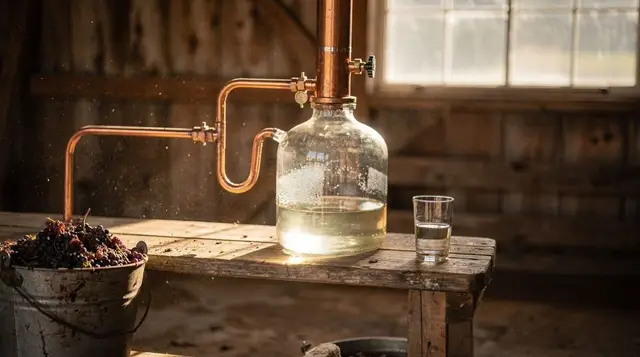
Many family cellars in Racha also distil their own chacha, and a small pour alongside the wine tasting is common practice — see Chacha: what it is and how not to overdo it if that is new to you, since it is considerably stronger than anything else on the table and easy to underestimate after a full day on mountain roads.
Buying Khvanchkara elsewhere
Khvanchkara is sold in wine shops across Georgia, including Tbilisi, so a bottle bought at source is not the only way to try it. See Buying Georgian wine to take home for what to check on a label, and how to tell a genuine Racha bottle from a cheaper semi-sweet wine trading on a similar name.
Staying overnight in Racha
Given the distance involved, an overnight stay in Racha turns a rushed, exhausting day into a considerably more relaxed trip, and it is worth planning for if your schedule allows it. Guesthouses in and around Ambrolauri, the regional centre, are the main option, generally family-run, simple and considerably cheaper than equivalent accommodation closer to Tbilisi or Kakheti — often in the range of 60 to 120 GEL a night for two people, breakfast included more often than not.
Choice is genuinely limited compared with Kakheti or Tbilisi, so booking ahead matters more here than in more visited parts of the country, particularly across the September-October harvest window when demand from both wine-focused and general tourism rises together. An overnight also opens up a second day for the mountain scenery and smaller villages beyond Ambrolauri itself, which a single long day trip from Kutaisi simply does not have time for once travel there and back is factored in.
Racha’s honey and cheese as souvenirs, alongside the wine
Wine is not the only thing worth bringing home from a Racha cellar visit. The region’s honey, produced in the same cooler mountain conditions that give Khvanchkara its natural sweetness, has a distinct character worth trying alongside the wine itself, and many family cellars sell it directly, often at a better price and with more certainty about where it actually came from than a jar bought later in a Tbilisi shop.
Racha’s smoked pork and mountain cheese, mentioned earlier, travel less easily than wine or honey and are better treated as something to eat while you are there rather than pack for the journey home, though a vacuum-sealed cheese from a market stall can survive a short trip if kept cool. If you are buying Khvanchkara itself to take home, a bottle bought directly from a small producer in Racha is generally cheaper than the same or a similar bottle bought later in Tbilisi, and buying at source also means a better chance of finding a specific small-batch bottle that never reaches wider distribution at all.
Combining Racha with a longer western Georgia route
Racha sits naturally on the way toward, or back from, a wider loop through western Georgia rather than functioning only as an isolated add-on to Kutaisi. Travellers already planning a longer western route — Kutaisi, the canyons, and on toward Svaneti and Mestia — can fold Racha into that itinerary as a scenic, wine-focused stage rather than a separate trip requiring its own dedicated day from Tbilisi.
The roads connecting Racha toward the wider Svaneti direction are mountainous and slower going than a direct Kutaisi-to-Mestia route, so this only makes sense with enough days in hand to absorb the extra driving rather than as a shortcut. For travellers building an itinerary around Kazbegi or Svaneti? and leaning toward the Svaneti side specifically, Racha is a reasonable way to break up the western leg of the trip with wine and a change of pace before the higher mountains further on, provided the extra driving time is genuinely available rather than squeezed in.
What to pack for a Racha trip
A Racha trip is a mountain trip as much as it is a wine trip, and packing accordingly makes the drive and the visit considerably more comfortable. Layers matter more here than in Kakheti’s lower, warmer valleys, since temperatures drop noticeably once the road climbs, even in a season that feels mild lower down. Cash is worth carrying in larger amounts than you might in Tbilisi or Kakheti, since card machines are less consistently available at smaller family cellars and shops around Ambrolauri and the surrounding villages, and a producer without a working card reader is not an unusual situation to run into.
A basic phrasebook or a translation app is more useful here than in more visited parts of the country too, since English fluency drops off further from the main tourist routes, and a family cellar host in a small Racha village is less likely to have hosted many English-speaking visitors than a producer closer to Sighnaghi or Telavi.
Frequently asked questions about Racha and Khvanchkara wine
Is Khvanchkara sweet or dry?
Semi-sweet, closer to an off-dry red than a dessert wine, with real residual sugar rather than a syrupy style.
Why is Khvanchkara sweet when most Georgian wine is not?
Racha’s cooler mountain climate can halt fermentation naturally before all the sugar converts to alcohol — a climate effect, not added sugar.
Does Racha only make Khvanchkara?
No — dry reds and whites, including Saperavi, and the similar semi-sweet Tvishi, all come from the region too.
How far is Racha from Kutaisi and Tbilisi?
Several hours further into the mountains beyond Kutaisi, which is itself a substantial drive from Tbilisi. It suits a multi-day add-on more than a single day trip from the capital.
Is Racha worth visiting just for the wine?
If you are already in western Georgia around Kutaisi, yes. As a dedicated wine trip from Tbilisi alone, Kakheti is the shorter, denser option.
Can you buy Khvanchkara outside Racha?
Yes, it is sold across Georgia including Tbilisi, though tasting it at source alongside the region’s dry wines gives a fuller picture.
What is Tvishi, and how is it different from Khvanchkara?
Tvishi is a naturally semi-sweet white made near Racha on the same principle as Khvanchkara. Khvanchkara is red; Tvishi is white and less often poured by default, so ask for it specifically.
Why is Khvanchkara associated with the Soviet era?
Its long-standing reputation at formal Soviet-era occasions helped make the name internationally recognisable — background history rather than a marker of any particular bottle’s quality today.
Qvevri wine tasting and vineyard tours on GetYourGuide
Verified deep-linked GetYourGuide tours. Book through these links and we earn a small commission at no cost to you.
Photo: our own image of the location, not the operator’s product photo.