Saperavi: how to read a Georgian red
What is Saperavi wine?
Saperavi is Georgia's most planted and best-known red grape, a teinturier variety whose juice, not just the skin, is deeply red, which gives the wine an unusually dark colour. It ranges from a light, fruit-forward style made in steel or oak to a heavier, more tannic version aged in qvevri, and both are worth trying rather than assuming one is more authentic than the other.
The grape that stains its own juice
If there is one wine to understand before a Kakheti trip, or before ordering confidently at a Tbilisi restaurant, it is this one.
Most red wine gets its colour the same way, regardless of grape or country: pale juice sits in contact with dark skins during fermentation, and pigment leaches out. Saperavi, Georgia’s flagship red grape, breaks that pattern — it is a teinturier variety, meaning the flesh and juice themselves are pigmented, not just the skin. Press a Saperavi grape and the juice runs red before it has touched a skin at all, which is unusual enough internationally that sommeliers elsewhere sometimes treat it as a curiosity rather than the everyday grape it actually is across Kakheti, where it appears on almost every restaurant wine list and family table without needing an explanation for locals the way it often does for visitors.
This guide covers what to expect from Saperavi in the glass, the real difference between qvevri and conventional versions, where it is grown, and what to look for if you want to buy a bottle to bring home. If you are new to Georgian wine generally, it is worth reading alongside a primer on the qvevri method itself, since the two topics come up together at almost every tasting and understanding one helps the other make sense faster.
Two styles, one grape
Saperavi is made in two broadly different ways, and both are common enough that neither counts as the “real” or “authentic” version at the other’s expense.
Qvevri-aged Saperavi ferments and ages with skins, stems and sometimes pips in the traditional buried clay vessel, producing a fuller-bodied, more tannic wine, often with a rustic or savoury edge that fans of natural wine tend to like immediately and newcomers sometimes need a second glass to appreciate. See Qvevri wine explained for how the method itself works.
Steel or oak-aged Saperavi, made using techniques closer to conventional European winemaking, tends to be cleaner and more fruit-forward, closer to what an international red wine drinker already recognises, while still carrying Saperavi’s characteristic deep colour and firm acidity. Neither style is a compromise, and neither should be treated as more legitimate than the other; they simply show different sides of the same grape, and a tasting that pours both side by side, such as Wine Tasting Feel the Difference of Qvevri or Classical Wine mentioned in Qvevri wine explained, is the clearest way to understand the difference.
What it actually tastes like
Expect a full-bodied wine, high in both acidity and tannin, with dark fruit — blackberry and plum are the usual comparisons — and, in the qvevri versions especially, a firmer grip than most casual red drinkers are used to. It is not a soft, easy-drinking style; Saperavi is built to age and to stand up to rich food, which is part of why it pairs so naturally with Georgian cooking rather than being served as a lighter aperitif wine.
Tbilisi: Wine Tasting with Georgian Snacks and Sommelier pairs a guided tasting with food specifically to show this off, which is a more useful way to meet the grape for the first time than tasting it alone.
Where it is grown
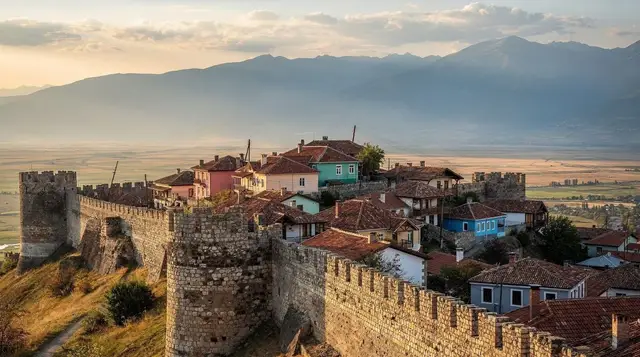
Kakheti produces the largest share of Georgia’s Saperavi by a wide margin, and a Kakheti wine tour is the most direct way to taste multiple versions from different producers in one trip. It is grown more widely than that, though — in smaller quantities around Mtskheta and Kartli, and, further afield, Racha grows Saperavi alongside its own distinctive semi-sweet reds, covered separately in Racha and Khvanchkara: Georgia’s semi-sweet outlier — a useful comparison if you want to understand how differently two Georgian red wine regions can taste.
Saperavi is not the whole story: Rkatsiteli and the whites
Focusing purely on Saperavi risks missing half of what a Kakheti tasting actually pours. Rkatsiteli, a white grape, is planted at least as widely across Kakheti and is the base for both crisp, conventionally made whites and, when fermented on its skins in qvevri, some of the country’s most recognisable amber wine.
A tasting built entirely around reds misses this contrast, and most cellars, left to their own itinerary, will pour both without being asked. If a guided tasting or tour lets you choose, asking specifically for a Rkatsiteli alongside your Saperavi gives a far more complete sense of Kakheti’s range than reds alone. Amber wine: the skin-contact whites Georgia never stopped making covers this white-wine side in more depth.
Reading a Saperavi label
Georgian wine labels vary in how much information they give, but a few things are worth knowing how to spot. The grape name, Saperavi, is usually printed clearly, sometimes alongside a regional designation — Kakheti generally, or occasionally a more specific appellation tied to a particular microzone within it, which functions similarly to how a European wine label might name a sub-region rather than just a country. Whether the wine was made in qvevri or by conventional methods is not always stated explicitly on the front label; if it matters to you, this is a reasonable question to ask directly at a wine shop or cellar rather than assume from packaging alone, since qvevri wine does not always come in visually distinctive bottles.
Vintage matters more for qvevri Saperavi, which tends to develop further in bottle, than for a lighter, fresher steel-aged style meant to be drunk within a year or two of release. Producer name is worth noting too, particularly for smaller family cellars whose wine may not travel far outside Georgia — if you find a bottle you like at a specific winery, buying a second there and then, rather than assuming you will find it again in Tbilisi, is generally the safer bet.
Getting a sommelier’s read on it
If Saperavi is your first serious exposure to Georgian wine and you would rather have someone explain the differences glass by glass than work it out alone, a guided tasting is worth the modest cost. Tbilisi: Individual Wine Tasting with Somellier and Tbilisi: Wine Tasting with Rezi both work this way in Tbilisi, without requiring a day trip to Kakheti. Wine tasting without leaving Tbilisi covers the wider range of in-city options if neither suits your schedule, and is worth a look before committing to a specific booking, since availability and format vary more between operators than the marketing copy on any single listing tends to suggest.
How Saperavi compares to reds you already know
For a rough reference point, qvevri Saperavi sits closer in weight and tannin to a young, structured Cabernet Sauvignon or a robust Malbec than to a lighter red like Pinot Noir or Beaujolais, though the comparison only goes so far — the rustic, sometimes savoury character that qvevri ageing gives it does not map neatly onto anything most international drinkers have tried before. Steel or oak-aged Saperavi narrows that gap somewhat, trading some of the rustic edge for a cleaner, more familiar fruit-forward profile that reads more like a mid-weight international red. Neither comparison is exact, and part of the appeal for wine-curious travellers is precisely that Saperavi does not slot neatly into a category they already know.
How it ages
Well-made qvevri Saperavi has real ageing potential, developing more savoury, dried-fruit characteristics over several years in bottle rather than simply fading, though most bottles sold to visitors are intended to be enjoyable on release rather than requiring cellaring. Lighter, steel-aged versions are generally made to be drunk sooner, within a year or two, and do not reward long storage the way the qvevri versions can. If ageing potential specifically interests you, ask at the winery or wine shop which style you are buying, since this is rarely obvious from the label alone.
Food that actually works with it
Saperavi’s tannin and acidity want fat and spice to balance against, which Georgian food supplies readily. Khinkali: how to order and how to eat them and a peppery filling hold up well against a glass of qvevri Saperavi, and slow-cooked meat dishes generally outperform lighter fare alongside it. A supra, the traditional Georgian feast, is built around exactly this kind of pairing across many courses and many toasts.
Mistakes worth avoiding on a first taste
Judging Saperavi against a lighter, more familiar, easy-drinking red is the single most common misstep first-time tasters make — it is built to be bigger and more tannic than that, and expecting something soft leads to disappointment that has more to do with mismatched expectations than the wine itself. Drinking it cold, or straight from a fridge at a picnic, also mutes it; Saperavi shows better closer to room temperature, where its fruit and tannin balance out properly. Finally, tasting only one style — only qvevri, or only steel-aged — and assuming it represents the grape as a whole misses the point of a wine that genuinely changes character depending on how it is made; trying both, ideally side by side, is the more informative approach.
Saperavi versus Khvanchkara: not the same red
Visitors sometimes conflate Saperavi with Khvanchkara, Georgia’s other well-known red, but the two are genuinely different. Saperavi is normally made dry, with the tannin and structure described above. Khvanchkara, made from different grapes — Aleksandrouli and Mujuretuli — grown specifically in the cooler Racha region, is naturally semi-sweet, a result of the local climate slowing fermentation rather than any added sugar. If a menu or a shop lists both, expect a genuinely different drinking experience from each rather than two versions of the same style — see the Racha guide linked earlier for that wine and the region it comes from in full.
Buying a bottle to bring home
Saperavi is widely available in wine shops across Tbilisi and directly from producers in Kakheti, and bottled wine travels home like any other. Buying Georgian wine to take home covers what to check on a label — variety, region and whether it is qvevri or conventionally made are usually stated — plus the practical side of packing bottles for a flight.
Ordering Saperavi in a restaurant
Ordering wine in a Tbilisi or Kakheti restaurant works a little differently from what many visitors expect, and it is worth knowing the local pattern before you sit down. House wine, often simply labelled domestic or homemade rather than by a specific commercial brand, is common on Georgian restaurant menus and frequently poured from an unlabelled carafe or jug rather than a bottle with a printed label — this is not a sign of poor quality, and in many family-run restaurants it is genuinely better than the commercial bottles on the same list, made by the owner’s own family or a relative with a small vineyard.
Asking the server directly whether the house wine is Saperavi, and whether it is qvevri or conventionally made, usually gets a straight answer even when the menu itself does not specify. A bottled, labelled Saperavi from a known producer costs more than the house pour but comes with more certainty about exactly what you are getting, useful if you have already found a producer you like elsewhere and want the same style again. Neither route is the wrong choice — the house wine is often the better value, the labelled bottle the safer bet if consistency matters more to you than discovery.
What you actually get at different price points
Price is a rough but genuinely useful guide to what a bottle of Saperavi is likely to deliver. At the lower end, roughly 15 to 25 GEL in a shop, expect a straightforward, fruit-forward style, usually steel or oak-aged rather than qvevri, made for everyday drinking rather than ageing or serious contemplation — entirely drinkable, just not the deep, complex version the grape is capable of. In the middle range, 25 to 50 GEL, both qvevri and conventional styles from known regional producers become available, generally the sweet spot for a visitor who wants a genuinely representative bottle without paying for scarcity or reputation.
Above 50 GEL, you are typically paying for a specific small producer, a particular vintage with real ageing behind it, or a limited qvevri release from a family cellar whose wine does not travel far outside Georgia — worth it if a specific bottle has genuinely impressed you, less necessary if you simply want a solid, characterful Saperavi to bring home. None of these bands are fixed rules, but they hold up well enough across most shops and restaurants to be a useful starting point when a label alone gives you little else to go on.
Is Saperavi ever blended?
Saperavi is most often bottled as a single varietal wine rather than blended, which is part of why producers and menus tend to name it directly rather than describing a blend of unnamed grapes the way some European regions do. That said, blending is not unheard of, particularly among producers experimenting with international styles or softening Saperavi’s naturally high tannin and acidity by blending in a small proportion of a rounder grape.
Some producers also blend Saperavi with other Georgian reds from outside Kakheti, including varieties grown in Kartli or further afield, generally aiming for a softer, more approachable everyday wine rather than a showcase bottle. If a label lists Saperavi alongside another named grape, or simply says “red blend” without specifying, expect a rounder, less structured wine than a pure varietal Saperavi, closer in spirit to the steel-aged single-varietal style than to a full qvevri expression — useful to know if you specifically want the grape’s more distinctive characteristics rather than a smoothed-out blend built for easier everyday drinking.
Frequently asked questions about Saperavi
What does Saperavi taste like?
Full-bodied, high in acidity and tannin, with dark fruit like blackberry and plum, and, in qvevri versions, a more rustic edge than most visitors expect from an unfamiliar grape.
Is Saperavi the same as amber or qvevri wine?
No. Amber wine is specifically a qvevri-method white. Saperavi is a red grape, made either in qvevri or conventionally — a variety, not a method.
Why is Saperavi’s juice red, unlike most red grapes?
It is a teinturier variety with pigmented flesh and juice, not just skin, which is unusual internationally and gives the wine its notably deep colour.
Where is Saperavi grown in Georgia?
Predominantly in Kakheti, though it is grown more widely, including around Mtskheta and Kartli.
Should I try qvevri or steel-aged Saperavi first?
Qvevri gives the more distinctively Georgian experience; steel or oak-aged is closer to a red most international drinkers already recognise. Trying both side by side is the clearest way to learn the difference.
What food pairs well with Saperavi?
Grilled and roasted meat, and Georgian dishes with real fat and spice, such as peppery khinkali or a slow-cooked stew.
Can you buy good Saperavi to take home?
Yes, widely, from Tbilisi wine shops and directly from Kakheti producers. See Buying Georgian wine to take home for label and packing advice.
Is Saperavi the same as Khvanchkara?
No. Saperavi is normally dry and tannic; Khvanchkara, from different grapes grown in the cooler Racha region, is naturally semi-sweet. Both are well known, but stylistically distinct.
Qvevri wine tasting and vineyard tours on GetYourGuide
Verified deep-linked GetYourGuide tours. Book through these links and we earn a small commission at no cost to you.
Photo: our own image of the location, not the operator’s product photo.