Customs, duty free and what you may take out
Do I need a permit to take antiques out of Georgia?
Items the state classifies as cultural property — which can include older icons, some antique carpets, archaeological objects and certain categories of old jewellery or coins — legally require an export permit from the National Agency for Cultural Heritage Preservation before leaving the country, regardless of where or how casually they were bought.
Customs and export rules are mostly procedural, so most of this page is about habits and paperwork. A few parts of a trip do touch it, though: wine tastings, workshops and food experiences are where most visitors end up buying the things this guide is about.
Why Georgia’s customs situation is not the same as an EU country
Georgia sits outside both the European Union and the Schengen area, which matters directly for anyone assuming EU-style duty-free and import rules apply automatically. There is no shared customs union covering Georgia and your home country in the way there might be between two EU member states, which means allowances, restricted categories and paperwork all follow Georgia’s own rules on departure and your destination country’s rules on arrival, checked independently at each end rather than harmonised between them. This is a genuinely different situation from, say, moving goods between two EU countries, and it is worth resetting any assumption carried over from EU travel before shopping seriously in Georgia.
What this guide actually covers
Most Georgian souvenirs — wine, food, crafts, jewellery bought new from a workshop — leave the country without any special process, and this page exists mainly for the smaller set of situations that do raise a genuine question: buying something old, buying wine or spirits in real quantity, or carrying food items with import restrictions on the other end. Read this before you buy something at the Dry Bridge market or a serious antique shop that looks genuinely old, not after you have already packed it.
Why this matters more in Georgia than in many destinations
Georgia’s long, layered history — ancient kingdoms, Byzantine and Persian influence, centuries as a religious centre, decades in the Soviet Union — means the country has an unusually dense concentration of genuinely old religious and cultural objects still in private hands and occasionally in informal trade, rather than confined entirely to museums.
That density is part of what makes flea markets like Dry Bridge interesting places to browse in the first place, but it is also exactly why Georgian heritage law takes cultural property export seriously: without some form of control, the country’s own material history would steadily leave through casual tourist purchases. Understanding this context makes the rule feel less like arbitrary bureaucracy and more like a reasonable response to a real risk.
Cultural property: the category that actually matters
Georgian heritage law classifies certain categories of object as cultural property, and exporting these without a permit from the National Agency for Cultural Heritage Preservation is a real legal issue, not a formality. The categories most likely to affect an ordinary visitor are religious icons and objects above a certain age, archaeological finds (including coins), antique carpets and textiles of significant age, and jewellery or metalwork identified as historically or culturally significant.
The threshold is set by law and by the specific characteristics of an item, not by how a seller casually describes it — “this is very old” from a market vendor is not the same thing as a formal determination, and it can cut both ways: some items that look old are recent reproductions with no export issue at all, while others that look unremarkable can be genuinely old enough to require a permit.
How to actually get a permit if you need one
The National Agency for Cultural Heritage Preservation is the body that issues export certificates, examining an item and determining whether it falls under a protected category before granting permission to take it out of the country. In practice, most visitors encounter this process indirectly through an established antique dealer or shop, since reputable sellers of higher-value antiques are generally familiar with the process and can either handle the paperwork directly or tell you plainly that a specific piece requires it before you commit to buying.
This is one practical argument for buying a serious, higher-value antique from an established shop rather than only from an informal market stall, where a seller may be less equipped to help with — or even less aware of — the export requirement.
Wine, chacha and alcohol allowances
Georgia itself does not meaningfully restrict wine or spirits leaving the country in personal, non- commercial quantities — the limit that actually matters is your destination country’s duty-free alcohol allowance, which varies by country and by mode of transport. Buying several bottles at a Kakheti winery or a Tbilisi wine shop is straightforward on the Georgian side; the practical question is whether your home country’s allowance covers what you are bringing back, and whether you need to declare and potentially pay duty on anything beyond it.
Checking your specific destination’s allowance before a large wine purchase avoids an unwelcome surprise at your home airport. See Buying Georgian wine to take home for what to actually look for when choosing what to buy.
Where the bottles usually come from
Most wine that ends up in a suitcase is bought at the source. A tasting visit such as a day trip from Tbilisi into the Kakheti wine region makes it easy to buy a few bottles from the producer, and the winery can usually wrap them properly for the flight. Decide how many you can legally carry home before the tasting rather than after, since a pleasant afternoon makes it easy to overbuy. The region is covered in the Kakheti wine day trip guide and the Kakheti wine tour guide.
Food: what travels and what does not, legally
Packaged, shelf-stable Georgian food — dried spices, honey, churchkhela, jarred adjika — generally moves through customs without issue in personal quantities, since these fall outside the food categories most countries restrict. Fresh dairy is the main exception: many countries, including EU member states, restrict or ban dairy imports from outside their own customs union regardless of packaging, which affects Georgian cheeses like sulguni and guda specifically.
Fresh fruit, vegetables and meat products carry similar restrictions in most destinations and are generally not worth attempting to bring back at all. If food souvenirs matter to your trip, Souvenirs worth carrying home covers which specific items travel well within these constraints.
Learning to cook Georgian dishes is a good way to bring something home that has no customs question attached. a Georgian cooking class that includes wine and small souvenirs sends you away with recipes and technique instead of perishable cheese, and the spice side of the pantry is covered in Georgian spices and pantry staples. For a Tbilisi option, see cooking classes in Tbilisi.
Antiques bought at flea markets specifically
The Dry Bridge market deserves particular mention here because it is exactly the kind of place where the cultural property question comes up in practice: genuinely old Soviet-era medals and household items sit alongside occasional older icons, coins and carpets, sold informally without documentation. For low-value, clearly mass-produced Soviet items — medals, cameras, enamel teapots — this is rarely a real issue in practice.
For anything presented as significantly older or more valuable — an icon with a specific claimed century, a carpet described as a genuine antique — it is worth asking the seller directly whether an export permit is needed, and treating a vague or evasive answer as a reason for real caution rather than reassurance. Carpets, felt and textiles covers how to judge a carpet’s likely age and origin before this question even arises.
What actually happens at the airport
Georgian customs can inspect luggage and ask about items that appear old or culturally significant, though this is not standard practice applied to every departing traveller — it is more a possibility to be prepared for than an expected certainty. Travellers who can show a purchase receipt, and an export certificate for anything that genuinely required one, generally pass through without further difficulty. Undocumented items that appear to fall into a protected category risk being held for further examination or, in a worst case, confiscated, which is a considerably worse outcome than the modest extra effort of asking a seller about export status before you buy.
Personal use versus commercial quantities
Georgian and destination-country customs rules both draw a distinction, sometimes explicitly and sometimes just in practical enforcement, between goods for personal use and quantities large enough to suggest resale. A handful of bottles of wine or a single antique carpet reads clearly as personal souvenir shopping; several cases of wine or multiple carpets bought at once can trigger different questions at either end, even if every individual item is otherwise unremarkable.
If your shopping runs toward the larger end of this range — stocking up on wine for a wedding, buying multiple carpets to furnish a home — it is worth researching your destination’s commercial import thresholds specifically rather than assuming personal-allowance rules stretch to cover it.
Airport duty-free shopping, and its limits
Tbilisi, Kutaisi and Batumi airports all operate duty-free shops after security, selling wine, chacha and other alcohol at prices that avoid Georgian domestic tax, which is a straightforward and low-risk way to buy a bottle at the very end of a trip without worrying about it being jostled across multiple earlier journeys. This does not remove your destination country’s own duty-free allowance limit, however — an airport duty-free purchase is still counted against whatever your home country permits you to bring in without declaration, it simply avoids Georgian tax on the sale itself.
Photographing and documenting higher-value purchases
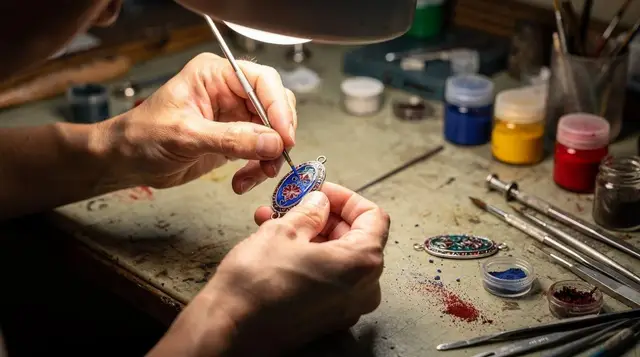
For anything bought that is either expensive or ambiguous in age — a substantial carpet, a piece of jewellery, a larger antique — taking a clear photograph of the item alongside its receipt at the point of purchase is a small habit that helps considerably if a question ever arises later, whether at Georgian departure or at your home country’s arrival customs. This is especially worth doing for crafts like minankari enamel or ceramics bought directly from a workshop, where a simple photo of you at the studio with the finished piece doubles as informal proof of origin if it is ever questioned, on top of any formal receipt.
Where customs questions fit into wider trip planning
Most of what matters here is worth thinking about before you shop rather than after, alongside the rest of your trip budget and packing plan. What a week in Georgia actually costs and Packing for Georgia, season by season both cover the wider logistics a shopping-heavy trip sits inside, and Visa and entry rules: 365 days, and the fine print is worth reading alongside this page since both cover the formal, legal side of a Georgia trip that is easy to overlook next to the more immediately exciting parts of planning.
Lari, ATMs and paying by card and Scams, overcharging and minor annoyances round out the practical planning side for anyone doing serious shopping during their visit.
When the seller genuinely does not know either
Not every informal market vendor understands cultural property law in detail, and it is entirely possible to ask directly and receive a confident but wrong answer, whether through genuine ignorance or simple sales pressure to close a deal. Treat a seller’s assurance as helpful context rather than a legal guarantee, particularly for anything above a modest price at an informal stall. For a significant purchase, the safer path is independent verification — contacting the National Agency for Cultural Heritage Preservation directly, or buying instead from an established shop with a track record of handling export documentation, rather than relying entirely on a market vendor’s word in the moment of a sale.
A practical checklist before you fly
Keep receipts for anything bought that looks even plausibly old or valuable, since a receipt showing where and when you bought something is the simplest evidence of a legitimate, low-stakes purchase. Ask directly at the point of sale whether an item needs an export certificate rather than assuming a low price means no issue — price and cultural significance do not always correlate cleanly.
Check your home country’s duty-free alcohol and food import allowances before a large wine or food purchase, since the binding constraint is usually on the receiving end rather than the Georgian side. And when in doubt about a specific item, contacting the National Agency for Cultural Heritage Preservation directly, with time to spare before your departure date, is the only way to get a definitive answer rather than a guess.
Buying with a story, not just a receipt
Experiences that put you in front of the maker tend to produce the cleanest purchases. A visit built around a village wine and bread ritual gives you context for what you are buying and who made it, which is useful if anyone later asks about origin. Wine itself is explained in qvevri wine explained and amber wine, and the habit of checking labels is worth building before you shop at wine tasting in Tbilisi. If you are still shaping the trip, the Georgia wine itinerary shows where tastings fit, and how Georgians eat explains the table culture behind many of these purchases.
Insurance for higher-value purchases
For anything expensive enough that its loss or damage in transit would genuinely sting — a serious antique, a substantial carpet, fine jewellery — checking whether your travel insurance policy covers purchases made abroad, and up to what value, is worth doing before you buy rather than after something goes wrong.
Many standard travel policies cap single-item coverage at a modest amount, well below what a serious carpet or antique might cost, which can mean a supplementary policy or a specific declaration is needed for a genuinely valuable purchase. This sits alongside, rather than instead of, the export documentation covered above — insurance protects your financial interest in an item, while an export certificate protects your legal right to actually take it out of the country.
Frequently asked questions about Georgian customs and duty free
What items need an export permit to leave Georgia?
Items the National Agency for Cultural Heritage Preservation classifies as cultural property, which can include icons and religious objects above a certain age, archaeological finds, some antique carpets and jewellery, and historically significant documents or artwork. The exact age and category thresholds are set by Georgian heritage law rather than by how a seller describes an item.
How do I get an export certificate for an antique bought in Georgia?
The National Agency for Cultural Heritage Preservation issues export certificates after examining the item; reputable antique dealers and established shops can often assist with this process or tell you directly whether a specific piece requires one, which is one practical reason to buy higher-value antiques from an established shop rather than only an informal market stall.
How much wine can I take out of Georgia duty free?
This depends on your destination country’s duty-free allowance rather than a Georgian export limit, since Georgia does not restrict wine leaving the country in reasonable personal quantities. Check your home country’s duty-free alcohol allowance before buying in bulk, since exceeding it means declaring the excess and potentially paying import duty on arrival.
Can I bring Georgian cheese or honey through customs?
Honey generally travels without issue as a packaged, shelf-stable product. Cheese and other dairy face restrictions in many countries outside their own customs union (the EU, for instance, restricts dairy imports from non-EU countries), so check your destination’s specific food import rules before packing cheese, rather than assuming it is allowed.
Is it illegal to buy items without knowing if they need an export permit?
Buying is not illegal, but attempting to export a regulated cultural item without a permit is, and ignorance of the rule is not generally treated as a defence at the border. If in doubt about an item’s age or classification, ask the seller directly or contact the National Agency for Cultural Heritage Preservation before your departure date rather than at the airport.
What happens if my luggage is checked for cultural property at the airport?
Georgian customs can inspect luggage and ask about the origin of antiques, icons or other items that appear old; travellers who can show a receipt, an export certificate where required, or can otherwise explain a purchase generally pass through without difficulty, while undocumented, high-value cultural items risk confiscation and further questioning.
Shopping and craft tours on GetYourGuide
Verified deep-linked GetYourGuide tours. Book through these links and we earn a small commission at no cost to you.
Photo: our own image of the location, not the operator’s product photo.