Souvenirs worth carrying home
What are the best souvenirs to bring back from Georgia?
Qvevri wine and chacha from a producer rather than a supermarket shelf, churchkhela, dried tarragon and blue fenugreek (utskho suneli), handmade minankari cloisonné enamel, and felt or wool items from the mountains are the items locals themselves value most. Mass-produced fridge magnets and printed scarves are the ones to skip.
The question worth asking before you shop
“What should I bring back from Georgia” is really two different questions bundled together: what do Georgians themselves value as genuinely their own, and what will actually survive a suitcase and a flight home intact. Wine, food and small crafts dominate the first list; how well something packs, whether it needs refrigeration, and whether customs rules allow it dominate the second. This guide works through both, organised by category, with realistic prices and the specific traps — fake antiques, machine-stamped “handmade” crafts, dairy that will not clear customs — that catch out first-time visitors most often.
Wine, chacha and the drinks cabinet
Georgian wine is the single most defensible “authentic souvenir” claim in the country, given a documented 8,000-year winemaking tradition centred on qvevri, the large clay vessels used to ferment and age wine underground, recognised by UNESCO as intangible cultural heritage. A bottle from a small producer, bought either directly at a Kakheti winery or from a specialist Tbilisi wine shop rather than a generic supermarket shelf, is a genuinely different product from what most tourists end up with.
The full detail on what to look for on a label, which grapes to try, and how to get bottles home intact is in Buying Georgian wine to take home; for the wider context of what qvevri wine actually is and why it tastes the way it does, see Qvevri wine explained: 8,000 years in a clay pot.
Chacha, Georgia’s grape pomace spirit, is the other bottle worth considering, though quality varies enormously between a carefully distilled version from a serious producer and the rougher homemade versions sold informally by the roadside. See Chacha: what it is and how not to overdo it before committing a suitcase slot to a bottle you have not tasted first.
Tbilisi: 15 Hour Ceramic Workshop Experience is unrelated to drinking but sits in the same Tbilisi craft-workshop category worth knowing about if wine alone does not fill a souvenir list — making your own piece to take home solves the “what do I actually buy” problem directly.
Food that survives the journey
Churchkhela — walnuts or hazelnuts strung on thread, dipped repeatedly in thickened grape juice until they form a firm, chewy candle shape — is Georgia’s classic road-trip snack, sold at almost every market and roadside stand, and it keeps for weeks without refrigeration, which makes it one of the most practical food souvenirs available. See Churchkhela and the sweets sold at every roadside for what to look for in quality and how prices compare between a market stall and a supermarket version.
Dried herbs and spice blends travel just as well: khmeli-suneli (a mixed herb blend built around dried marigold, coriander and dill) and utskho suneli (dried blue fenugreek, the defining flavour behind much Georgian bean and walnut cooking) both last for months sealed and weigh almost nothing. Honey, jam and bottled adjika (a fiery walnut and pepper paste) also travel reasonably well in checked luggage if padded against breakage. The fuller picture of what pantry goods are worth seeking out, and where to buy them at a fair price rather than a tourist markup, is in Spices and pantry goods to bring back.
Fresh Georgian cheeses — sulguni, guda, imeruli — do not travel, and most destination countries restrict dairy imports from outside their own customs union regardless of how well it is packed; treat A guide to Georgian cheese as something to enjoy while in the country rather than a shopping list.
Minankari enamel: the craft souvenir with real depth
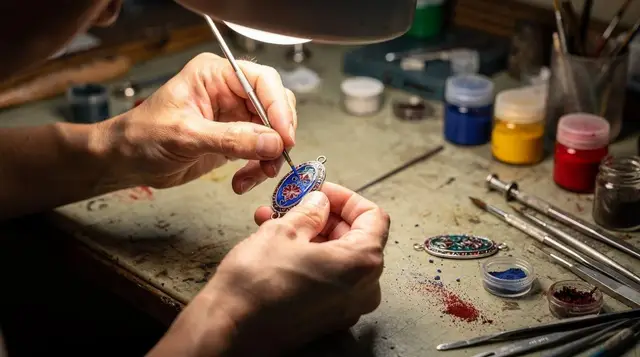
Minankari, Georgian cloisonné enamel, is the country’s most distinctive small craft: fine wire soldered onto a metal base to form compartments, each hand-filled with coloured enamel powder and fired repeatedly at high heat until the colours fuse and polish smooth.
Genuine hand-fired pieces from a real workshop cost meaningfully more than the stamped, machine-produced imitations sold under the same name in souvenir shops, and the difference is visible once you know what to look for — slightly uneven wire lines and a certain depth to the colour versus a flat, perfectly uniform surface. The full detail on where to find real workshops, what a fair price looks like, and how to spot an imitation is in Minankari: Georgian cloisonné enamel.
Tbilisi: Felting Art Wool Craft at Local Workshop is a different craft entirely — wool felting rather than metal enamel — but sits alongside minankari as one of the more genuinely hands-on souvenir-making experiences available in Tbilisi, worth considering if you would rather make something than buy it ready-made.
Carpets, felt and textiles
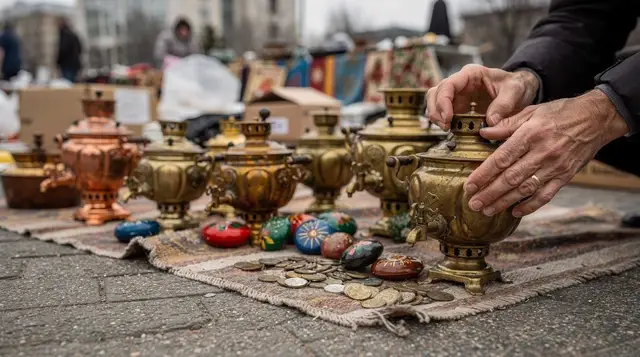
Caucasian carpets, kilims and felted wool goods — hats, slippers, small rugs — represent a craft tradition rooted particularly in Georgia’s mountain regions, where wool and weaving have long been practical necessities as well as decorative ones. Quality and authenticity both vary enormously between a genuinely handwoven piece and a machine-made import sold at a similar price, and carpets specifically carry the same “claimed antique” risk as anything sold at the Dry Bridge market. See Carpets, felt and textiles for how to judge what you are looking at before committing serious money to a rug.
Ceramics and qvevri-inspired pieces
Georgian pottery, from everyday glazed tableware to small hand-painted pieces inspired by the shape of a qvevri itself, is widely made and sold across Tbilisi in particular, with a cluster of working studios in the Old Town that both sell finished pieces and run hands-on sessions for visitors who want to make their own. See Pottery and qvevri workshops for specific studios, prices and what a typical session involves.
Create Your Own Ceramic Piece at Ma Ceramic Studio is one specific version of this — throwing or decorating your own piece at a working Tbilisi studio — useful as a souvenir that is also an activity rather than a straightforward purchase.
What to skip
A handful of categories are consistently the most overpriced or least genuine across Georgia, wherever you encounter them. Printed fridge magnets and mass-produced painted plates carry a large tourist markup relative to their actual production cost and say little about the country specifically. Anything sold as a centuries-old antique icon at a fixed, low, no-negotiation price is very unlikely to be what it claims; genuine antique icons are rare and are not typically sold this casually. Machine- stamped jewellery labelled “minankari” without any visible hand-firing texture is a lower-effort, lower-value product wearing the name of a real craft.
A subtler trap is buying the first version of something you see rather than comparing across a few stalls or shops first. Prices for the same category of item — a small enamel pendant, a bottle of an accessible mid-range wine, a jar of adjika — can vary by a genuine margin between a shop aimed squarely at tour groups and one a few streets away aimed at locals, with no visible difference in quality. A short comparison walk before the first purchase of a trip tends to recalibrate what a fair price actually looks like for everything bought afterward.
Regional specialities worth seeking out
Georgia’s souvenir landscape is not uniform, and a handful of items are genuinely tied to a specific place rather than available everywhere. In Svaneti, felted wool hats and Svan towers carved into small models reflect a mountain craft tradition distinct from anything sold in Tbilisi, and prices there tend to run lower than the same style of item resold in the capital, simply because there is one fewer link in the supply chain.
In Racha, honey and the region’s distinctive semi-sweet Khvanchkara wine are the local specialities, covered in more detail in Racha and Khvanchkara: Georgia’s semi-sweet outlier. Along the Black Sea coast around Batumi, citrus preserves and hazelnuts reflect Adjara’s different growing climate, distinct enough from the rest of the country that they rarely turn up for sale elsewhere.
Buying regionally rather than exclusively in Tbilisi has two real advantages: prices are typically lower closer to the source, and the purchase supports the actual producing region rather than a resale shop in the capital. The trade-off is obvious — it only works if your itinerary actually takes you there, which is a reasonable argument for building at least one wine-region or mountain stop into a trip even if souvenirs are not the primary reason for going.
Gift-giving customs worth knowing
Georgian hospitality culture places real weight on bringing something when visiting someone’s home, a custom rooted in the same generosity that defines the Georgian supra feast tradition. Wine, sweets or flowers are the standard safe choices if you find yourself invited to a Georgian home during your trip, and refusing an offered gift in return is generally considered impolite — a small counter-gift, even something modest, is the expected response. This is worth knowing less for what you buy for yourself and more for what you might be given: a bottle of homemade wine or a jar of preserves handed over by a host is a genuine honour, not a transaction, and is rarely something with a market price attached.
Budgeting for souvenirs
A realistic souvenir budget scales with what you are after: churchkhela and spice blends cost only a few lari each and add up slowly even in quantity; a decent bottle of qvevri wine runs from around 20-30 GEL for an accessible producer to well over 100 GEL for something more serious; a small piece of real minankari jewellery starts around 40-50 GEL; and a genuinely handwoven small rug or kilim can run into several hundred lari depending on size and quality. For the wider trip-cost picture these numbers sit inside, a rough week-long budget across accommodation, food and transport runs well below what the same trip would cost across most of Western Europe.
Packing souvenirs to survive the flight home
Wine and spirits belong in checked luggage, wrapped in clothing or a dedicated bottle sleeve rather than loose, and ideally bought toward the end of a trip so they are not jostled across multiple internal journeys first. Ceramics and enamel pieces are more fragile than they look and are worth requesting bubble wrap or newspaper at the point of sale, since not every workshop packs to flight standard by default. Carpets and larger textiles are usually the easiest category logistically, since they roll rather than break, though airline weight limits are the more likely constraint for a large piece.
Timing a trip around what is available
A handful of Georgian food souvenirs are genuinely seasonal rather than available year-round. Rtveli, the autumn grape harvest across Kakheti, is the best time to buy fresh-pressed grape juice and to watch churchkhela being made from that year’s harvest rather than buying a batch that has sat in a shop for months, and it is worth watching that year’s batch being made rather than buying stock that has sat in a shop for months.
Fresh honey is most widely available from late summer through autumn as producers finish the season’s extraction, and prices tend to be lowest closer to the source regions rather than in central Tbilisi shops. Wine itself is sold year-round, but a bottle bought directly from a small Kakheti producer during harvest season sometimes comes with a story and a personal introduction that a shop purchase in the capital cannot offer.
Shipping larger purchases instead of carrying them
For a carpet, a larger ceramic piece, or several cases of wine, some sellers and specialist shipping agents in Tbilisi can arrange international courier delivery, which avoids both excess baggage charges and the risk of breakage in transit. This is worth asking about directly at the point of sale for anything bulky or fragile enough to complicate a flight home; not every stall or workshop offers it, but larger, more established galleries and wine merchants generally do. Confirm the total landed cost, including your home country’s import duty on wine or antiques, before assuming shipping is cheaper than carrying an item yourself.
Getting it home legally
Before buying anything that looks genuinely old — an icon, an antique coin, a substantial old carpet — check whether Georgia’s cultural property export rules apply, since certain categories require a permit from the National Agency for Cultural Heritage Preservation regardless of where you bought them or what the seller told you. The practical detail, plus duty-free liquid allowances for wine and chacha, is in Customs, duty free and what you may take out.
Where to actually shop
Shopping in Tbilisi: markets, malls and design shops breaks the city down by neighbourhood and category, from the antique trade at Dry Bridge to working craft studios and design shops. Outside Tbilisi, the wineries around Telavi and the wider wine tour of Kakheti are the most reliable places to buy wine directly from producers rather than a resale shelf.
Frequently asked questions about Georgian souvenirs
What is the most authentic souvenir from Georgia?
Georgian wine from a small qvevri producer, bought either direct from a Kakheti winery or a specialist Tbilisi wine shop rather than a supermarket, is widely considered the most genuinely Georgian souvenir, given the country’s 8,000-year winemaking history. Minankari enamel jewellery is the closest craft equivalent.
Can I bring Georgian wine home on the plane?
Yes, within the usual duty-free liquid allowances for your destination country, either bought at the airport duty-free shop after security or packed in checked luggage with careful padding. See Customs, duty free and what you may take out for exact allowances by destination.
What Georgian food souvenirs travel well?
Churchkhela keeps for weeks without refrigeration, dried herbs and spice blends like khmeli-suneli and utskho suneli last months in a sealed bag, and Georgian honey and jams travel fine in checked luggage if packed against breakage. Fresh cheese and most dairy do not travel well at all.
Is minankari enamel jewellery expensive?
A small hand-fired minankari pendant or pair of earrings from a real workshop typically runs from around 40-50 GEL for simple pieces to several hundred for elaborate ones, reflecting the hours of hand enamelling involved. Machine-stamped imitations sold as minankari in tourist shops cost far less and are a different, much lower-effort product.
Where is the best place to buy souvenirs in Tbilisi?
The Dry Bridge market for antiques and small crafts, specialist workshops in Old Town for minankari and ceramics, and Dezerter Bazaar or a proper wine shop for food and drink each serve a different purpose. See Shopping in Tbilisi for a fuller breakdown by category and neighbourhood.
What souvenirs should I avoid buying in Georgia?
Skip printed magnets, mass-produced painted plates and anything claiming to be a centuries-old antique icon sold at a fixed low price — these are the categories most consistently overpriced relative to what they actually are, wherever in the country you find them.
Can I take Georgian cheese or dairy products home?
Generally no, or only with real restrictions. Most countries limit or ban dairy imports from outside their customs union, and Georgian cheeses like sulguni and guda do not travel or keep well regardless. Dried, cured or bottled goods are a safer bet across the board.
Shopping and craft tours on GetYourGuide
Verified deep-linked GetYourGuide tours. Book through these links and we earn a small commission at no cost to you.
Photo: our own image of the location, not the operator’s product photo.