Packing for Georgia, season by season
What should I pack for a trip to Georgia?
Layers are the single most important packing principle, since a day that starts warm in Tbilisi can turn cold fast if you head up to Kazbegi or Gudauri. Comfortable walking shoes for old-town cobbles and mountain trails, a proper rain layer outside summer, and modest clothing for monastery visits (covered shoulders and knees) matter more than any specialist gear for most itineraries.
Why “what to pack for Georgia” doesn’t have one answer
Georgia packs an unusual range of climates into a small country, and the honest starting point for any packing list is that the answer depends heavily on where you’re actually going, not just when. Tbilisi sits in a warm, semi-continental climate that gets properly hot in summer and properly cold in winter; the Black Sea coast around Batumi is subtropical and humid; and the mountains — Kazbegi, Svaneti, Gudauri — run cold enough for snow well into what would be spring at lower elevations.
A single “Georgia packing list” that ignores this geography either overpacks you for a city-only trip or underprepares you for a day trip into the mountains, which is why this guide is organised by season first and then flags what changes if your itinerary includes altitude, the coast, or a longer stay rather than a straightforward one- or two-week holiday.
See The best time to visit Georgia for the wider seasonal picture behind these recommendations, and Tbilisi weather month by month for specific temperature ranges if you want more precision than “cold” or “hot” for your exact travel dates.
The year-round essentials
Regardless of season, a few things earn a place in almost every Georgia packing list:
-
Comfortable, broken-in walking shoes. Tbilisi’s old town is cobbled and uneven in places, and even a city-only itinerary involves more walking than most visitors expect.
-
A rain layer. Georgia gets genuine rain outside the driest summer months, and a proper waterproof or water-resistant jacket beats an umbrella for anything involving hills or wind.
-
Modest clothing for monastery and church visits. Covered shoulders and knees for everyone, plus a headscarf for women at some sites (usually available to borrow at the entrance). See Visiting a Georgian Orthodox church: dress and etiquette for the full picture, since this applies at active religious sites throughout the country, not just on a single formal occasion.
- A European Type C/F power adapter. Georgia runs 220V on the same round two-pin plugs as continental Europe, so UK, US, Australian and most Asian travellers need an adapter; check whether voltage-sensitive appliances like hairdryers also need a converter rather than just a plug shape change.
-
A refillable water bottle. Tap water is generally safe in Tbilisi and most cities (see Health, pharmacies and insurance for the fuller picture), and a bottle saves money and plastic across a multi-day trip.
-
A basic first aid kit, more important the further into the mountains your itinerary goes, where the nearest pharmacy might be a genuine drive away.
Spring (March–May)
Spring in Tbilisi swings from cool and occasionally rainy in March to properly warm by May, so layering is the theme: a mid-weight jacket that can come off by afternoon, a couple of long-sleeve layers, and a light rain shell for the still-frequent spring showers. Mountain passes are a different story entirely in early spring — the Abano and Goderdzi passes typically stay closed into May or June, and Kazbegi and Svaneti can still see snow well into April, so anyone heading to the mountains in March or early April needs proper winter layers regardless of what Tbilisi’s own weather is doing. See When the mountain passes open and close for exact seasonal closures relevant to route planning.
By late April and May, day hikes around day hikes from Tbilisi become genuinely pleasant, and lighter hiking shoes rather than full winter boots are usually adequate for the lower-altitude routes.
Summer (June–August)
Tbilisi summer is hot, often humid, and the single season where breathable, light clothing matters most for the city portion of a trip — cotton or technical fabrics over anything heavy, a wide-brimmed hat, and sunscreen applied more diligently than the temperature alone suggests, since UV at altitude and even in the city is stronger than many visitors expect. A cooling towel or a portable fan is a small addition that makes a real difference on the hottest Tbilisi days in July and August.
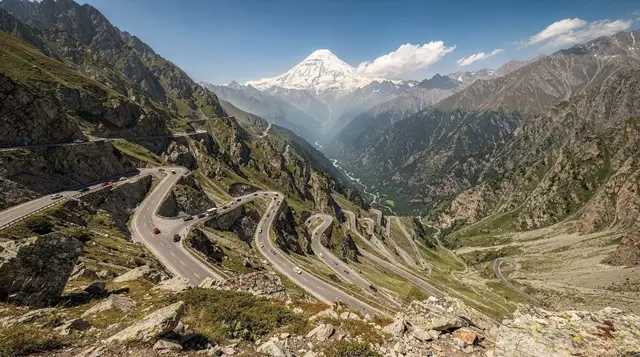
The mountains are where most Georgians and increasingly many visitors escape summer heat, and this is where packing gets more complicated: Kazbegi and Gudauri can be pleasantly cool by day and genuinely cold after sunset even in July, so a proper layer — a fleece or light insulated jacket, not just a t-shirt under a rain shell — belongs in the bag for any mountain excursion, however hot Tbilisi felt that morning.
Juta: Hiking Tour with Gudauri Ananuri Zhinvali is a good example of exactly this seasonal mismatch in action — a single day trip that starts in Tbilisi heat and ends on a mountain trail cold enough for a proper jacket, which is worth knowing before you leave your hotel in a t-shirt.
Autumn (September–November)
Autumn is widely considered Georgia’s best season, and packing for it means preparing for real day-to-night temperature swings rather than one consistent climate. September in Tbilisi often still feels like summer during the day but cools sharply after dark; by November, the city has moved firmly into cold-weather territory and the mountain passes are closing again for winter. Layers that can be added and removed through the day — a light jacket, a warmer layer for evenings, comfortable trousers rather than shorts as the month progresses — cover most of the season.
Autumn is also grape harvest season (rtveli) in Kakheti, and anyone planning to join a harvest or spend a day at wineries should bring clothes they don’t mind getting genuinely dirty; treading grapes and hands-on harvest work is not a spectator activity at most family wineries. Hiking season in Georgia generally remains excellent through September and much of October before the passes and higher trails start closing for the year, which makes it a good window for a Borjomi forest walk before the weather turns.
Hiking in Borjomi from Tbilisi works particularly well in autumn, when Borjomi-Kharagauli’s forest turns and the hiking temperature is close to ideal — cool enough for exertion, warm enough not to need serious winter gear.
Winter (December–February)
Tbilisi winter is properly cold, colder than its latitude suggests, given a combination of altitude and a continental weather pattern that pulls in cold air from the north and east. A genuine insulated winter coat, not a light jacket, is the single most important item, alongside thermal base layers, a warm hat and gloves, and waterproof boots with decent grip — icy, sometimes poorly cleared pavements in the old town’s steeper streets are a real hazard without them. See Georgia in winter for the fuller seasonal picture, including what stays open and what doesn’t over the coldest months.
Winter is also Georgia’s ski season, running roughly December to April at Gudauri and a bit shorter at Bakuriani — see The Georgian ski season for exact dates by resort. If skiing is on the itinerary, technical ski layers (base layer, mid layer, waterproof outer shell), goggles and gloves matter, though renting the bulkier gear — skis, boots, poles — at resort level is usually more practical than flying with your own.
From Tbilisi: Gudauri Ski Resort Private Day Trip and Learn to Ski Private Lessons in Gudauri both include or can arrange rental gear on site, which removes the need to travel with ski equipment at all for a single-day or first-time outing.
Mountain and multi-day trekking gear
For anything beyond a day trip into the mountains — a multi-day trek through Svaneti, an ascent attempt on Mount Kazbek, or several days in Tusheti — the packing list shifts from “what to wear” to genuine trekking kit: broken-in hiking boots rather than trainers, a real rain shell, a headtorch for early starts or delayed returns, trekking poles if your knees benefit from them on steep descents, and a basic repair kit for gear failures far from the nearest shop.
Guides, gear and mountain rescue in Georgia covers what local operators can supply versus what you should genuinely bring yourself, and rescue infrastructure in Georgia’s mountains, while improving, is more limited than in the Alps, which is part of why self-sufficiency on gear matters more here than it might elsewhere.
Packing for Batumi and the Black Sea coast
Batumi and the wider Adjara coast run a noticeably different climate to Tbilisi or the mountains — subtropical, humid, and considerably wetter, particularly in autumn and winter when the coast receives some of the highest rainfall totals in the country. A swimsuit and light summer clothing cover the June-to-September beach season, but a proper rain layer earns its place here more than almost anywhere else in Georgia if your trip extends outside high summer, since Batumi’s rain doesn’t politely confine itself to a season the way Tbilisi’s mostly does.
Beach shoes are worth packing specifically for Batumi and Kobuleti, since the coastline is pebble rather than sand and bare feet struggle on it; see Batumi’s beaches: pebbles, not sand for what to expect underfoot before you arrive expecting soft sand.
Domestic flights, baggage limits and packing light
Anyone combining Tbilisi with Batumi or Kutaisi by domestic flight rather than road should check the operating airline’s baggage allowance before packing, since regional carriers on short domestic hops sometimes run tighter cabin-bag limits than international long-haul flights. Packing genuinely light for a multi-stop Georgia itinerary — one checked bag rather than several, a packable daypack for the actual sightseeing days — pays off repeatedly if your route includes even one internal flight or a transfer that involves carrying your own luggage over cobbled or uneven ground, which describes a fair amount of old Tbilisi and Sighnaghi.
Laundry on a longer trip
For any Georgia trip longer than about a week, laundry becomes a more practical packing consideration than it might seem worth mentioning. Most Tbilisi guesthouses and mid-range hotels offer laundry service, usually at a reasonable price, and a handful of self-service laundrettes have opened in the capital’s more visitor-heavy neighbourhoods in recent years. Packing for a genuine two-week trip as if you’ll do laundry around the midpoint — five to seven days of clothing rather than fourteen — keeps the bag manageable and leaves more room for what you bring home, whether that’s a bottle of Kakhetian wine or a piece of Georgian felt or ceramic craft.
Camera gear and Georgia’s light
Georgia rewards photographers enough that camera gear is worth a specific mention. A polarising filter helps considerably with the glare off Kazbegi’s snow and the Black Sea’s water in summer, and a lens cloth earns its keep on dusty mountain roads and inside incense-heavy monasteries. Beyond that, most visitors do fine with a phone camera or a single mid-range mirrorless body rather than a full kit — Georgia’s landscapes and architecture photograph well without specialist equipment, and a lighter camera bag is one less heavy thing to carry up to Gergeti Trinity Church or through a long day in Svaneti.
What you can rent instead of packing
Not everything needs to come from home. Ski equipment rents easily and affordably at both Gudauri and Bakuriani, which saves airline baggage fees that often exceed the rental cost for a short trip. Trekking poles, crampons for winter routes, and even proper hiking boots (if sized right) are available to rent from outfitters in Mestia and around Kazbegi for anyone doing a single serious hike rather than a full trekking holiday. This is worth factoring in before you overpack a suitcase with bulky gear you’ll use for one day of a two-week trip.
What you genuinely don’t need
A few things visitors pack out of habit that rarely earn their space in a Georgia suitcase: a full formal outfit (Georgian dining and even most evening plans are smart-casual at most, outside a handful of high-end Tbilisi restaurants), excessive cash-carrying gear like a money belt (see Lari, ATMs and paying by card for why ATMs cover most needs), and heavy specialist trekking gear if your itinerary is realistically city-and-day-trips rather than multi-day mountain trekking. Packing for the trip you’re actually taking, rather than a more ambitious hypothetical one, keeps the bag manageable.
Toiletries, sun protection and a few small extras
Georgian pharmacies and supermarkets stock the ordinary range of toiletries, sunscreen and basic medication, so there’s little need to overpack this category for a standard trip — see Health, pharmacies and insurance for what’s easy to buy locally versus what’s worth bringing from home, particularly any specific prescription. Sun protection deserves more attention than the general climate suggests, since UV exposure at altitude on a mountain hike is genuinely stronger than the ambient temperature implies, and a cool, overcast day in Svaneti or on the Kazbek approach can still burn skin that wasn’t reapplied through the day.
A lightweight daypack, separate from a main suitcase or backpack, earns its place on almost every itinerary — for a day trip to Kazbegi, a walk through Old Tbilisi, or a wine-tasting day in Kakheti, carrying just water, a layer and a camera in a small bag beats hauling a full suitcase or leaving valuables unattended in a car at a trailhead. Keeping a spare copy of key documents (passport photo page, travel insurance policy number, accommodation confirmations) separate from the originals, either on a phone or as a printed backup, is a small habit that costs nothing and saves real stress if a bag or wallet does go missing, tying into the broader precautions covered in Scams, overcharging and minor annoyances.
A packing list by trip type
- City break (Tbilisi only, any season): walking shoes, layers appropriate to season, modest clothing for church visits, power adapter, rain layer.
- Tbilisi plus classic day trips (Kazbegi, Kakheti, Mtskheta): the above, plus a warmer layer than the city weather alone suggests, since Kazbegi and Gudauri run noticeably colder.
- Multi-day mountain trekking (Svaneti, Tusheti, Kazbek): full trekking kit — boots, rain shell, headtorch, layers for altitude swings, basic first aid and repair kit.
- Winter ski trip (Gudauri, Bakuriani): technical ski layers, goggles, gloves; rent the bulky hardware on arrival rather than flying with it.
Frequently asked questions about packing for Georgia
Do I need hiking boots for Georgia?
For serious multi-day trekking in Svaneti, Tusheti or toward Kazbek, yes. For day hikes to Gergeti Trinity Church or shorter trails, sturdy trainers or light hiking shoes are usually adequate.
What should I pack for Tbilisi in winter?
A proper insulated coat, thermal layers, gloves and a hat — Tbilisi winters are colder than the city’s latitude suggests. Waterproof boots with grip help on icy pavements.
Is it hot in Georgia in summer?
Yes, Tbilisi sees uncomfortably hot, humid days in July and August, while the mountains stay cooler and are how Georgians escape the heat. Pack light clothing for the city and a warm layer for any mountain trip, since evenings at altitude turn cold fast.
What should I wear to visit a Georgian Orthodox church or monastery?
Covered shoulders and knees for everyone, and a headscarf for women at some monasteries, usually available to borrow at the entrance. Shorts and beachwear are not appropriate.
Do I need a power adapter for Georgia?
Yes — Type C and Type F plugs at 220V, the continental European standard, so UK, US, Australian and most Asian travellers need an adapter, and voltage-sensitive devices may need a converter too.
What should I pack for hiking in Svaneti or Tusheti?
Proper broken-in boots, a genuine rain shell, layers for temperature swings, a headtorch, and a basic first aid kit — mountain rescue is more limited than in the Alps, so self-sufficiency matters.
Should I bring my own hiking or ski gear, or rent in Georgia?
Renting is often the better choice: Gudauri and Bakuriani have well-stocked ski rental at resort level, and Mestia and Kazbegi have outfitters renting trekking gear, saving baggage weight and hassle.
Popular Georgia experiences on GetYourGuide
Verified deep-linked GetYourGuide tours. Book through these links and we earn a small commission at no cost to you.
Photo: our own image of the location, not the operator’s product photo.