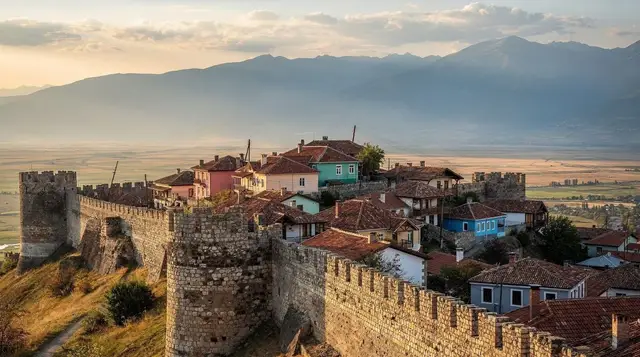
The Khareba wine tunnel at Kvareli
What is the Khareba wine tunnel at Kvareli?
It is a roughly eight-kilometre tunnel cut into the hillside above Kvareli, originally started for a different purpose and later repurposed by the Khareba winery as a wine cellar. Visitors walk or ride a short stretch of it, past qvevri and oak barrels ageing wine at a constant underground temperature, before finishing at a tasting room with a terrace looking out over the Alazani valley.
A cellar that used to be something else
Most wine cellars in Kakheti were built to be wine cellars. The Khareba tunnel, cut into the hillside just outside Kvareli, was not. It began as a Soviet-era tunnel project for a different purpose entirely, was left unfinished, and was later taken over by the Khareba winery, which found that a long, cool, humid tunnel bored straight into rock happens to be close to ideal for storing and ageing wine. That accident of history is most of what makes the place worth a stop: nowhere else in Kakheti do you taste wine standing in a passage built for something other than wine.
This guide covers what an actual visit involves, how it compares to the many other Kakheti wineries covered in A wine tour of Kakheti: how to plan it, and when to go if you would rather not share the tasting hall with three coach parties at once.
What the visit actually looks like
Visitors do not walk the tunnel’s full length — it runs for several kilometres into the hillside, far more than any tour needs. Instead, a guided walk (sometimes by golf cart for part of the way) covers the section nearest the entrance, lined on both sides with rows of qvevri and stacked oak barrels holding Khareba’s wine as it ages at a steady underground temperature. Signage and the guide explain which vessels hold which grape and how long each has been resting, which is a useful companion to Qvevri wine explained if the clay-vessel method is new to you.
The tour ends at a tasting hall built into the far end of the visited stretch, with a terrace that opens onto a genuinely good view across Kvareli and the Alazani valley toward the Caucasus foothills. Tastings here typically run through several of Khareba’s wines, usually including a Saperavi and a Rkatsiteli or two — see Saperavi: how to read a Georgian red if you want the grape explained properly before you taste it rather than mid-pour.
Getting there from Tbilisi
Kvareli sits a little under two hours from Tbilisi by road, on the far side of the Alazani valley from Telavi and beyond Sighnaghi if you are coming that way. There is no train connection; a marshrutka runs from Tbilisi to Kvareli, but the tunnel itself sits outside the town centre, so a taxi or pre-arranged transport for the last stretch is usually necessary if you are travelling independently.
In Vino Veritas Grape Harvest in Kakheti Region is based out of Kvareli and is the closest bookable option to this specific corner of Kakheti — it is worth noting that GetYourGuide does not currently list a ticket for the Khareba tunnel tour on its own, so a regional Kvareli-based wine day like this one, or a private driver who can add the tunnel as a stop, is the realistic way to combine it with a booked tour rather than turning up and hoping for a same-day slot.
Kakhetian Authentic Wine Tasting and Traditional Dinner is another Kvareli-area option, built around a sit-down tasting and dinner rather than a single cellar visit, useful if you would rather make an evening of the area than fit in a fast stop between other sights.
Should you go, if you have already done a Kakheti wine tour
Most Kakheti cellars share a broadly similar format: a walk through the working part of the winery, an explanation of the qvevri method, a tasting of three to six wines, and a shop on the way out. The Khareba tunnel follows that pattern too, and the wine itself is competent rather than exceptional compared with smaller producers around Telavi or the family cellars covered in The best wineries within two hours of Tbilisi.
What sets it apart is entirely the setting — walking a genuine tunnel rather than a purpose-built cellar — which makes it worth adding to an itinerary that already includes two or three other wineries, rather than being the single reason to plan a Kakheti day around Kvareli specifically.
Tbilisi: Kakheti Wine Tour with Tastings Lunch covers a broader spread of the region for anyone weighing up whether to prioritise Kvareli or spend that time in Sighnaghi and Telavi instead.
Avoiding the coach crowds
The tasting hall is a regular stop on group-tour itineraries out of Tbilisi, and several coaches tend to converge on it in the late morning and early afternoon, when the terrace and tasting counter can feel more like a transit hub than a wine cellar. Visiting first thing, or later in the afternoon once the day-trip buses have moved on to their next stop, gives a noticeably calmer visit and more of the guide’s attention. A private driver or a smaller group tour also has more flexibility to time the stop around the crowds than a fixed-departure coach tour does.
What it costs
Khareba, like most Kakheti wineries built for tour groups, charges for the tunnel walk and tasting together as a set experience rather than pricing the two separately, and the fee sits in the same broad range as a sit-down tasting elsewhere in the region — enough to cover the guide, the pours and the upkeep of a genuinely unusual piece of infrastructure, without being a major line item in a day that already includes transport and lunch. A specific figure varies by season and by whether you book independently or as part of a tour, so check the current price when you book rather than relying on a number here.
Combining Kvareli with the rest of Kakheti
Kvareli sits far enough from Sighnaghi and Telavi that fitting all three into one day from Tbilisi is ambitious — the driving alone eats a large share of daylight. Most visitors either treat Kvareli as the single furthest stop on a long group-tour day that also covers Sighnaghi, or base themselves overnight in the region and take Kvareli on a separate day from Telavi’s wineries. A weekend in Kakheti is built around exactly that kind of two-centre trip, and A wine-lover’s week: Kakheti, Kartli and Racha works Kvareli in as one stop among several across a longer trip.
If you are visiting during rtveli, the autumn grape harvest, note that cellars across the region, Khareba included, get busier and more interesting at once — see Rtveli: joining the grape harvest for how that timing changes what a tunnel visit looks like.
Chacha at the tunnel
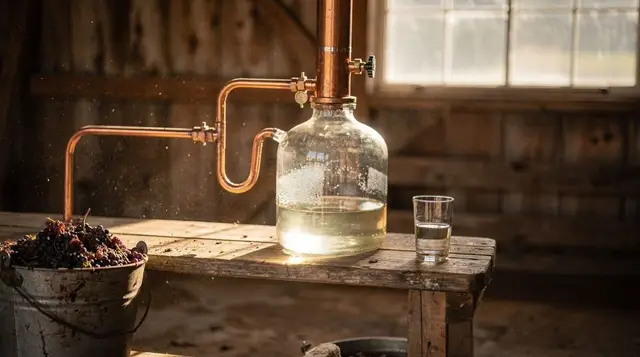
Like most Kakheti wineries, Khareba also produces and pours chacha, the grape-pomace spirit distilled from what is left over after pressing. It is not usually the centrepiece of a tasting here, more a closing pour after the wine, but if chacha is unfamiliar to you it is worth reading Chacha: what it is and how not to overdo it before your glass arrives, since it is considerably stronger than the wine you have just been tasting and easy to underestimate on that basis alone.
Who the tunnel actually suits
The Khareba tunnel works best for visitors who want one memorable, slightly unusual stop within a broader Kakheti day rather than a deep dive into small-producer wine. Anyone chasing the most interesting or distinctive wine in the region on its own merits is generally better served by the family cellars around Telavi, where the focus stays entirely on the winemaking rather than being shared with an unusual setting. Families travelling with children, on the other hand, often rate the tunnel highly precisely because the setting itself, rather than the wine, holds younger visitors’ attention in a way a standard tasting room struggles to.
Kvareli beyond the tunnel
Treating Kvareli as a single-attraction stop undersells the town. It is the birthplace of Ilia Chavchavadze, the 19th-century writer, publicist and national figure often credited with shaping modern Georgian literary and political identity, and a house museum dedicated to him sits in the town itself — a worthwhile pairing with the tunnel if 19th-century Georgian history interests you, and a different figure entirely from Alexander Chavchavadze of Tsinandali Estate, despite the shared family name.
A short drive from Kvareli, Nekresi Monastery sits on a wooded hilltop with views over the Alazani valley, one of the older monastic sites in Kakheti and a reasonable add-on if you have half a day rather than just an afternoon in the area.
Kindzmarauli: Kvareli’s other wine claim
The tunnel is not the only reason Kvareli matters to Georgian wine. The town and its surrounding vineyards give their name to Kindzmarauli, a protected semi-sweet red wine appellation made from Saperavi grapes grown specifically in this microzone — a genuinely different style from the dry Saperavi poured at most Kakheti tastings, and one worth asking for by name if a sweeter red interests you more than the tannic, structured version covered in Saperavi: how to read a Georgian red. Several producers around Kvareli, Khareba included, pour a Kindzmarauli alongside their dry reds, so it is worth asking specifically if the tasting menu does not flag it clearly.
What to bring
The tunnel itself stays cool year-round, considerably cooler than the Kakheti summer heat outside it, so a light layer is worth carrying even on a hot day — the temperature swing between the car park and the tunnel entrance catches some visitors off guard in July and August. Solid, closed shoes are sensible too, since the tunnel floor can be uneven and slightly damp in places given how far it runs into the hillside.
What guides actually tell you on site
Expect the guide leading your walk through the tunnel to spend real time on the site’s Soviet-era origin story before moving on to the wine itself, since the tunnel’s unfinished original purpose is genuinely part of what makes the stop distinctive rather than a footnote. Questions about exactly why the original project was abandoned tend to get a fairly general answer rather than a precise, documented one — treat that as part of the site’s character rather than a gap in the guide’s knowledge, since detailed archival records from the period are not always readily available even to people working on site every day.
The drive out, and what it passes
The road from Tbilisi to Kvareli follows much of the same route as a trip to Telavi and Sighnaghi before splitting further east, which means the drive itself doubles as a first look at the Alazani valley long before you reach the tunnel. Depending on the exact route your driver or tour takes, you may pass close to Gremi’s royal citadel or the turn-off toward Nekresi, both worth flagging to a private driver in advance if you would rather stop briefly than drive straight past on the way out. A coach-based group tour is less likely to offer that flexibility, which is one more reason a private driver suits travellers who already know they want to see more of the region than the tunnel alone.
A note on the spelling
You will see the town written both as Kvareli and Qvareli depending on the source — both refer to the same place, and the variation comes down to how the Georgian letter is transliterated into Latin script rather than any difference in meaning. Do not be thrown if a map, a bus timetable or a booking confirmation uses one spelling and a guidebook uses the other; they are the same destination.
First visit to Georgia versus a repeat trip
For a first-time visitor to Georgia with only one Kakheti day available, the Khareba tunnel competes for that single slot with Sighnaghi’s old town, Bodbe Monastery and the closer wineries around Telavi, and it is reasonable to prioritise those over the extra distance to Kvareli if this is your only chance to see the region. For a repeat visitor, or anyone with two or more days in Kakheti, the tunnel earns its place precisely because it offers something genuinely different from the cellar-and-tasting-room format you will already have seen elsewhere in the region on an earlier trip.
Booking ahead versus turning up
Because the tunnel sits on so many group-tour itineraries, turning up without a booking during peak season risks a wait for the next available guided slot, particularly around midday. Booking a tour or confirming a private driver’s plan in advance removes that uncertainty, and is generally the more reliable approach if your day has other stops planned around the visit and a long wait would throw off the rest of the schedule.
The honest verdict
The Khareba wine tunnel earns its place on a Kakheti itinerary for the setting rather than for wine that outclasses everything else in the region — it does not, and several smaller Telavi-area producers pour something more distinctive for less ceremony. What it does uniquely is let you taste wine standing inside several hundred metres of tunnel that has nothing structurally to do with winemaking, which is a genuinely different experience from a normal cellar, and reason enough to add it to a day that already has Sighnaghi or Kvareli town on the plan. Treat it as one strong stop among several rather than the sole reason to drive two hours from Tbilisi, and time your visit around the coach schedule if you can.
Frequently asked questions about the Khareba wine tunnel
Is the Khareba wine tunnel actually a wine cave, or was it built for something else?
It was not purpose-built. The tunnel dates from the Soviet period and was originally started for a different use before being abandoned; Khareba later adapted a section of it for wine storage and visits, which is why it extends so much further than a normal cellar.
How long is the tour inside the tunnel?
Visits cover a walkable stretch near the entrance rather than the full length, ending at a tasting hall with a view over Kvareli and the Alazani valley. Tunnel plus tasting usually runs under an hour.
How do you get to Kvareli from Tbilisi?
By road, a little under two hours. There is no direct train; a tour, a private driver, or a marshrutka to Kvareli followed by a short taxi are the realistic options.
Is the Khareba tunnel worth visiting if you have already done a Kakheti wine tour?
It depends on what you want. The wine itself is not dramatically different from other Kakhetian producers, but the tunnel setting is unusual enough to stand out, which is why it appears on so many group itineraries alongside Sighnaghi.
Does the Khareba tunnel get crowded?
Yes, especially late morning and early afternoon when several coaches tend to arrive together. Early or later-afternoon visits, or a smaller private tour, are noticeably quieter.
Can you buy wine at the Khareba tunnel to take home?
Yes, there is a shop by the tasting hall selling Khareba’s own bottles. See Buying Georgian wine to take home for how to pack and carry bottles onward from a stop like this.
Qvevri wine tasting and vineyard tours on GetYourGuide
Verified deep-linked GetYourGuide tours. Book through these links and we earn a small commission at no cost to you.
Photo: our own image of the location, not the operator’s product photo.