A monastery complex that outgrew the border drawn through it
David Gareja is a sprawling complex of rock-hewn monasteries carved into a ridge of semi-desert hills roughly two hours southeast of Tbilisi, hard against the Azerbaijan border — so hard against it, in fact, that part of the complex sits on territory both countries have historically disputed. It was founded in the 6th century by David Garejeli, one of the thirteen Assyrian fathers credited with establishing monasticism in Georgia, who is said to have chosen the site specifically for its isolation and harshness, a test of devotion in a landscape with almost no natural water and blistering summer heat.
What grew from that original hermit’s cell became, over the following centuries, one of the largest monastic complexes in the Caucasus, with an estimated several thousand cells, chapels and refectories carved into the rock across a dozen or more separate monastery clusters spread over several kilometres of ridge. A day trip here sits at the opposite end of the spectrum from a relaxed city stay in Tbilisi — long, remote and physically demanding rather than a gentle add-on.
A history of destruction and revival
David Gareja’s history is one of repeated near-destruction followed by slow rebuilding, which is part of what makes the surviving frescoes and cave architecture feel remarkable rather than simply old. The complex was sacked multiple times over the centuries by invading forces moving through the region, most infamously in 1786 when Persian forces under Agha Mohammad Khan attacked during Easter celebrations, killing a large number of monks in what is remembered in Georgia as one of the complex’s darkest episodes.
It was largely abandoned during the Soviet period, when the surrounding steppe was used at times as a military training ground — shelling and manoeuvres caused further damage to some of the cave structures and their frescoes, a fact that adds a layer of irony to the site’s more recent border tensions, given that Soviet military activity had already put the complex at risk decades before either independent state existed to dispute the boundary. Monastic life resumed at the Lavra after Georgian independence in 1991, and restoration work has continued since, though large sections of the wider complex remain unrestored ruins rather than active sites.
The Lavra: the part that’s reliably open
The Lavra, David Gareja’s founding monastery at the base of the ridge, remains an active religious community and the part of the complex every visitor can count on seeing. Cave cells, a chapel built around David Garejeli’s tomb, and a small working monastic population give the Lavra a genuinely lived-in atmosphere rather than a purely archaeological one — this is one of the few great cave monastery complexes in the region still functioning as an actual monastery rather than existing solely as a heritage site. Modest dress is expected, as at any active Georgian Orthodox site.
A day tour combining the Lavra with the surrounding Rainbow Mountains landscape is the standard way most visitors see the site, and a reasonable choice given the site’s remoteness and the limited public transport options for reaching it independently. General guidance on dress and behaviour at any working Georgian Orthodox site — relevant at the Lavra as much as at any city church — is covered in the church etiquette in Georgia guide.
Udabno and the frescoes — and why access isn’t guaranteed
Above the Lavra, a steep path climbs the ridge to Udabno Monastery, whose cave walls hold some of the best-preserved medieval Georgian frescoes anywhere in the country, depicting biblical scenes and portraits of Georgian royalty in a style distinct from the more Byzantine-influenced painting found elsewhere. The path also crosses, at points, onto ground that sits within territory Azerbaijan has historically claimed as its own — a genuinely unresolved border question dating back to Soviet-era administrative boundaries that were never cleanly redrawn along an agreed line once both countries became independent.
That unresolved status has led, at various points over the past two decades, to restricted or entirely closed access to the upper Udabno section, sometimes with little advance notice, tied to periods of heightened tension between the two governments.
Visitors specifically chasing the frescoes should check current access conditions close to their travel dates rather than assuming based on an older trip report or a tour operator’s standard itinerary description — the situation has changed more than once and is not something this page can promise as reliably open. The David Gareja monastery guide tracks the practical access situation in more detail and is worth reading immediately before a visit rather than well in advance.
The Rainbow Mountains and the semi-desert landscape
Quite apart from the monasteries, the Udabno semi-desert landscape itself has become a draw in its own right — eroded hillsides in bands of red, ochre, grey and green mineral striping, popularly nicknamed the Rainbow Mountains, visible from a short additional walk beyond the main monastery path. The terrain is genuinely stark: almost no shade, sparse vegetation, and a silence broken mostly by wind, a striking contrast with the lush wine country of Kakheti visible in the distance on a clear day.
A off-road tour focused on the desert ridge and viewpoints suits visitors more interested in the landscape than the religious history, though most operators combine both in a single itinerary regardless.
Heat is the main practical hazard here rather than any border concern — there is essentially no shade across the entire site, and midsummer temperatures on the exposed rock and dirt paths can be genuinely dangerous without enough water. Good boots matter too: much of the terrain is loose scree and dirt rather than a maintained path.
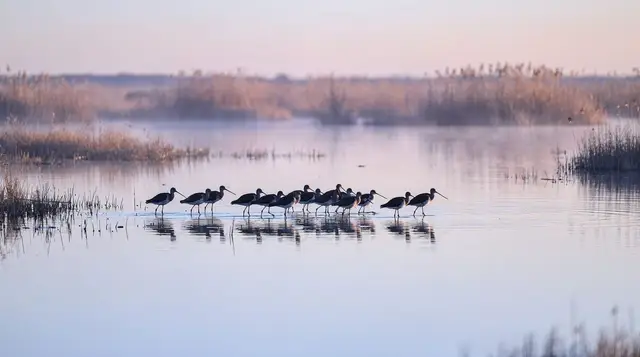
The surrounding steppe, part of a protected semi-desert landscape bordering Vashlovani further southeast, supports birds of prey — including species of eagle and vulture that nest in the cliffs around the monastery caves — along with a scattering of hardy scrub vegetation adapted to the near-total lack of surface water. Wildlife sightings are more a matter of luck and quiet observation than a guaranteed feature of a visit, but the landscape’s ecological starkness is as much a part of the experience as the monastic history for visitors paying attention to more than the caves alone.
Getting there, and why most people go with a tour
David Gareja sits roughly 60-70km from Tbilisi as the crow flies but considerably further by road, and the final stretch is a rough, partly unpaved track that a standard rental car can struggle with, particularly after rain. There is no meaningful public transport option covering the full route, which is the main reason the overwhelming majority of visitors arrive as part of an organised tour or with a private driver rather than attempting an independent trip.
A round trip from Tbilisi, including several hours at the site, typically takes 6-7 hours total. What to bring matters more here than at almost any other Kartli day trip: at least 1.5-2 litres of water per person, a hat and sunscreen regardless of season, and sturdy closed shoes rather than sandals, since the paths up to Udabno involve genuine scrambling over uneven rock in places.
A combined tour pairing David Gareja with a Kakheti wine stop on the return leg is a common and sensible way to make the long drive feel less like a there-and-back trip, since Kakheti’s wine region sits roughly on the way back toward Tbilisi from Udabno.
Combining David Gareja with Sighnaghi
Because David Gareja sits closer to Kakheti than to central Tbilisi in practical driving terms, several tours combine it with Sighnaghi rather than running it as a standalone round trip from the capital — a more efficient use of the long drive out, and a natural pairing given Sighnaghi’s own proximity to the Kakheti wine region. The David Gareja in a day guide lays out both the standalone Tbilisi round trip and the combined Sighnaghi version, with realistic timing for each.
For a broader view of where David Gareja ranks against Georgia’s other day trips in terms of time cost versus payoff, see the best day trips from Tbilisi, ranked honestly guide, which is candid about it being one of the longer, more logistically demanding options on the list rather than an easy add-on. It also appears as one stop on the one-week Georgia itinerary, typically slotted alongside the Kakheti leg rather than run separately from Tbilisi, for travellers with enough time to absorb a genuinely long day without it crowding out everything else on the itinerary.
How David Gareja compares to Georgia’s other cave sites
Georgia has several notable rock-hewn sites, and David Gareja is genuinely distinct from the others rather than a smaller version of the same idea. Vardzia, in the far south near the Turkish border, is a single dense cave city built primarily for defence and civilian habitation under Queen Tamar, with thousands of interconnected rooms carved into one cliff face — visually more immediately dramatic in a single frame. Uplistsikhe, near Gori, is older still and was a genuine ancient town rather than a monastery.
David Gareja is different again: a scattered network of dozens of separate monastic communities spread across several kilometres of a desert ridge, built for religious withdrawal rather than defence or settlement, with a starker, emptier landscape around it than either of the other two sites. The Georgia’s cave cities compared guide lays out the distinctions between all three in more detail for travellers deciding which, if not all, are worth prioritising on a single trip.
Photography and timing the light
The Rainbow Mountains’ colour banding is most vivid in the low, angled light of early morning or late afternoon, when shadows pick out the striations in the eroded hillsides — midday sun flattens the colour contrast considerably, which is one more reason to prioritise an early departure from Tbilisi over a late one. Inside the cave chapels, photography of the frescoes is sometimes restricted or discouraged depending on the specific site and current monastic guidance, out of respect for spaces that remain consecrated rather than purely historical; checking with a guide or any posted signage before photographing interior religious art is the respectful default here as at any active Georgian Orthodox site.
The border question, in plain terms
The Georgia-Azerbaijan border dispute affecting parts of David Gareja is a genuinely unresolved diplomatic issue rather than a resolved historical footnote, and it is worth understanding in outline before visiting rather than being caught off guard by a closed gate or a soldier turning a group back partway up the ridge. Soviet-era administrative maps drew the boundary through the monastery complex in a way that split it between what became, after 1991, two separate sovereign states, and negotiations over a final delimitation have continued on and off for decades without full resolution.
Visitors should treat any specific claim about “the border is currently open” or “currently closed” as accurate only at the time it was written, including the guidance on this page — conditions have shifted multiple times and can shift again. The broader land borders with Armenia, Turkey and Azerbaijan guide covers Georgia’s border situations generally, though David Gareja’s issue is a boundary dispute rather than a standard crossing point.
When to visit
Spring and autumn are considerably more comfortable than summer, when the exposed, shadeless terrain can reach genuinely uncomfortable and even risky temperatures by midday. An early morning start, both to beat the heat and to have more daylight buffer for the long drive, is worth prioritising regardless of season.
Winter access can be affected by the rough final approach road, particularly after rain or snow, and is worth confirming with a tour operator or driver before setting out. The site is genuinely quiet outside the summer season, which suits visitors who value solitude over the added logistical certainty of a warm-weather trip, though the exposed terrain feels considerably colder and windier in winter than the drive up from Tbilisi might suggest.
Frequently asked questions about visiting David Gareja
Is David Gareja worth the long drive from Tbilisi?
For visitors with a genuine interest in early Christian monastic history or dramatic semi-desert landscapes, yes. For a first-time, time-limited visitor prioritising the highest-value sights near Tbilisi, it ranks below Mtskheta or Ananuri in terms of time cost versus payoff.
Can you visit the frescoes at Udabno Monastery right now?
It depends on current border access conditions, which have changed multiple times over the past two decades. Check with a tour operator or recent visitor reports close to your travel dates rather than relying on an older source.
Do you need a 4x4 to reach David Gareja independently?
Not strictly, but the final stretch of unpaved track can be rough, especially after rain, and a standard sedan rental can struggle. Most independent travellers without an off-road-capable vehicle use an organised tour or private driver instead.
How long does a full visit take, and is there anywhere to eat or buy water?
Budget 6-7 hours for the round trip from Tbilisi including 2-3 hours at the site, longer if combining the visit with a Kakheti wine stop on the way back. There is no vendor or shade at the monastery complex itself, so bring more water than feels necessary — the nearest proper food stop is generally back toward Sighnaghi or Tbilisi.
Is David Gareja dangerous because of the border dispute?
Not in the sense of active conflict — this is a long-standing, largely diplomatic disagreement rather than an active security threat to visitors. The practical impact is intermittent access restrictions to the upper Udabno section rather than any danger at the Lavra or the main visited areas, and organised tours will not knowingly take a group anywhere access is currently restricted.
Is modest dress required at David Gareja?
Yes, as at any active Georgian Orthodox monastery — shoulders and knees covered, particularly at the Lavra, which remains a functioning monastic community. Bringing a light scarf or shawl to cover up on arrival saves scrambling for one at the entrance in a hot, shadeless car park.
Can David Gareja be combined with Vardzia, and how do the two compare?
Not comfortably in a single day given the distances involved — they sit in different directions from Tbilisi and are better treated as separate trips. Vardzia is the more reliably accessible and visually dramatic single-frame site; David Gareja offers a starker landscape and a more scattered, exploratory feel but comes with longer travel time and added uncertainty around upper-site access.
Is David Gareja suitable for visitors with limited mobility?
Only partially — the Lavra at the base is reasonably accessible, but reaching Udabno and the Rainbow Mountains viewpoints involves a genuine uphill scramble over uneven rock with no paved path or railings, which will not suit everyone.