Tbilisi weather month by month
What is Tbilisi's weather like across the year?
Winter (December–February) is mild but grey and damp rather than bitterly cold. Spring builds through March and April into a pleasant May. Summer, especially July and August, turns genuinely stifling, regularly above 35°C. Autumn, particularly September and October, is the most comfortable stretch of the whole calendar.
A city that changes more than the season names suggest
Tbilisi’s climate sits at the edge of continental and subtropical influences, which gives the city a weather pattern that swings further between its extremes than a similar-latitude city in Western Europe might. Its river-valley setting traps summer heat and, to a lesser extent, winter damp, so the difference between an August afternoon and a January one is more dramatic than the modest distance on a map would suggest.
This guide goes through what each month actually delivers, building on the broader picture in The best time to visit Georgia and the fuller seasonal detail in Georgia in summer, Georgia in winter, Georgia in spring and Georgia in autumn.
January and February: the mild, grey floor of the year
January is Tbilisi’s coldest month, though “cold” here means mild-to-cool and persistently overcast rather than the deep freeze a similar latitude further north might deliver. Daytime temperatures typically sit in a range that makes a coat necessary but rarely feels brutal, and the defining feature of these two months is grey skies and damp air more than raw cold.
Snow falls occasionally, more likely in late January or February, but at the city’s elevation it rarely settles for more than a day or two before melting. This is the season covered in more depth in Georgia in winter, and it’s also New Year and Orthodox Christmas territory — see New Year and Orthodox Christmas in Georgia for what changes around the holidays specifically.
Tbilisi: History of Sulphur Baths Walking Tour is one of the better ways to spend a grey January or February day, pairing a walk through Abanotubani’s bathhouse district with the option of a soak afterward.
March: transitional, unpredictable
March is the month Tbilisi’s weather is hardest to predict from a distance. Some years deliver an early, mild spring; others hold onto winter’s grey well into the month, with cold snaps alternating with a run of milder days. Rain is generally more frequent in March than in the depths of winter or the height of summer. It’s a workable month for city sightseeing with flexible, layered clothing, but not one to plan around consistently good weather.
April: spring becomes real
By April, Tbilisi’s spring is unmistakable: parks and green spaces fill back in, outdoor café seating returns to regular use, and daytime temperatures become genuinely comfortable for a full day of walking without either a heavy coat or real heat to manage. Georgia in spring covers this month, and the following one, in more depth, including what’s realistic beyond the capital at this point in the year.
May: the strongest spring month, and a genuine contender for the year’s best
May typically offers Tbilisi’s best all-round combination of warmth, greenery and manageable rainfall before summer’s heat takes over. It’s warm enough for a full day outdoors without yet being uncomfortable, and it’s late enough in spring that the mountain roads referenced in Mountain roads and when they open and close are, in most years, close to fully reopening. Many repeat visitors rank May alongside September as the two strongest single months on the calendar.
June: warming quickly toward summer
June marks the real transition into summer conditions, with temperatures climbing steadily through the month and the first genuinely hot days typically arriving before June ends. It remains a reasonable month for city walking if mornings and evenings are prioritised over the middle of the day, and it’s also the point at which the Black Sea coast becomes reliably swimmable — see When the Black Sea is warm enough to swim for the specifics.
July and August: the stifling peak
July and August are Tbilisi’s hottest months by a clear margin, regularly pushing past 35°C with heat that lingers on the city’s stone-paved streets well into the evening, since the same surfaces that give the old town its character also hold the day’s warmth long after sunset. Georgia in summer, and how to escape the heat is built specifically around restructuring a trip for these two months — mornings and evenings for the city, the middle of the day for something shaded, elevated or coastal.
From Tbilisi: Day Trip to Kazbegi is one of the more effective ways to get real relief from these two months’ heat, since the Georgian Military Highway climbs well above the city’s elevation into noticeably cooler conditions within a few hours’ drive.
September: the year’s best month
September is where Tbilisi’s weather peaks for most travellers’ purposes: the heat has broken without the city having turned cold, humidity drops, and the light softens compared with summer’s harsh midday sun. Georgia in autumn: the best season, and why makes the fuller case for this month and October together, including the Kakheti wine harvest that runs alongside the weather advantage.
October: cooler again, still comfortable
October continues September’s comfortable pattern with a further step down in temperature, remaining pleasant for walking-heavy days without summer’s heat or winter’s grey. Rainfall picks up gradually as the month progresses, and by late October the first genuinely cold, damp days of the approaching winter can appear, though this varies year to year.
November: the hinge into winter
November is Tbilisi’s clearest transitional month toward winter, with temperatures dropping steadily, days shortening noticeably, and grey, damp conditions becoming more frequent than in October. It’s still a workable month for a city-focused visit, particularly for travellers who prioritise fewer crowds over ideal weather, but it sits closer in character to the winter months covered above than to the autumn peak just before it.
December: winter arrives, holidays begin
December brings Tbilisi fully into winter’s mild-but-grey pattern, with the approach of New Year and Orthodox Christmas giving the city a specific seasonal atmosphere — markets, decorations, a livelier evening scene — that partly offsets the shorter days and cooler temperatures. Old Tbilisi Private Walking Tour and Cable Car works well even in December’s shorter daylight, combining a walking tour with the Narikala cable car for a compact, weather-flexible half-day.
Rainfall through the year
Tbilisi doesn’t have a single defined wet season the way some climates do; rainfall is spread across the year with two modest peaks, one in spring and a smaller one in late autumn, rather than one concentrated monsoon-style stretch. May and June tend to bring the most frequent showers of the warmer months, often as short, sometimes heavy downpours rather than all-day rain, while the peak of summer, particularly August, is comparatively dry alongside the heat.
Late autumn and early winter bring a return of more frequent, lighter rain, usually without the intensity of the spring showers. Practically, this means a light rain layer is worth packing for a spring or late-autumn trip in a way it usually isn’t for a July visit, when the bigger concern is sun and heat rather than rain. A sudden downpour rarely lasts more than an hour or two even in the wetter months, so it’s usually worth waiting it out under cover rather than cancelling the day’s plans entirely.
Daylight hours and how they shape a day
Daylight length swings substantially between Tbilisi’s winter and summer, with the shortest days around the December solstice giving noticeably less usable daylight than the long evenings of June and July. This matters for planning in a concrete way: a winter sightseeing day needs to start earlier and build in less overall walking time than a summer one, while a midsummer evening leaves enough light for a late dinner and an evening stroll along Rustaveli Avenue that simply isn’t possible in December. Anyone building a tight day-by-day itinerary should factor this in rather than assuming a fixed number of daylight hours applies year-round.
Humidity, sun exposure and what it feels like on the ground
Tbilisi’s summer heat is compounded by humidity that, while not tropical, is high enough to make the peak of the day feel more oppressive than the raw temperature figure alone suggests, particularly in the narrower streets of the old town where airflow is limited. Sun exposure is also worth taking seriously outside the deep of winter: UV levels climb quickly through spring and stay high through summer, and the city’s relatively high elevation compared with a sea-level European capital means sunburn can happen faster than visitors expect, especially on an extended walking day. Sunscreen, a hat and shade breaks are sensible from April through September, not just in the hottest weeks.
How Tbilisi compares with a few reference points
Travellers arriving from Western Europe sometimes underestimate both ends of Tbilisi’s range: its summer heat is closer to a Mediterranean or Balkan capital’s peak than to anything typical further north, while its winter, though mild by regional Caucasus standards, still delivers more grey, damp days in a row than many visitors expect from a city this far south. Compared with nearby Yerevan, Tbilisi’s winters tend to run slightly milder thanks to its lower elevation and more sheltered valley position, while summer conditions in both cities can feel similarly intense during the July–August peak.
Clothing by month, briefly
A rough packing logic follows directly from the pattern above: layers and a rain shell for March, April, October and November; light, breathable clothing plus sun protection for June through August, with an evening layer for cooler nights; a proper warm coat, waterproof footwear and a scarf for December through February; and a flexible middle ground — a light jacket that can come off by midday — for May and September, the two months where the day’s temperature swing is often the widest relative to how mild the month feels overall.
A quick month-by-month summary
Putting the year in order: January and February are mild but grey; March is unpredictable; April and May build into spring’s best conditions; June transitions into summer; July and August are genuinely stifling; September is the year’s strongest single month; October remains comfortable; November hinges toward winter; and December settles into winter’s mild, damp, holiday-lit pattern. No single month is objectively “bad” for a visit, but the trip’s shape — indoor versus outdoor time, mountain versus city focus — should shift with the month rather than assume a single template works year-round.
What the weather means for specific activities
Different parts of a Tbilisi visit tolerate the calendar’s extremes differently. Walking-heavy days — the old town, Sololaki’s Art Nouveau streets, the climb toward Narikala — are most comfortable April through June and September through October, and hardest in July and August without careful timing. Museum and indoor culture days work in any month but earn their keep most clearly in winter and in the hottest stretch of summer, when they double as genuine weather refuges rather than just one item on a longer list.
The sulphur baths of Abanotubani are a year-round activity but, as Georgia in winter sets out, arguably work best precisely when the outside air is coldest, for the contrast alone. Rooftop bars and evening terraces come into their own from May through September, when warm evenings make outdoor seating genuinely pleasant rather than a concession to a limited alternative.
Public holidays layered onto the weather calendar
Weather isn’t the only thing that shifts month to month — several public holidays and festivals sit on top of this calendar and are worth cross-referencing before finalising dates. Public holidays and what closes covers Georgia’s fixed and movable holidays through the year, which can affect opening hours and transport schedules independently of what the weather itself is doing on a given date. Combining the two — weather suitability and the holiday calendar — gives a more complete picture than either alone when narrowing down exact travel dates.
Why the mountains don’t follow this calendar
Everything above describes Tbilisi specifically, at its relatively low elevation in a sheltered river valley. The high mountain regions — Kazbegi, Svaneti, Tusheti — run on a different clock entirely, with their own snow, opening and closing dates covered in Mountain roads and when they open and close and The Georgian ski season. A warm May day in Tbilisi says very little about whether a high pass is open, and a cold December in the capital is exactly the season Gudauri’s ski resort comes alive. Treat this page as the Tbilisi-specific piece of a larger picture, not the whole picture.
From Tbilisi: Tbilisi City Tour works as a weather-flexible orientation to the capital in almost any month on this list, useful as a first-day anchor regardless of when a trip happens to fall.
A note on how reliable this pattern is
The pattern described above holds in a typical year, but Tbilisi, like the wider Caucasus, doesn’t repeat identically every twelve months — a late cold snap can push spring back by a couple of weeks, and an unusually hot September can blur the line between summer and autumn described here. Treat this page as the reliable shape of the year rather than a guarantee for any specific date, and check closer to travel if a trip’s plans hinge on a particular month behaving exactly as described.
Frequently asked questions about Tbilisi’s weather
What is the hottest month in Tbilisi?
August, closely followed by July. Both months regularly push past 35°C with heat that lingers into the evening on the city’s stone-paved streets.
What is the coldest month in Tbilisi?
January, though “coldest” in Tbilisi means mild-to-cool and grey rather than severely cold by regional standards; the city rarely holds prolonged sub-zero conditions the way parts of the wider Caucasus and Eastern Europe do.
Does it snow in Tbilisi?
Occasionally, mostly in January and February, but snow at the city’s elevation rarely settles for long. It’s a very different picture from the mountain regions a few hours away, where snow can sit for months.
What is the best month for walking Tbilisi’s old town?
September and October offer the best combination of comfortable temperature and low rainfall. May is a close second, before summer’s heat sets in.
Is Tbilisi rainy?
Rainfall is spread fairly evenly across the year rather than concentrated in one wet season, with spring and early summer tending to bring slightly more frequent showers than the drier peak of summer.
Is it worth checking a forecast close to travel rather than relying on this page?
Yes, for anything specific to particular dates. This guide describes Tbilisi’s typical pattern month by month, useful for choosing which month to travel in, but individual years vary, and a forecast checked a few days out will always be more accurate than a seasonal average for exact planning, such as whether to pack a rain shell for a specific afternoon.
How much does the weather change between Tbilisi and the mountains nearby?
Substantially. A short drive up the Georgian Military Highway toward Kazbegi gains well over a thousand metres of elevation, and the temperature and conditions there can be dramatically different from the capital on the same day, in any season.
Seasonal experiences on GetYourGuide
Verified deep-linked GetYourGuide tours. Book through these links and we earn a small commission at no cost to you.
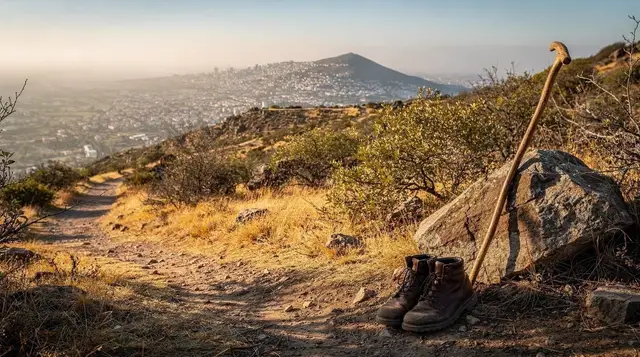
Photo: our own image of the location, not the operator’s product photo.