Black Rock Lake, Lagodekhi: a three-day trek, not a day hike
Can you hike to Black Rock Lake in Lagodekhi in one day?
No. Black Rock Lake (Shavi Tba) is roughly 40km round trip from the reserve entrance with over 1,700m of ascent, and the Agency of Protected Areas structures it as a three-day, two-night route using ranger huts. It also sits close to the border with Russia's Dagestan region, so a border-zone permit is required in advance.
A lake most visitors to Kakheti never reach
Lagodekhi is usually a name on the way to somewhere else — the last town before Azerbaijan, a stop on a Kakheti wine itinerary, or a footnote about the country’s oldest protected area. Black Rock Lake (Shavi Tba in Georgian) is the reason a small, committed group of hikers make Lagodekhi their destination rather than their stopover.
It sits at around 2,700m in the Greater Caucasus ridge that forms the border with Russia’s Dagestan region, inside Lagodekhi Protected Areas, and reaching it is a genuine multi-day trek — not the kind of half-day walk to a waterfall that most people picture when they hear “hike near a wine region.” If you are looking for that shorter option, see Day hikes you can do from Tbilisi instead; this guide is for the longer, harder route.
Lagodekhi Protected Areas was established in 1912, making it one of the oldest formally protected nature reserves in the Caucasus, originally set up to preserve the forested slopes above the town from logging and overgrazing. The reserve now stretches from lowland Colchic-type forest around 750–900m up through beech and then subalpine birch forest, into open alpine meadow and finally bare ridge above 2,500m. Black Rock Lake sits near the top of that gradient, which is exactly why it takes three days rather than one: the trail does not shortcut the elevation, it climbs through it.
What the trek actually involves
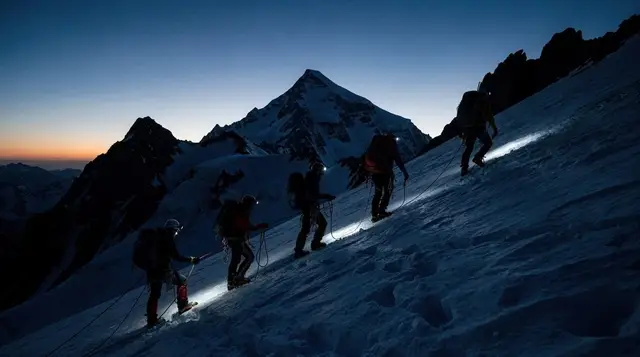
The round trip from the reserve’s visitor centre in Lagodekhi town to Black Rock Lake and back covers roughly 40km, with cumulative ascent well over 1,700m. The Agency of Protected Areas, which manages the route, structures it as a three-day, two-night itinerary using a chain of basic ranger houses along the way — simple wooden cabins with bunks, not huts with a kitchen or running hot water. Day one is the long forest climb to the first ranger house; day two continues up through the treeline to the lake, with the second night spent at or near the upper hut; day three is the descent back to town. Some strong, well-acclimatised hikers compress this into two days, but three is the realistic default, and nobody should plan on doing it in one.
The trail itself is well marked by Georgian standards — this is one of the country’s better-managed protected areas — but it is a real mountain route: river crossings that can be awkward after rain, long stretches of switchbacks through forest with no view to break the climb, and a final approach across open, exposed terrain where weather turns quickly. Afternoon cloud and rain are common in summer, which is part of why an early start each day matters more than it might on a shorter walk.
The border permit — the part people forget
Because the ridge above Black Rock Lake sits directly on the border with Dagestan, part of the route runs through Georgia’s restricted border zone. Reserve registration through the Agency of Protected Areas covers the park itself, but the border-zone sections require a separate permit, arranged with the border police in advance — this is not something you can sort out at the trailhead the morning you arrive.
In practice this means planning the trek at least several days ahead, not as a spontaneous add-on to a Kakheti wine trip. Rangers at the Lagodekhi visitor centre can point hikers to the current permit process, and it is worth confirming details directly with them before travelling, since border-zone rules are administered separately from park entry and can change.
This is also, worth saying plainly, not a route to attempt by wandering off the marked trail to see what is over the next ridge. The border itself is not signed in any way a casual hiker would notice from a distance, and treating the area with the seriousness it deserves is not optional.
Season and conditions
Late June through September is the realistic window. Snow can linger on the upper sections into June in a heavy year, and the ranger houses and trail are not maintained or staffed for winter travel — this is not a shoulder-season target the way a lowland walk might be. July and August are warmest but also when Kakheti’s afternoon thunderstorms are most frequent, which matters more at 2,700m than it does in a vineyard. September often gives the most stable multi-day weather window, with cooler nights at the huts but clearer skies. For a broader picture of when Georgia’s high- mountain trails generally open and close, see When the Georgian hiking season actually opens.
Gear, guides and what to book ahead
Because this is an unsupported multi-day trek — no huts sell food, no cafés appear along the way — hikers carry all their own food and a stove, plus a sleeping bag rated for near-freezing nights even in summer at that altitude. A guide is not a legal requirement for the park sections, but given the distance, the weather changes and the total absence of phone signal for most of the route, going with a local guide or an experienced, well-equipped group is the sensible choice rather than a formality. Guides, gear and mountain rescue in Georgia covers how to find one and what a rescue actually looks like if something goes wrong.
Ranger house bunks must be reserved in advance through the Agency of Protected Areas — Lagodekhi’s rangers will not send hikers up without a confirmed booking, partly because the huts have limited capacity and partly so the park knows who is on the mountain. Build this into your planning alongside the border permit rather than treating either as a formality.
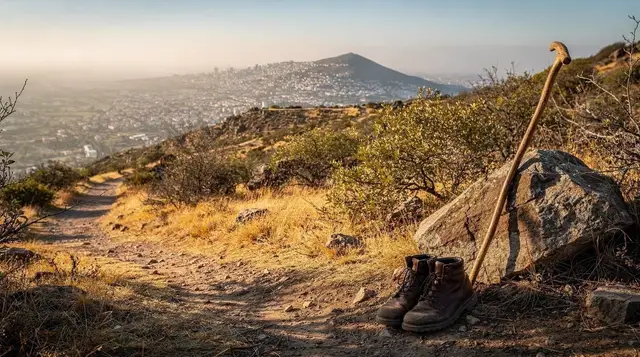
A sturdy pair of already broken-in boots matters more here than almost any other piece of kit — three consecutive days of ascent and descent on uneven, sometimes wet forest and scree terrain is not the place to discover a new pair rubs. Trekking poles help considerably on the steeper descents, and layered clothing is worth packing even in the height of summer, since temperatures at the ranger houses drop sharply after dark regardless of how warm the forest felt lower down.
Fitness and preparation
There is no technical climbing on the Black Rock Lake route — no rope, no scrambling — but the combination of distance, sustained ascent and consecutive long days means general fitness matters more here than on any of the shorter walks covered elsewhere in this guide’s category. Hikers who have done one of Georgia’s easier multi-day routes, such as the lower sections of Trekking in Tusheti or a long day on the Mestia to Ushguli trek, have a reasonable sense of what three consecutive days of mountain walking with a loaded pack feels like.
First-time multi-day trekkers are better served building up on a shorter overnight route first rather than making Black Rock Lake their introduction to backpacking in Georgia — not because it is unusually technical, but because there is no easy bail-out partway through: once past the first ranger house, turning back still means a long walk either direction.
Costs and how far ahead to plan
Beyond the reserve’s standard entrance registration, budgeting for this trek means the ranger house bunk fees, the border-zone permit application, and if hiring one, a guide’s day rate — all modest by international trekking standards, but each with its own process and, in the case of the permit, its own lead time. Two to three weeks ahead is a reasonable minimum for sorting the border permit alongside hut bookings; leaving it until arrival in Lagodekhi risks the whole three-day plan falling through on a technicality that had nothing to do with fitness, weather or gear.
Who this trek actually suits
Black Rock Lake rewards hikers who want a genuine wilderness trek without the crowds of Georgia’s better-known multi-day routes, and who are comfortable with the extra planning a border-zone permit adds. It is a poor fit for anyone hoping to combine serious hiking with a relaxed Kakheti wine trip in the same few days — the two do not compress together, and trying to force them tends to shortchange both. Travellers torn between the two are usually better off treating Lagodekhi’s reserve as a dedicated add-on to a longer Georgia trip, rather than squeezing it into the tail end of a wine-focused Kakheti itinerary.
If three days is more than you want
Most travellers passing through Kakheti are not signing up for a three-day border-zone trek, and that is a reasonable call. Lagodekhi Protected Areas has shorter, unrestricted walks near the entrance — forest paths to waterfalls that take a few hours rather than a few days — and the wider Lagodekhi area also has some of Kakheti’s least visited organic wineries, worth combining into a single day trip from a base in Sighnaghi or Telavi.
Kakheti: Lagodekhi Nature Flora Wine with Driver covers exactly that lower-key version: a day with a private driver through the reserve’s accessible trails and flora, paired with local wine, for anyone who wants a taste of Lagodekhi’s nature without three days of ranger huts.
If wine is the bigger draw, Tbilisi: Mtskheta Kakheti Lagodekhi National Park Tour runs from Tbilisi and covers Lagodekhi alongside a wider Kakheti loop, useful for travellers based in the capital who want the region in a single long day rather than a dedicated multi-day trip.
Getting to Lagodekhi
Lagodekhi town sits close to the Azerbaijan border, at the eastern edge of Kakheti, reached by marshrutka or private transfer from Tbilisi or from Telavi and Kvareli if you are already touring the wine region. There is no train service, and self-driving gives the most flexibility for reaching the trailhead early — a genuine advantage for a trek where an early start each day matters. See Driving in Georgia and Renting a car in Georgia if that is the plan. Accommodation in Lagodekhi itself is modest — small guesthouses rather than hotels — which suits a one-night stay before an early trailhead start.
What the landscape actually looks like along the way
The appeal of the Black Rock Lake route is as much about what changes underfoot as it is about the lake itself. The first several hours out of the reserve entrance run through Colchic-type forest — dense, humid, closer in character to the forests of Georgia’s Black Sea region than to the drier Caucasus valleys further west, with an understory of ferns and rhododendron that thins as the trail climbs.
By the end of day one the forest has shifted to beech, then to stunted birch clinging to the steeper slopes near the first ranger house, and by day two the trees have given way entirely to open subalpine meadow, thick with wildflowers through July, before the final approach onto bare rock and scree below the lake itself. Lagodekhi’s reserve status since 1912 means this transition has been left largely undisturbed by grazing or logging for over a century, which is part of why the forest here feels denser and less broken up than in many of Georgia’s more accessible hiking areas.
Wildlife sightings are possible but not something to plan around — the reserve holds brown bear, lynx and a range of smaller mammals, along with a genuinely large bird list, but dense forest cover means most hikers see far more evidence (tracks, droppings) than animals themselves. Rangers occasionally mention recent bear activity at the entrance briefing, worth taking seriously in terms of food storage at the huts rather than as a reason for alarm.
A realistic day-by-day breakdown
Day one typically starts early from the reserve entrance in Lagodekhi town, climbing steadily through forest for six to eight hours to reach the first ranger house, with a substantial part of the day’s elevation gain packed into the final approach. Day two continues up past the treeline, crossing several stream drainages before the final push onto the open ground around the lake — a shorter day in distance than day one but harder in effort, given the altitude and terrain underfoot, with the second night usually spent at or close to the upper hut rather than by the lake itself, since the lake area has no permanent shelter.
Day three is the descent, which moves faster than the climb but still takes most of a day given the distance back to town. Groups that want to linger at the lake — for photography, or simply to sit with the view before the descent — sometimes build in extra time on the morning of day two, arriving at the ranger house with enough daylight left for a proper look before dark.
Water, food and what the huts do not provide
None of the ranger houses along the route sell food or supplies, so everything eaten on the trek needs to be carried in from Lagodekhi town, along with a stove if you want a hot meal at altitude — the huts provide shelter and bunks, nothing more. Stream water is generally available along most of the route and is what hikers and rangers alike use, though treating or filtering it is the sensible default rather than assuming any mountain stream in a protected area is automatically safe. Anyone unused to self-catering multi-day treks should treat this as a genuine logistical exercise, closer to backcountry camping than to a guesthouse-to-guesthouse trek, and pack accordingly.
How this compares to Georgia’s other big treks
Black Rock Lake is less well known than Tusheti or the Mestia to Ushguli trek, and that relative obscurity is part of the appeal — far fewer hikers, and rangers who have time to talk you through the route in detail. It is also shorter than either of those in total trekking days, but comparably demanding day to day, given the elevation gain packed into three days rather than four to six. If you are choosing between Georgia’s multi-day trekking regions for a single trip, Kazbegi or Svaneti? covers the more commonly compared pair, but Lagodekhi is worth a look for anyone who has already done one of those and wants somewhere quieter.
Anyone planning a wider Kakheti visit around the trek should also read A wine tour of Kakheti: how to plan it for how Lagodekhi fits into a longer regional itinerary, and Health, pharmacies and insurance for what kind of travel insurance actually covers a mountain rescue if the trek goes wrong — regular travel policies often exclude activities above a certain altitude or without a guide, so it is worth checking the policy wording, not just buying the cheapest one.
The reward at the top
For all the planning the trek demands, the payoff at Black Rock Lake itself is straightforward: a clear alpine lake set among bare, dark rock at the top of the treeline, quiet enough that the loudest sound is usually wind or, in a good year, ice still cracking on the surface into early summer. It is not a dramatic postcard view in the way some of Georgia’s more photographed spots are — no fortress, no church, nothing built by human hands in sight — and that starkness is precisely the point for the hikers who make the effort to reach it.
Frequently asked questions about the Black Rock Lake trek
The questions below cover what most people ask before committing to the route — timing, permits and whether it is realistic for a first big hike in Georgia.
How long does the Black Rock Lake trek take?
The standard itinerary is three days and two nights: day one to the first ranger house, day two on to the lake and a second night at altitude, day three back down. Fit, fast hikers sometimes compress it, but the distance and altitude gain make a single day unrealistic.
Do you need a permit for Black Rock Lake?
Yes. The trail runs close to the border ridge with Dagestan (Russia), inside a restricted border zone, so hikers need a border permit arranged through the Agency of Protected Areas of Georgia ahead of time, in addition to the reserve’s own entrance registration.
Is Black Rock Lake actually black?
No — the name refers to the dark, mineral-streaked rock of the surrounding ridge rather than the water, which is a clear alpine lake at around 2,700m, fed by snowmelt and often still holding ice into early summer.
When is the trail open?
Realistically late June to September. Snow lingers on the high sections into June most years, and the ranger huts and route are not maintained for winter travel.
Do you need a guide for Black Rock Lake?
It is not legally required if you are only registering for the reserve trail (as opposed to the restricted border sections), but the terrain, weather changes and lack of phone signal make a local guide or at minimum a well-briefed, well-equipped group the sensible choice.
Where do you sleep on the way to Black Rock Lake?
In the reserve’s ranger houses (basic wooden cabins with bunks, not hotels), which must be reserved in advance through the Agency of Protected Areas — they are not first-come, first-served, and Lagodekhi’s rangers will not let you set off without a confirmed booking.
Can beginners do the Black Rock Lake trek?
Only with realistic expectations. The distance and cumulative ascent put it well beyond a casual walker’s day, and altitude, weather and stream crossings all add difficulty a first-time trekker in Georgia is unlikely to have met yet on an easier route.
Mountain hikes on GetYourGuide
Verified deep-linked GetYourGuide tours. Book through these links and we earn a small commission at no cost to you.
Photo: our own image of the location, not the operator’s product photo.