Walks that work with small legs
What are the easiest walks in Georgia for young children?
Tbilisi's riverside promenade and Vake Park, Batumi's seafront boulevard, and Sighnaghi's flat fortress-wall loop are the most reliably flat, stroller-friendly walks in the country. Old Town Tbilisi's upper lanes toward Narikala, by contrast, are steep and cobbled and are better tackled with a carrier than a stroller.
Georgia is a country built on hills, and it shows
A quick note before the route-by-route detail: this guide is written for the specific problem of travelling with strollers, prams or small children who tire on gradient and cobblestones, not as a general list of the country’s best or most scenic walks. Several routes that appear in other guides on this site as highlights, particularly around Old Town Tbilisi and the more dramatic mountain scenery further afield, are deliberately absent or flagged here as difficult, because scenic and manageable are two different questions with two different answers in Georgia.
Most of Georgia’s most photographed towns and cities sit on hillsides, gorges or mountain slopes, which is part of what makes the country visually striking and part of what makes it genuinely hard work with a stroller or a young child who tires quickly on steps and slopes.
This guide is deliberately narrow: rather than listing every scenic route, it flags the specific stretches that are actually flat and manageable with small legs or wheels, and calls out the well-known routes that look easy on a map but are not, so you can plan a walking day around what will actually work rather than discover the gradient halfway up a cobbled lane with a crying toddler. None of the routes below require any special fitness or equipment beyond ordinary footwear and, where noted, either a stroller or a carrier, and each is described honestly rather than rounded up to sound more manageable than it actually is on the ground.
Tbilisi’s riverside promenade: the default easy option
The paved path running alongside the Mtkvari River through the centre of Tbilisi is the single most reliable flat walk in the city, wide enough for strollers to pass each other comfortably and mostly free of the steps and cobbles that define the hillside districts. It runs past Rike Park, within sight of the cable car station, and connects reasonably well to the lower reaches of the Old Town without requiring a climb. On a hot day, shade is patchy rather than constant, so timing a riverside walk for morning or early evening avoids the harshest midday sun.
Vake Park: green space with real infrastructure
Vake Park, on the western side of the centre, has the most developed infrastructure for families of any green space in Tbilisi: shaded paths, functioning playground equipment, open lawns for running, and a boating lake in season. Paths through the park are flat and paved, and the park is large enough that a full circuit gives a genuinely tiring walk for an energetic child without needing to leave the grounds. It sits a short taxi ride from the centre rather than in comfortable walking distance of the Old Town, which is worth factoring into how you plan the rest of the day around it.
Rustaveli Avenue: flat but busier
Rustaveli Avenue, the city’s main boulevard, is flat and has wide pavements, making it another reasonably easy stretch to cover with a stroller, though it carries more traffic noise and crowds than the riverside path or Vake Park. It runs past the opera house, several museums and a run of shops and cafés, useful if you want a walk that doubles as a chance to duck into somewhere for a break rather than a purely green, quiet route. See Rustaveli Avenue: what is actually worth stopping for for what sits along the way.
The Old Town’s upper lanes: honestly, not stroller territory
It would be dishonest to include Tbilisi’s most photographed streets in a stroller-friendly list without a clear caveat: the lanes climbing from the lower Old Town toward Narikala Fortress, and through the Sololaki district’s back streets, are cobbled, often stepped, and genuinely hard work with wheels rather than a minor inconvenience. A soft carrier, or accepting that an older child will need to walk that stretch on foot at their own pace, works better than persisting with a stroller uphill.
The lower streets near Meidan Square are the exception and remain flat enough to manage. See A self-guided walking route through Tbilisi’s Old Town for the full route with the steeper sections flagged, and Narikala Fortress and the cable car for how the cable car changes the calculation, though the fortress grounds themselves remain uneven underfoot even once you are up there.
Turtle Lake: a flat loop once you are up the hill
Reached by cable car from near Mtatsminda rather than on foot from the city centre, the paths around Turtle Lake itself are flat and offer a genuine change of scenery from urban walking, with rowing boats available in season for children old enough to sit still in one. The transport up is the part that does the climbing rather than your legs, which is exactly the trade-off that makes this route work well with tired children by the middle of a longer day.
Tbilisi: Turtle Lake Mtatsminda Park Funicular Tour combines the cable car ride with the lakeside walk, useful for covering both without arranging transport twice.
Mtatsminda’s paved plazas: easier than the fortress alternative
Compared with Narikala’s uneven fortress terrain, the paved plazas and paths around Mtatsminda’s funicular station and amusement park are considerably more manageable with a stroller, even though getting up there in the first place still relies on the funicular or cable car rather than walking. Full detail on the rides and layout at the top is in Mtatsminda amusement park.
Tbilisi: Local Sweets Tour W Mtatsminda Park Cable Car Ride pairs the cable car ride with a gentle, food-focused stop at the top, a reasonable way to combine an easy walk with a treat for children who have earned a break.
Batumi Boulevard: the easiest sustained walk in the country
If a single stretch of pavement in Georgia deserves the label stroller-friendly without qualification, it is Batumi’s seafront boulevard: flat, fully paved, several kilometres long, with cycle paths, benches and patches of shade from planted trees along most of its length. It is wide enough to comfortably share with cyclists and other pedestrians, and its length means you can choose how much of it to cover rather than committing to a fixed route. See Batumi Boulevard end to end for the specific landmarks along the way.
Batumi: City Highlights Batumi Boulevard Walking Tour is a guided way to cover the boulevard’s landmarks with commentary, useful if you want structure rather than simply strolling.
Choosing between a stroller and a carrier before you land
Deciding whether to bring a stroller at all is worth doing before you land rather than after struggling with one on a cobbled lane. A lightweight, compact stroller works well for the flat routes above — the riverside promenade, Vake Park, Batumi’s boulevard — but becomes more of a burden than a help the moment you head into the Old Town’s upper streets or any hillside fortress. A soft structured carrier, while more tiring for the adult wearing it over a full day, handles every kind of terrain in this guide without exception, which is why many families travelling around several Georgian towns in one trip bring both rather than committing to just one system for the whole itinerary.
Indoor flat walking on a hot or rainy day
When the heat or the weather rules out an outdoor walk altogether, Tbilisi’s larger shopping malls, Tbilisi Mall and East Point on the edge of the centre, offer flat, air-conditioned indoor space that works as a genuine walking substitute rather than just a shopping trip, useful for children who need to move but the outdoor conditions do not cooperate. See Shopping in Tbilisi: markets, malls and design shops for locations, and What to do in Tbilisi when it rains for the wider set of indoor options beyond just walking space.
Sighnaghi: a flat fortress-wall loop in the hills
Sighnaghi, perched above the Alazani Valley in Kakheti, looks like classic hillside Georgian architecture from a distance, but the walk along the top of its fortress walls is largely flat once you are up there, offering sweeping valley views without much additional climbing. The town itself is small enough that a family can cover the main square and a stretch of the walls without an exhausting amount of walking, making it one of the more manageable hilltop towns to visit with children despite its elevated setting.
Borjomi: a gentle, shaded park walk
Borjomi’s central park, built around the source of the country’s famous mineral water, has gentle, largely flat paths through mature shaded trees, a genuine relief on a hot day compared with the more exposed stretches of Rustaveli or the boulevard in Batumi. It is a lower-key walking option than the city routes above, better suited to a slow, unstructured stroll than a route with specific landmarks to tick off. See Borjomi water at the source and Borjomi for the fuller picture of the town beyond the park itself.
Accessibility beyond strollers
Everything in this guide about stroller-friendly terrain applies just as directly to wheelchair users and anyone else with mobility considerations, and the same routes — riverside Tbilisi, Vake Park, Batumi’s boulevard — are the reliable choices, while the Old Town’s upper lanes and most fortress grounds remain genuinely difficult regardless of the type of wheels involved. See Accessible travel in Georgia for the broader picture of infrastructure and specific venues beyond walking routes alone.
Where flat walks mostly do not exist: the mountains
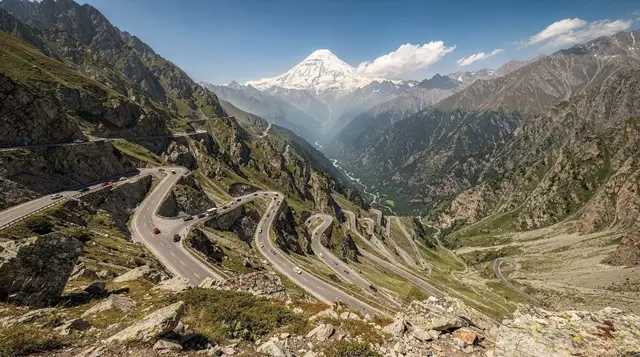
Kazbegi, Svaneti and most of Georgia’s mountain destinations are, by their nature, built on genuine gradient, and there is little point pretending otherwise: the terrain itself is the attraction, and flat walking options are limited to short stretches near village centres rather than anything resembling the routes above. If mountain scenery matters more to your family than flat walking, plan around shorter outings and more frequent breaks rather than expecting Tbilisi-style pavement.
Footwear and surface: what actually causes the complaints
More than distance itself, surface is usually what turns a walk sour with small children: cobbles and uneven paving stones, common across every hillside district in this guide, are tiring and sometimes genuinely painful for a child in soft-soled shoes, in a way flat asphalt or the riverside’s smooth paving is not.
Proper closed-toe shoes with some sole support make a bigger difference on Georgian streets than they might elsewhere, and sandals, however comfortable they feel at breakfast, tend to be the first thing regretted by mid-afternoon on any of the steeper Old Town routes, and the same applies to anything with a thin, flexible sole that offers no real protection against an uneven stone catching a small foot at an awkward angle. Packing a spare pair of socks and shoes for a child prone to getting wet feet at Turtle Lake or during a Black Sea paddle is a small thing that saves an uncomfortable second half of the day.
Benches, shade and where to actually rest
Beyond the route itself, the presence and spacing of benches makes a bigger practical difference than most planning guides admit: the riverside promenade and Batumi’s boulevard both have frequent seating, while Rustaveli Avenue and much of the Old Town have far less, meaning a proper sit-down rest often means finding a café rather than a public bench. Shade follows a similar pattern — Vake Park and Borjomi’s central park are genuinely well treed, while the boulevard and Rustaveli rely on younger, more widely spaced planting that offers only intermittent relief through the middle of the day. Factoring both into a route choice, not just flatness, makes a bigger difference to how the walk actually feels than distance alone would suggest.
Pacing: the real variable, more than any single route
Most children under about six manage twenty to thirty minutes of steady walking before needing a proper break rather than a mere slow-down, and this varies enormously by child, by heat and by how interesting the surroundings are to them at that moment. Building any of the routes above around a café, playground or simple bench roughly every half hour works better in practice than picking a single long, unbroken stretch and hoping everyone’s stamina holds.
Combining this guide with Tbilisi with children and Batumi with children gives the fuller picture of what to do at each stop along the way, and Georgia with children covers how to sequence flatter and steeper days across a longer trip.
Timing walks around Georgia’s seasons
Summer heat in Tbilisi and along the coast makes an exposed midday walk genuinely uncomfortable for a young child, and shifting the same route to morning or the couple of hours before sunset makes a noticeable difference without changing anything about the route itself. Spring and autumn generally offer the most comfortable temperatures for extended outdoor walking across the whole country, neither too hot for a long stroller push nor cold enough to need heavy layers that then have to be carried once the child warms up from moving.
Winter in Tbilisi is workable for shorter walks but cuts into daylight hours noticeably, so building in an earlier start matters more than in the warmer months. See The best time to visit Georgia for the fuller seasonal picture behind these adjustments.
Frequently asked questions about family-friendly walks in Georgia
Is Tbilisi Old Town suitable for a stroller?
Only partly: the lower streets near Meidan Square and the riverside path are flat enough, but the lanes climbing toward Narikala Fortress and through Sololaki are cobbled and often stepped. A carrier works better than a stroller for that stretch.
What is the flattest walk in Tbilisi with a stroller?
The riverside promenade along the Mtkvari and the paths through Vake Park are the two most consistently flat, paved routes in the city, both wide enough for a stroller to pass others comfortably. Rustaveli Avenue is also flat and wide, though busier with traffic noise.
Is Batumi’s seafront boulevard good for walking with children?
Yes, it is the easiest sustained walking stretch on the whole coast: flat, fully paved and several kilometres long, with benches and patches of shade along the way. It is the single most stroller-friendly route covered in this guide.
How long can a young child realistically walk before needing a break?
Most children under about six manage twenty to thirty minutes of steady walking before needing a proper break rather than just a slow-down, though this varies a lot by child and by heat. Building routes around a café, playground or bench roughly every half hour of walking works better than planning one long uninterrupted stretch.
Are there flat walks outside Tbilisi and Batumi suitable for children?
Sighnaghi’s fortress-wall walk in Kakheti is flat and offers views without much climbing, and the lower paths around Borjomi’s central park are gentle and shaded. Mountain destinations like Kazbegi and Svaneti have far fewer flat options, since the terrain itself is the main obstacle there.
What should we bring on a family walk in Georgia’s heat?
Water, sun hats and sunscreen matter more here than most visitors expect, since shade is inconsistent on several of the flatter routes, particularly Batumi’s boulevard and parts of Rustaveli Avenue. A folding fan or a small spray bottle helps on the hottest summer afternoons.
Is Narikala Fortress accessible with a stroller?
No, not realistically: the approach on foot involves steep, cobbled lanes, and even the cable car option requires navigating uneven fortress grounds at the top. A carrier is the more practical choice for visiting Narikala with a young child.
Family-friendly tours on GetYourGuide
Verified deep-linked GetYourGuide tours. Book through these links and we earn a small commission at no cost to you.
Photo: our own image of the location, not the operator’s product photo.