Mtatsminda Park and the funicular
What is Mtatsminda Park and how do you get there?
Mtatsminda Park is a hilltop amusement park and viewpoint above Tbilisi, reached by a funicular railway from Chonkadze Street near Rustaveli, or a longer cable car route from further down the hillside. A funicular return ticket costs around 5 to 7 GEL, and the ride itself takes about five minutes each way.
Tbilisi’s second hillside viewpoint
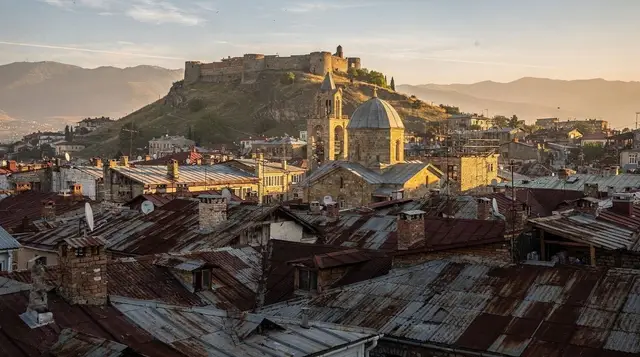
Where Narikala Fortress rises directly above the Old Town, Mtatsminda (“holy mountain” in Georgian) is the taller ridge on the opposite side of the modern city centre, reached from a station near Rustaveli Avenue by a funicular railway that has carried passengers up the hillside since 1905. At the top sits Mtatsminda Park, a hilltop amusement park with a Ferris wheel, a rollercoaster and a scattering of other rides, alongside what is simply one of the best panoramic views over Tbilisi — wider and further back than Narikala’s closer view over the Old Town rooftops, taking in the whole sweep of the city and the mountains beyond on a clear day.
A funicular with its own long history
The line opened in 1905, built by a Belgian company at a time when funicular railways were spreading across European cities as a fashionable solution to steep urban terrain, and it has run in various states of repair ever since — closed for extended periods during the more difficult decades of the twentieth century, reopened, closed again for renovation, and reopened once more in the 2010s with modern carriages replacing the historic ones. The lower station building itself, an Art Nouveau structure from the original 1905 construction, is worth a glance even before boarding.
The funicular: cost, hours and the ride itself
The funicular departs from a station on Chonkadze Street, a short walk from Rustaveli Avenue, and climbs the hillside in around five minutes, gaining considerable height quickly enough that the view opens up fast through the carriage windows. A return ticket costs roughly 5 to 7 GEL, bought at the lower station, and operating hours run broadly from mid-morning to around 10 or 11pm, extending later on weekends and shifting with the season. Like Narikala’s cable car, service can suspend in high wind, which is worth keeping in mind on this more exposed, higher ridge.
Tbilisi: Mtatsminda Park with Funicular and Cable Car Ride covers the funicular ride together with the park itself and, depending on availability, the connecting cable car section further along the ridge, useful for visitors who want the full hillside covered in one booking.
What is actually at the top
Mtatsminda Park itself is a genuine, functioning amusement park rather than a viewing platform with a couple of rides bolted on — a Ferris wheel with panoramic views from the top of its rotation, a rollercoaster, and a mix of older Soviet-era mechanical rides alongside newer additions. Individual rides are priced separately from the funicular fare, generally a few lari each, and it is worth a visual check of the older rides before putting a child on one, since maintenance standards vary across the park.
Away from the rides, simply walking the park’s edge for the view is free and, for many visitors, the actual point of the trip. A restaurant with a terrace looks out over the city from partway up the hillside, a reasonable stop for a coffee or a meal with a view, though priced above what the same food costs lower down in the city.
St David’s Church and the Pantheon
A short walk down from the upper funicular station is St David’s Church, a small but significant site in Georgian religious history, and immediately below it the Mtatsminda Pantheon — a hillside cemetery where a number of prominent Georgian writers, artists, scientists and public figures are buried. It also holds the graves of Nino Griboyedova, the young widow of Russian writer and diplomat Alexander Griboyedov, and other figures connected to Georgia’s nineteenth-century literary and political life. It is a quiet, contemplative stop, worth the ten minutes even for visitors who would not normally seek out a cemetery, given who is buried here and the view over the city from the terraced grounds.
Tbilisi: Mtatsminda Monastery and Funicular Guided Tour is built around this stretch specifically, useful if the history behind the Pantheon’s graves interests you more than the amusement park above.
Getting there and the walking alternative
The funicular’s lower station is a genuinely easy walk from Rustaveli Avenue and Freedom Square, a natural add-on to a day already spent on Rustaveli Avenue or as part of a longer stay covered in Tbilisi in three days. A hiking path up the hillside exists for visitors who would rather walk than ride, though it is a considerably longer and steeper climb than anything in the Old Town and not something most casual visitors attempt; the funicular is the practical choice for the overwhelming majority of trips up.
Mtatsminda versus Narikala: which one to prioritise
If time allows for only one hillside viewpoint, Narikala Fortress is generally the better single choice for a first visit, since its view sits directly over the Old Town — the part of the city most visitors have actually spent time in and can recognise from above — and it pairs naturally with the sulphur baths below it.
Mtatsminda’s view is wider and arguably more dramatic, but it looks out over a city you may not yet have explored, which makes it a better second- or third-day outing once the Old Town is familiar, or a good pick specifically for travellers with children who want an amusement park attached to the view. See The best viewpoints in Tbilisi for how both compare against the city’s other vantage points.
Photographing the view
The Mtatsminda panorama works well at almost any time of day given the height and the clear sight lines, but the hour before sunset gives the warmest light across the Old Town rooftops and the distant hills — see Where to photograph Tbilisi, hour by hour for the specific timing recommended for this spot compared with the city’s other viewpoints. Haze builds through the day in summer, particularly on warmer afternoons, so a clear morning or evening trip generally gives sharper photographs than midday.
Food and where to break for a meal
The restaurant terrace at the top has the view but charges accordingly; a cheaper and often better option is to eat before or after the funicular ride down near Rustaveli Avenue, where Where to eat in Tbilisi has a wider range of genuinely good, fairly priced options within a short walk of the lower station. A coffee at the top while taking in the view is a reasonable small splurge even if a full meal is not.
Tbilisi: Local Sweets Tour W Mtatsminda Park Cable Car Ride pairs the funicular ride with a tasting stop for Georgian sweets, a pleasant lighter add-on rather than a full meal if that suits the visit better.
Extending further: Kojori Fortress
Beyond Turtle Lake, further along the same road out of the city, sits Kojori Fortress, a much less visited ruin with sweeping views back toward Tbilisi and out over the surrounding hills — a reasonable half-day extension for anyone who has already done Mtatsminda and Narikala and wants a quieter third hillside stop without the crowds either of the more central fortresses attract.
Turtle Lake and beyond
Further along the same ridge, past Mtatsminda Park, a road continues toward Turtle Lake, a small reservoir popular with locals for walking and, in summer, swimming — a genuinely different, quieter atmosphere from the amusement park, and a reasonable extension for anyone with a free afternoon and no fixed plan.
Tbilisi: Turtle Lake Mtatsminda Park Funicular Tour combines both stops for visitors who want the fuller hillside experience covered without arranging transport onward from the park themselves.
Fitting Mtatsminda into a longer stay
Mtatsminda is not usually a first-day priority — most visitors reasonably spend day one in the Old Town and at Narikala Fortress, leaving Mtatsminda for a second or third day once the Old Town’s geography is familiar and the wider view means more.
It fits well alongside a morning on Rustaveli Avenue, since the funicular’s lower station is only a short walk from the avenue itself, and works as a lighter, more family-friendly alternative to a full day trip if energy or weather rules out Mtskheta or another excursion that day. See Tbilisi in three days for how it slots into a longer itinerary without competing for the same time as the Old Town walk.
Booking the funicular-and-park combination directly is worth it for a family day out, since it bundles the ride and park entry into one straightforward ticket without needing to work out pricing at the base station.
Accessibility and practical notes
The funicular carriages themselves are step-accessible with assistance, though the park’s paths at the top include some slopes and uneven ground around the older ride areas. Wind is the main practical concern here more than at almost any other Tbilisi attraction, given the ridge’s height and exposure — check conditions before making a special trip on a blustery day, since a suspended service with no advance warning is a genuine possibility rather than a rare edge case.
Best time of year to go up
Mtatsminda’s height above the city makes it noticeably cooler than the streets below, which is worth factoring into when you go rather than treating it as an afterthought. In the height of summer, when Old Town streets can feel oppressive by mid-afternoon, the ridge catches a breeze that most visitors find genuinely pleasant rather than merely tolerable, and a warm evening up here after a hot day in the city is one of the more comfortable ways to end it.
Winter brings the opposite trade-off: some of the more exposed rides close for the season or run only on milder days, wind cuts harder at altitude than it does at street level, and photography light through the haze that settles over Tbilisi in colder months is often flatter than in the clearer air of spring or autumn.
Spring and autumn split the difference well, with fewer of summer’s crowds and generally reliable service, which makes either season the more forgiving choice if a single weather-dependent day is all you have free. Evenings, whatever the season, add another dimension entirely — the city’s lights spread out below once the sun is down, a different view from the daytime panorama and, for many visitors, the more memorable of the two.
Tickets, cards and what actually gets you in
Paying for the funicular works the same way as the rest of Tbilisi’s public transport network — a Metromoney card, the same one used on the metro and buses, taps in at the lower station and is generally the quickest way through if you already have one from getting around the city. Cash works too, at a ticket window by the lower entrance, useful if you have not yet picked up a card or would rather not add a small transaction to it.
The amusement park rides at the top are billed separately from the funicular fare itself, either through a top-up card system specific to the park or individual cash payment per ride, so budget for this on top of the return fare rather than assuming one ticket covers everything. There is no dedicated all-inclusive Mtatsminda pass beyond what a booked funicular-and-park tour bundles together, which is worth knowing before assuming a single upfront payment will cover the whole visit.
Mistakes worth avoiding
A few avoidable missteps come up often enough with this particular outing to flag directly. Turning up without checking wind conditions on a blustery day is the most common one — the service can suspend with little warning, and a wasted trip to the lower station is a genuinely deflating way to lose an hour. Underestimating how much time the Pantheon and St David’s Church add is another: visitors who plan for “the funicular and the park” alone often rush past what is arguably the more thoughtful stop on the hillside, or skip it outright for lack of time.
Assuming the top restaurant is a reasonable lunch option on a tight budget is a third — it is priced for the view, not for value, and anyone counting lari carefully is better off eating near Rustaveli before or after the ride rather than at altitude. Finally, visiting in the middle of a hot, hazy summer afternoon purely for photographs is rarely worth it; the softer light and clearer air of morning or the hour before sunset consistently produce better results here than the flat midday glare that summer haze tends to bring.
What to bring for the trip up
The ridge’s height and exposure make it worth packing slightly differently than for a day in the Old Town below. A light jacket or extra layer is worth carrying even on a warm day, since the breeze at the top is noticeably stronger and cooler than at street level, and what feels like plenty of warmth by Rustaveli Avenue can feel thin once the funicular has climbed a few hundred metres. Water is worth carrying too, particularly in summer, since prices at the top-of-hill kiosks and the restaurant run higher than what the same bottle costs lower in the city.
Sunscreen matters more here than the altitude might suggest, given how much time many visitors spend outdoors walking the park’s edge or queuing for rides in direct sun. Comfortable shoes help for the uneven ground around the older rides and the sloped paths near the Pantheon, and a little cash in hand speeds up paying for individual rides if the park’s card top-up queue is long, which it often is on a busy weekend afternoon.
Frequently asked questions about Mtatsminda Park and the funicular
How much does the Mtatsminda funicular cost?
A return ticket costs roughly 5 to 7 GEL, paid at the lower station either in cash or with a Metromoney card. Individual amusement park rides at the top are priced separately, on top of the funicular fare.
What time does the Mtatsminda funicular run?
Generally from around 10 or 11am until 10 or 11pm, later on weekends and in summer, though it can close early in high wind. It is worth checking the current schedule locally rather than assuming a fixed timetable, since the hours shift with the season more than most Tbilisi attractions.
Is Mtatsminda Park worth visiting if you are not interested in the amusement rides?
Yes — the view over Tbilisi from the ridge is one of the best in the city, and the walk around the park’s edge and the Pantheon nearby are worth the trip on their own, independent of whether you ride anything.
What is the Pantheon on Mtatsminda?
The Mtatsminda Pantheon is a hillside cemetery below the park where a number of prominent Georgian writers, artists and public figures are buried, including relatives connected to the writer Alexander Griboyedov. It is a short walk from St David’s Church, reachable on the same funicular line.
Can you walk up to Mtatsminda instead of taking the funicular?
Yes, via a hiking path that climbs the hillside from near the park’s base, though it is a considerably longer and steeper ascent than Narikala’s walking route and not commonly done by casual visitors. Most people take the funicular both ways.
How does Mtatsminda compare to Narikala Fortress for views?
Mtatsminda sits higher and further back from the Old Town, giving a wider view of the whole city including areas Narikala does not show, while Narikala’s view is closer and more focused on the Old Town rooftops directly below. Both are worth doing on separate outings rather than trying to combine them in one visit.
Is Mtatsminda Park suitable for children?
Yes, it is one of the more reliably child-friendly outings in Tbilisi, with a Ferris wheel, a rollercoaster and other rides aimed at families, though some of the older mechanical rides show their age and are worth a visual check before committing a child to them.
Old Town walking tours on GetYourGuide
Verified deep-linked GetYourGuide tours. Book through these links and we earn a small commission at no cost to you.
Photo: our own image of the location, not the operator’s product photo.