Chalaadi Glacier: the easiest big walk in Svaneti
How long is the hike to Chalaadi Glacier?
Around 8-9 km round trip from the trailhead near Mestia, mostly flat forest track with under 200 m of elevation gain, taking 2.5-3.5 hours round trip. A shared 4x4 covers much of the approach road, shortening the walking section for anyone with less time.
The gentler side of Svaneti hiking
Most of the hikes around Mestia — Koruldi Lakes chief among them — demand real fitness and sustained climbing. Chalaadi Glacier is the exception: a mostly flat forest walk that ends at a genuinely dramatic destination, a glacier face close enough to feel its cold air before you reach it, without the multi-hour uphill grind that defines most of Svaneti’s other trails. It is the honest recommendation for families, anyone with a single lower-key day to spare, or hikers who tried something harder earlier in the trip and want a gentler day before moving on.
Getting to Mestia first
As with every hike in this part of Svaneti, the trip starts with getting to Mestia itself, either an 8-9 hour drive from Tbilisi or a short flight from Natakhtari or Kutaisi when weather allows — see Getting to Svaneti for how those options compare. Because Chalaadi demands so little in the way of fitness or planning compared with the region’s other trails, it is often the first walk visitors do after arriving, a gentle way to stretch the legs after a long journey in before attempting anything more demanding.
The route
From the trailhead a short drive outside Mestia, the trail follows the Chalaadi river through dense forest — pine and beech giving way to more open, rockier ground as you near the glacier itself. The path gains under 200 m of elevation across the whole route, which by Svaneti standards is close to flat, and stays well shaded for most of its length, a real advantage on a hot midsummer afternoon when the exposed upper trails elsewhere in the region offer no relief from the sun. Round trip distance from the standard trailhead runs roughly 8-9 km, and most walkers complete it in 2.5 to 3.5 hours including a stop at the glacier viewpoint.
The final stretch, where the forest opens onto glacial moraine and the ice face itself comes into view, is rockier and requires more careful footing than the rest of the walk, but involves no climbing or exposure that would concern an average hiker.
Chalaadi Glacier Tour covers this route with a guide who can point out where it is safe to approach the glacier’s edge and where current conditions call for more distance, useful given how much the glacier’s face changes season to season.
What the glacier actually looks like
Chalaadi is a valley glacier descending from the high peaks above Mestia, its face streaked grey and white with rock debris carried down within the ice rather than presenting the clean blue-white wall some visitors expect from photographs of glaciers elsewhere in the world. This is normal for a glacier at this elevation and does not make it less worth seeing — the scale up close, and the genuinely cold air pouring off the ice, are the parts that tend to surprise first-time visitors more than the colour does. Meltwater streams and the low grumble of moving ice and occasional falling rock are part of the experience too, one more reason to respect any distance markers rather than pushing closer for a photograph.
Why the glacier is retreating, and why that matters for the visit
Like most valley glaciers in the Caucasus, Chalaadi has retreated noticeably over recent decades, and the moraine field you cross on the final approach — bare rock and rubble rather than forest — marks ground the ice itself covered within living memory. This is not presented as a lecture so much as context for why the marked viewpoint sits where it does: the glacier’s face is less stable and more prone to calving ice or shifting rock at its retreating edge than it would have been further back, and the distance rules in place reflect that rather than excessive caution. It is also, for anyone interested, one of the more accessible places in Georgia to see glacial retreat directly rather than read about it.
The 4x4 shortcut
A rough access road covers a meaningful part of the route from Mestia, and shared or private 4x4s run it through the summer season, cutting the walking down to a shorter final stretch on foot regardless. This is a sensible option for anyone short on time or travelling with very young children, though the walk itself is gentle enough that most visitors who are physically able choose to do the whole thing on foot rather than pay for the shortcut.
Mestia: Chalaadi Glacier Private Hike with Transfer combines a private transfer to the trailhead with the guided walk, a reasonable middle ground for anyone who wants to save time on the approach without skipping the hike itself.
Combining Chalaadi with Koruldi Lakes
The two are commonly paired into a single guided day, and the combination works because they demand such different levels of effort — Chalaadi as the easier warm-up or wind-down, Koruldi Lakes as the harder objective. Mestia: Chalaadi Glacier Hike Koruldi Lakes Day Trip packages both into one day for travellers with limited time in Mestia, though anyone not pressed for time should consider splitting them across two days rather than tackling Koruldi Lakes’ 1,000 m of climbing on the same day as an earlier walk, since fatigue from Chalaadi first will make the harder hike feel considerably worse than it needs to.
A different half-day: Mazeri and the waterfalls
For travellers looking for a second easy-to-moderate walk in the wider Mestia area beyond Chalaadi, the Mazeri side of Svaneti, on the other side of the Becho pass, offers its own set of waterfall walks with a similarly gentle profile. Mestia: Mazeri Waterfalls Guided Hike with Transfers covers this as a guided day trip from Mestia, worth considering as an alternative rather than repeating Chalaadi on a second day in the region.
Season
Chalaadi is accessible over a longer window than Svaneti’s higher hikes, roughly May through October, since most of the route sits below the elevation where snow lingers into summer. The glacier itself is visually most dramatic in early to midsummer, when meltwater is at its most active; by late September the surrounding forest colour changes but the crowds thin out considerably, a reasonable trade for anyone visiting outside peak season. See When the Georgian hiking season actually opens for how this compares with the higher, more weather-dependent hikes elsewhere in the region.
What makes this different from a lowland forest walk
It is worth being clear about what sets Chalaadi apart from an ordinary forest trail, since “easy” undersells the destination itself. The transition from dense, shaded woodland to open glacial moraine happens over a relatively short distance, and the temperature and light both shift noticeably as you make that transition — cooler air pouring off the ice, a wider, starker landscape replacing the enclosed forest, and the sound of the glacier itself, a low, occasional grinding or cracking that takes first-time visitors by surprise.
None of Svaneti’s other easy walks deliver quite this contrast between approach and destination, which is part of why Chalaadi remains a recommended stop even for visitors who came to the region specifically for its harder trails.
Families and lower-effort days
Of every hike covered across this guide series, Chalaadi is one of the more genuinely family-friendly options: flat, shaded, well-marked, and short enough to complete comfortably with children who can manage a few hours of walking. It is not without any rough ground — the final approach over moraine requires reasonably sturdy shoes and some care with footing — but it avoids the sustained climbing that rules out most of Svaneti’s other trails for younger children or less experienced walkers. For a wider view of what else works well with children in Georgia, see Walks that work with small legs.
Photographing Chalaadi
The most striking shots come from close to the marked viewpoint, where the scale of the ice face against the surrounding rock walls is easiest to read, and from a little further back on the moraine, where the whole glacier and the peaks feeding it fit into a single frame. Morning light tends to work best, both for clarity and because the glacier sits in a valley that loses direct sun earlier in the afternoon than the open ground around Mestia does. Unlike the higher hikes in this region, cloud building later in the day is less of a concern here, since the glacier stays visible from the forest-shaded approach even when the peaks above it disappear into mist.
Safety on an easy trail
An easy rating does not mean no precautions are needed. The final approach over moraine has loose, uneven footing that catches out hikers wearing sandals or worn-out trainers, and the glacier’s edge itself carries real risk from falling ice regardless of how safe the approach path feels. Respecting posted distance markers matters here as much as on any of the harder hikes in this guide series, and Mountain safety in Georgia: rescue, weather and signal is worth a skim even for a walk this manageable, if only for the reminder that an easy trail and a hazard-free destination are not the same thing.
What to bring
Sturdy shoes for the rockier final stretch, water for the walk, and a warmer layer than the forest temperature suggests — the air noticeably cools as you approach the glacier itself, a genuine change rather than a subtle one. Given the modest distance and elevation gain, this hike needs far less preparation than Koruldi Lakes or the Mestia to Ushguli trek, which is exactly its appeal for a lower- key day.
An easy day that still needs a plan
It is tempting to treat Chalaadi as needing no real preparation given how short and flat it is compared with the rest of Svaneti’s trails, and mostly that instinct is right. Still, a few basics carry over from the harder hikes covered elsewhere in this guide series: check the weather before setting off, since heavy rain turns the forest track muddy and the moraine section genuinely slippery; carry more water than a 2.5-3.5 hour outing might suggest, particularly in midsummer heat; and let someone at your guesthouse know roughly when you expect back, a habit worth keeping even on the region’s gentler walks.
Guides, gear and mountain rescue in Georgia covers the wider picture of preparation across all of Svaneti’s trails, most of which apply here in a lighter form.
The honest bottom line
Chalaadi Glacier is the hike to recommend without much hesitation to almost anyone visiting Mestia: short enough for a half-day, gentle enough for families, and genuinely rewarding at the end despite requiring none of the sustained effort that Svaneti’s harder trails demand. It will not replace Koruldi Lakes or the Mestia to Ushguli trek for hikers chasing a bigger physical challenge, but as an easy, reliable half-day out, it is one of the better options anywhere in the Svaneti region.
Cost of the hike and the 4x4 shortcut
Walking to Chalaadi Glacier independently costs nothing beyond getting yourself to the trailhead, making it one of the cheapest genuine highlights in Svaneti alongside the region’s free viewpoints. The shared or private 4x4 shortcut covered above is priced per vehicle rather than per kilometre, similar in structure to hiring a driver anywhere else in Georgia’s mountains rather than a metered in-town fare like a Bolt ride, which in Tbilisi runs roughly 5-12 ₾ for a short hop but has no real equivalent for mountain track driving.
Splitting a shared 4x4 among several travellers heading the same way, which many guesthouses in Mestia can help arrange informally, brings the per-person cost down considerably compared with booking a private vehicle solo.
Getting to the trailhead: walking from Mestia versus a taxi
The trailhead sits a genuine walk or short drive outside Mestia’s centre, and travellers without their own transport have two realistic options: walk the access road as part of the day, adding distance and time to the round-trip figures given above, or take a short taxi or arranged transfer to the trailhead itself and start the forest section fresh.
Walking the access road is a reasonable choice for anyone treating the whole outing as their main activity for the day and in no particular hurry, since it is flat and unremarkable rather than scenic in its own right. A transfer makes more sense for anyone planning to fit Chalaadi alongside another activity the same day, or simply wanting to save energy for the forest and moraine sections that make up the actual hike. Most guesthouses in Mestia can arrange or point you toward a local driver for this short hop without needing to book anything in advance.
What else to do in Mestia on the same day
Because Chalaadi rarely fills a full day on its own, especially for anyone using the 4x4 shortcut, pairing it with something else in or around Mestia is common. The town’s stone towers reward an hour or two of unhurried walking, and the Svaneti Museum of History and Ethnography, when open, adds context on the towers and the region’s history that the trail itself does not provide.
Travellers with more energy left after a morning at Chalaadi sometimes add a shorter walk elsewhere in town rather than a second full trailhead, saving Koruldi Lakes for a separate, dedicated day given how much more demanding that climb is. For anyone basing in Mestia for several nights rather than passing through, spacing the region’s hikes across separate days rather than stacking two into one generally makes for a more enjoyable trip than treating each day as a box to tick.
Money and connectivity near the trailhead
Mestia itself has reasonably reliable phone signal and a couple of ATMs in the town centre, but neither extends far along the Chalaadi access road or into the forest itself, so treat the hike as effectively offline once you leave town. SIM cards, eSIM and mobile data covers Georgian coverage more broadly, though Svaneti’s mountain terrain, as elsewhere in this guide series, is a weaker spot in the network than the lowlands. Withdrawing cash in Mestia before setting out is sensible if you plan to eat at a guesthouse or small café near the trailhead, since card acceptance thins out fast once you are outside the town centre itself.
Frequently asked questions about hiking to Chalaadi Glacier
How hard is the walk to Chalaadi Glacier?
Genuinely easy by Svaneti standards: mostly flat forest track along the Chalaadi river with under 200 m of elevation gain over the whole route. It suits families, casual walkers and anyone recovering from a harder hike elsewhere in the region.
How long does it take to walk to Chalaadi Glacier?
Most walkers cover the roughly 8-9 km round trip in 2.5 to 3.5 hours including time at the glacier viewpoint. It works comfortably as a half-day activity rather than a full day out.
Can you drive to Chalaadi Glacier?
A rough access road covers part of the route from Mestia, and shared or private 4x4s run it in season, shortening the walk to a shorter final stretch on foot. The last section to the glacier viewpoint is on foot regardless of how you arrive.
Can you touch the glacier at Chalaadi?
You can get close to the glacier’s face, though rangers and signage generally ask visitors to keep a safe distance given the risk of falling ice and unstable moraine at the glacier’s edge. Treat any barrier or warning sign as there for a real reason, not as an overcautious formality.
Is Chalaadi Glacier suitable for children?
Yes, more than most hikes in this guide series — the flat, well-marked forest track and modest distance make it one of the more family-friendly options in Svaneti, though the final approach to the glacier itself involves rougher, rockier ground.
How does Chalaadi Glacier compare to Koruldi Lakes?
Considerably easier. Koruldi Lakes demands over 1,000 m of sustained climbing; Chalaadi Glacier stays mostly flat and covers a fraction of the elevation gain, making it the better choice for a lower- effort day or a warm-up earlier in a Svaneti trip.
What should I bring for the Chalaadi Glacier walk?
Sturdy shoes for the rocky final approach, water, and a layer for the noticeably cooler air near the glacier itself, which drops several degrees compared with the forest walk leading up to it.
Mountain hikes on GetYourGuide
Verified deep-linked GetYourGuide tours. Book through these links and we earn a small commission at no cost to you.
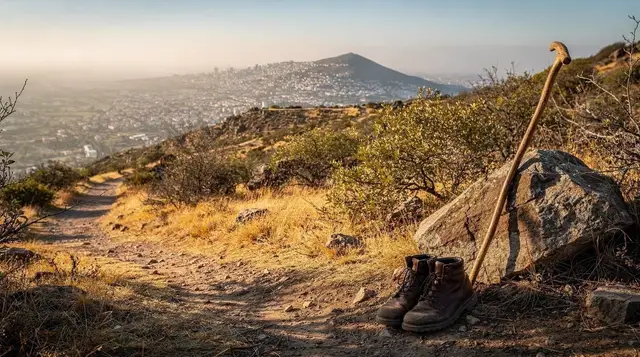
Photo: our own image of the location, not the operator’s product photo.