Three days in Tbilisi
What three days actually buys you in Tbilisi
Three days is enough to see Tbilisi properly and add one day trip, but not enough to also fit Kazbegi or Kakheti without turning the whole trip into a series of long car journeys. Most first-time visitors try to cram in a Military Highway day and a wine day on top of the city and end up exhausted, having seen everything through a car window.
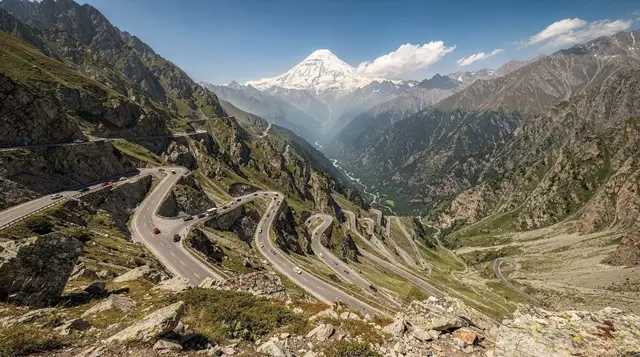
This itinerary keeps two full days in the city — where Tbilisi rewards slow walking more than almost any other capital in the Caucasus — and gives the third day to Mtskheta, which is 25 minutes away and does not eat into the rest of the plan the way a three-hour drive to Kazbegi would. If you do have a fourth day, that is the one to add Kazbegi; see Kazbegi as a day trip: is it too much? for why it is a stretch to bolt onto a three-day city trip rather than give its own day.
Tbilisi does not need a car. The Old Town, Sololaki, Vera and most of what you will want to see sit within a compact, walkable core, connected by a metro that costs 1 ₾ a ride on a Metromoney card and a funicular up Mtatsminda that is worth riding for its own sake. Budget 150–220 € per person for the three days at a mid-range level — a well-located guesthouse or three-star hotel, two or three sit-down meals a day, one paid activity (the baths or a cooking class), and local transport — which is roughly in line with what What a week in Georgia actually costs lays out on a per-day basis for a slower, city-based trip.
Day 1: the Old Town, on foot
Start at Freedom Square and walk down toward Meidan and the Old Town rather than the other way round, so the day builds toward the river and the baths rather than away from them. The best sequence for a first pass is Sioni Cathedral, the Bridge of Peace, and then up into Betlemi and Sololaki for the painted stairwells and Art Nouveau doorways that most visitors miss entirely because they are not signposted — see Sololaki: Art Nouveau doorways and painted stairwells for the specific streets worth the detour. A full route through the district, with the order that avoids doubling back, is in A self-guided walking route through Tbilisi’s Old Town.
By early afternoon you will be near Abanotubani, the sulphur bath district, which is the one paid experience in Tbilisi worth building a schedule around. A private room with a plunge pool of naturally hot sulphur water runs 60–150 ₾ an hour depending on the bathhouse and time of day — weekday mornings are cheapest and least crowded.
Tbilisi: History of Sulphur Baths Walking Touris a useful way to understand what you are looking at before choosing a bathhouse yourself; the full breakdown of prices, which houses are worth it and which are tourist traps is in Tbilisi’s sulphur baths: prices, private rooms and what to expect. Finish the day with the Narikala cable car up from Rike Park — 2.5 ₾ each way on the same Metromoney card — for the sunset view over the Old Town roofs; see Narikala Fortress and the cable car: what it costs and when to go.
Dinner: khinkali and a bottle of Saperavi at a no-frills khinkali house rather than a tourist restaurant on Shardeni Street — the food is usually better and the bill considerably smaller. A plate of khinkali runs 1–1.5 ₾ a dumpling; a full meal for two with wine rarely tops 60 ₾. See Khinkali: how to order and how to eat them if you have not eaten them before — there is a correct way to hold one, and getting it wrong means losing the broth.
Day 2: Rustaveli, Fabrika and a wine evening
Day two moves out of the Old Town and into the parts of Tbilisi that show how the city actually changed over the last decade. Walk Rustaveli Avenue in the morning for the Soviet-era public buildings and the Opera House — Rustaveli Avenue: what is actually worth stopping for is honest about which stretches are worth slowing down for and which are just traffic. From there, head into Chugureti and Fabrika, the former Soviet sewing factory turned hostel-and-courtyard complex that has become the centre of Tbilisi’s younger creative scene, and look for the street art along the way — see Street art, Fabrika and the courtyards of Chugureti.
If the weather is good, ride the funicular up Mtatsminda in the late afternoon; the park itself is mostly nostalgic Soviet fairground rather than essential, but the funicular ride and the summit view are worth the ticket on their own — see Mtatsminda Park and the funicular. For the evening, a cooking class or a natural wine bar are the two strongest options.
If you want a hands-on introduction to Georgian food rather than just eating it, Boshuri Khinkali Cooking Class with Local Family covers khinkali and khachapuri with a local family, which is a more memorable evening than most restaurant bookings. Otherwise, natural wine is genuinely one of Tbilisi’s strengths and worth an evening on its own; see Natural wine bars in Tbilisi for where to go and Wine tasting without leaving Tbilisi if you would rather taste several producers side by side than commit to one bar.
Budget for day two: 15–25 ₾ for lunch (a bakery window or a cheap khachapuri stop — see a street food stop), plus whatever the evening activity costs — a cooking class typically runs 60–90 ₾ per person, a wine bar tasting flight 15–35 ₾.
Day 3: Mtskheta, then back for the afternoon
Mtskheta is 25 minutes from central Tbilisi by marshrutka (1 ₾ each way from Didube station) or about the same by taxi (15–25 ₾ one way with Bolt), which makes it the only day trip that fits comfortably into a three-day city break without swallowing the whole day. The town holds two UNESCO World Heritage sites within walking distance of each other: Svetitskhoveli Cathedral, where Georgia’s kings were crowned and buried, and Jvari Monastery on the hilltop above the confluence of the Mtkvari and Aragvi rivers, reachable by a short taxi ride up from town (10 ₾ round trip is typical if you negotiate, or join a group tour).
The full route, with realistic timing, is in Mtskheta in half a day; From Tbilisi: Mtskheta Walking Tour Along the Aragvi River covers the same ground with a guide if you would rather not work out the layout yourself. See also Svetitskhoveli Cathedral, Mtskheta and Jvari Monastery above the confluence for what each site actually involves, since they are different enough — one a working cathedral, one a hilltop monastery with a view — that treating them as interchangeable undersells both.
Because Mtskheta only takes half a day properly, you will be back in Tbilisi by early afternoon with time for one more thing. The strongest options are Dezerter Bazaar, if you want to see how Georgians actually shop rather than the souvenir version of a market (see Dezerter Bazaar), or a final wander through Sololaki if the light is better for photography in the afternoon than it was on day one — see the afternoon light on Sololaki’s stairwells.
What to drop if you only have two days
If a flight schedule cuts this to two days, drop Mtskheta entirely rather than trying to compress it into a rushed morning before a flight — a half-hearted 90-minute stop at Svetitskhoveli with a taxi waiting outside does not do it justice, and you would be better off spending that time in the Old Town instead. The other honest cut is the cooking class: it is the single most expensive and time-consuming evening in this plan, and skipping it in favour of a wine bar or an extra hour at the baths loses less than it saves. Keep the sulphur baths and Narikala on day one regardless — they are the two things visitors most regret skipping when they only had a short stopover, more so than any single museum or viewpoint.
Where to stay for this plan
Staying in or right at the edge of the Old Town (Betlemi, Kala or the lower part of Sololaki) means almost everything in this itinerary is within a 15-minute walk, and you only need transport for Mtskheta and the airport. Vera and Vake are quieter and often better value but add 15–20 minutes of walking or a short taxi to most of what is listed here. The full neighbourhood breakdown, including which areas to avoid at night, is in Where to stay in Tbilisi, neighbourhood by neighbourhood. A mid-range guesthouse room in the Old Town runs roughly 80–150 ₾ a night for two in shoulder season, more in July and August.
Getting from the airport to the start of the itinerary
Tbilisi International Airport sits about 18 km southeast of the centre, and the cheapest way in is the 37 bus (0.5 ₾, cash or Metromoney, roughly 45–60 minutes to Freedom Square depending on traffic) or a Bolt taxi, which typically runs 25–35 ₾ and takes 25–40 minutes. Avoid the taxi drivers who approach you inside the arrivals hall quoting a flat fare in dollars or euros — they are almost always overpriced compared with booking through the app once you clear customs.
The full comparison, including night-time options when the bus does not run as often, is in Tbilisi airport to the city centre. If your flight lands late and you would rather not navigate transport after a long journey, arrange a pre-booked private transfer instead — it costs more than Bolt but removes the uncertainty on your first night.
A rainy-day backup for any of the three days
Tbilisi’s Old Town and the baths both work in poor weather — the baths arguably work better, since a hot sulphur pool feels more appealing when it is raining outside. If a whole day is washed out, swap the Mtatsminda funicular and outdoor photography stops for the National Museum on Rustaveli Avenue (covers the Soviet Occupation period and a strong archaeology wing) or the Georgian National Gallery, both of which sit inside the Rustaveli walking route already in this plan. Fabrika’s covered courtyard and its cafés also give you somewhere to sit out a downpour without losing the neighbourhood entirely. See What to do in Tbilisi when it rains for a longer list if the whole three days looks wet on the forecast.
What this budget actually covers, day by day
Day one is the most expensive of the three because of the baths: a private room for two typically runs 100–150 ₾ split between you, plus 40–60 ₾ for dinner and 5 ₾ for the cable car and metro rides combined. Day two varies more depending on whether you choose the cooking class (60–90 ₾ per person) or a wine bar evening (20–40 ₾ per person for a tasting flight and a light meal); lunch and transport that day rarely exceed 20 ₾ per person.
Day three, the Mtskheta half-day, is the cheapest: 2 ₾ round trip on the marshrutka, 10 ₾ for a taxi up to Jvari if you split it three or four ways, and whatever you spend on a market lunch back in Tbilisi, typically 20–30 ₾ for two. Across the three days, a couple travelling mid-range should expect to spend 300–450 ₾ (roughly 100–150 €) between them on food, activities and local transport, on top of accommodation.
If you have a car anyway
This itinerary assumes no car, because none of it needs one — but if you are picking up a rental for a longer Georgia trip and starting in Tbilisi, do not collect it until the morning you leave for Kazbegi, Kakheti or wherever comes next. Driving and parking in the Old Town and Sololaki is genuinely worse than walking or taking a 5 ₾ Bolt ride, and a parked rental car earns you nothing for three days beyond a daily excess-liability worry. See our transport and car-hire guides if a longer trip is what brought you here.
Best time of year for this itinerary
Late April to early June and September to mid-November are the strongest windows: warm enough to enjoy walking the Old Town for hours, cool enough that the baths still feel like a treat rather than an odd choice in 35°C heat. July and August work, but expect the baths to be busier and midday walking less pleasant — shift the Old Town walk to morning and evening and use the middle of the day for Fabrika’s shaded courtyard or an indoor stop. Winter (December to February) drops the crowds at every stop in this plan and pairs well with the baths, though a few open-air viewing platforms feel less appealing in the cold. See The best time to visit Georgia for month-by-month specifics.
Frequently asked questions about a three-day Tbilisi trip
Is three days enough for Tbilisi?
Yes, for the city itself. Three days lets you walk the Old Town properly, do the sulphur baths without rushing, see Rustaveli and Fabrika, and add Mtskheta as a half-day trip. It is not enough to also add Kazbegi or a Kakheti wine day without turning at least one day into mostly driving.
Do I need a car for three days in Tbilisi?
No. The metro, marshrutkas and Bolt cover everything in this itinerary, including Mtskheta. A car becomes useful once you start adding Kazbegi or Kakheti to the trip, not before.
Should I do Kazbegi as a day trip instead of Mtskheta?
Only if you are prepared for a long day — Kazbegi is a three-hour drive each way, so a day trip means six hours in a car for perhaps three hours on the ground. Mtskheta gives a similar sense of Georgian history and religious architecture in a fraction of the travel time. See Kazbegi as a day trip: is it too much? before committing to it on a short trip.
What is the best area to base yourself in for three days?
The Old Town or lower Sololaki, for the walking distance to almost everything in this plan. See Where to stay in Tbilisi, neighbourhood by neighbourhood for the trade-offs against Vera and Vake.
How much should I budget for three days in Tbilisi?
Roughly 150–220 € per person at a mid-range level, covering accommodation, food, local transport and one or two paid activities such as the baths or a cooking class. Budget travellers can do it for less by staying in a hostel and eating mostly at bakery windows and khinkali houses.
Is it possible to do this itinerary in winter?
Yes, and the baths are arguably better in winter — sitting in hot sulphur water is more appealing when it is cold outside, and the Old Town is far less crowded. Mtatsminda Park’s rides may be closed, but the funicular itself usually still runs. See our seasonal guide for what changes seasonally.
Can I fit a wine tasting into this itinerary without leaving Tbilisi?
Yes — Tbilisi has enough natural wine bars and in-city tasting rooms that you do not need to travel to Kakheti to try Georgian wine properly, though the selection and setting are different. See Wine tasting without leaving Tbilisi.
Trip-planning essentials on GetYourGuide
Verified deep-linked GetYourGuide tours. Book through these links and we earn a small commission at no cost to you.
Photo: our own image of the location, not the operator’s product photo.