A week in Georgia with children
Georgia works better with kids than the wine-and-monasteries reputation suggests
Most Georgia itineraries are built around wine tastings, monastery hikes and long mountain drives — none of which a seven-year-old cares about for more than twenty minutes. This one is built the other way round: short driving legs, a genuine funicular and amusement park, a zipline, hands-on cooking classes children can actually join, and enough slack in each day that a meltdown or a nap doesn’t wreck the schedule. A rental car matters here specifically because it lets you leave when a child is done, rather than waiting on a shared marshrutka’s timetable.
| Best for | Families with children roughly 5 to 14, mixed energy levels |
| Getting around | Rental car recommended — flexibility matters more than cost here |
| Total budget guide | Roughly 250-350 ₾ per day for a family of four, excluding car rental and flights |
| Car needed | Recommended, mainly for the ability to cut a day short without stranding anyone |
Day 1 — Arrive and ease in
Land in Tbilisi and keep expectations low for day one — jet lag and a new environment are enough for most children without adding a packed itinerary. If there’s energy left in the afternoon, the Mtatsminda funicular up to the hilltop park is the single best first activity: the ride itself is entertainment, the park at the top has genuine rides (a Ferris wheel among them), and the view over the city gives kids and adults alike a mental map of Tbilisi before the rest of the week.
Dinner should be simple — khinkali are naturally fun for children once someone explains the no-fork rule, and a plate of ten runs 10-15 lari. If anyone in the family is prone to motion sickness or altitude discomfort, this first evening is also the time to sort out a local pharmacy (widely available and well-stocked in central Tbilisi) rather than waiting until it becomes urgent partway through the week.
Day 2 — Old Town, cable car, and the zoo
Morning: Ride the Narikala cable car from Rike Park rather than walking up — it’s short, cheap, and a highlight in its own right for younger children. Take a guided Old Town walking tour pitched at a manageable pace if you’d rather have a guide handle the history than explain it yourselves; ask in advance whether the guide is used to working with children, since pacing matters more than content here.
Afternoon: Tbilisi’s zoo, rebuilt after severe flood damage in 2015, is compact but functional, and the aquarium and dolphinarium nearby give a second option if the zoo alone doesn’t fill the afternoon. None of these are world-class attractions by international standards — be honest with yourself about that going in — but they’re a legitimate way to burn a few hours of energy between the more sightseeing-heavy days either side.
Evening: Keep it low-key. A courtyard restaurant in Sololaki with outdoor seating gives children room to be children without disturbing other diners, which matters more in a formal indoor restaurant than most first-time visitors expect. Sololaki’s back streets, with their crumbling Art Nouveau balconies and quiet stepped lanes, are also genuinely pleasant for an aimless post-dinner wander — no ticket, no schedule, and usually a few street cats for younger children to chase.
Day 3 — Mtskheta, Ananuri and a first taste of the mountains
Morning: Drive to Mtskheta, 25 minutes from Tbilisi, and keep the visit short and focused: Svetitskhoveli Cathedral’s scale genuinely impresses most children, and the walk up to Jvari Monastery’s viewpoint over the river confluence is short enough not to cause complaints. Both sites involve modest churchyards rather than long indoor tours, which keeps this stop closer to twenty minutes than an hour for a family moving at a child’s pace — plan on an hour total for both together rather than treating each as a separate excursion.
Afternoon: Continue toward Ananuri Fortress and the Zhinvali reservoir, an easy stop with open space to run around rather than another building to be marched through. Book an Ananuri, Gudauri and Kazbegi day trip with a driver instead of self-driving this stretch if anyone in the family finds mountain roads uncomfortable — it removes the driving stress entirely and lets everyone look at the scenery.
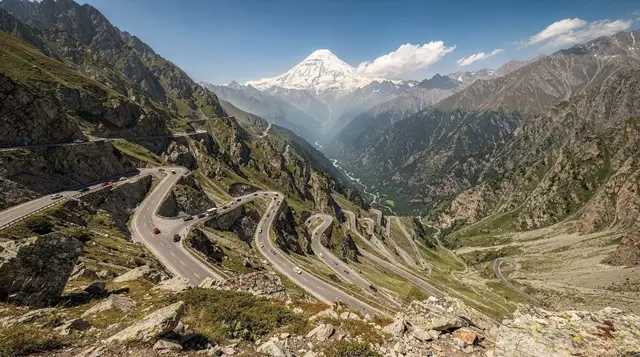
Evening: Push on to Gudauri if the weather and everyone’s patience allow — the drive up the Georgian Military Highway is dramatic enough to be its own entertainment, and a short walk at altitude before heading back down (or overnighting, if the schedule allows a night away) is a genuine highlight for most kids.
Don’t attempt Kazbegi and Gergeti Trinity Church itself on this same day with young children in tow; the 4x4 transfer up to the church and the walk around it add real time that this itinerary hasn’t budgeted for, and Gudauri’s scenery alone delivers most of the same wow factor without the extra push. If energy is already low by mid-afternoon: turn back after Ananuri rather than pushing on to Gudauri — the fortress and reservoir alone justify the day, and Kazbegi’s full drama is better appreciated by children who aren’t already tired.
Day 4 — Into Kakheti: Sighnaghi and the zipline
Morning: Drive to Sighnaghi, roughly two hours from Tbilisi through open Kakheti countryside — break the drive with a stop if needed, since two hours is a real stretch for younger children without one. Sighnaghi itself, the walled “City of Love” on its hilltop, is compact and pleasant to wander, with genuine views over the Alazani Valley toward the Caucasus.
Afternoon: Book the Sighnaghi and Bodbe Monastery zipline tour — this is the single best-judged activity on this whole itinerary for families with children old enough for it (check the operator’s minimum age and weight requirements before booking, since these vary and matter more here than almost anywhere else on this list). Bodbe Monastery itself, tied to the story of St Nino who brought Christianity to Georgia, is a short, calm stop either side of the adrenaline.
Evening: Overnight in Sighnaghi or Telavi — both have family-friendly guesthouses, and staying over means the next day doesn’t start with another two-hour drive before anything happens.
Day 5 — Telavi wineries, the family way
Morning: Kakheti is Georgia’s wine region, and most itineraries here are built for adults with a designated driver. This one flips that: book a Telavi family winery tour with wine tasting and cooking — the format pairs an adult-focused tasting with a hands-on cooking session that children can join, which genuinely works better than either a straight winery visit or leaving kids out of the day entirely.
Afternoon: If energy allows, a short stop at one of the roadside honey or churchkhela stalls between Telavi and the main road gives children something to choose and buy themselves — a small thing, but it matters on a trip with this much adult-paced sightseeing. Churchkhela, strings of nuts dipped repeatedly in grape must until they set into a thick, chewy coating, reads to most children as an unfamiliar cross between a sweet and a snack, and it travels well if anyone wants to save some for the drive. Head back toward Tbilisi in the afternoon; the return drive from Telavi runs a little over two hours.
Evening: Arrive back in Tbilisi with enough daylight left for a slow dinner rather than another activity — this is a natural point in the week for everyone to be tired, and forcing more sightseeing onto an already full day is where family trips tend to go wrong.
Day 6 — Cooking class and a free afternoon
Morning: Book a khinkali cooking class with a local family — genuinely one of the better hands-on activities for children on this whole trip, since making the dumplings is a physical, forgiving task that doesn’t require reading or sitting still, and everyone eats what they made for lunch.
Afternoon: Leave this open deliberately. Options include a second visit to Mtatsminda Park if the funicular was a hit on Day 1, a slow walk along Rustaveli Avenue and through Vake Park, or simply downtime at the accommodation — by day six of a family trip, an unscheduled afternoon is worth more than another sight. If the weather has turned, Tbilisi’s covered malls and the aquarium (if not already done on Day 2) are reasonable wet-weather fallbacks.
Evening: A last supra-style dinner, ideally somewhere that welcomes a table with children rather than a formal restaurant built around a long adult toast sequence — ask your guesthouse for a recommendation rather than guessing from a review site.
Day 7 — Departure
Keep the final morning light and don’t schedule anything beyond breakfast and packing. Tbilisi’s airport is close enough to the centre that a mid-morning or early-afternoon flight leaves comfortable room without a rushed final sightseeing stop that usually isn’t worth the stress it adds.
Health, packing and the practical stuff nobody mentions
Georgia doesn’t require any special vaccinations for most nationalities beyond routine ones, and pharmacies (marked with a green cross, similar to much of Europe) are common in Tbilisi and every town on this route, staffed by people who generally speak enough English for basic needs. Tap water in Tbilisi is drinkable, which simplifies things considerably compared with destinations where bottled water is the only safe option for a week. Sun protection matters more than most visitors expect even outside summer — Tbilisi and Kakheti both sit at a latitude and altitude combination that burns faster than the temperature alone suggests, and Gudauri’s altitude on Day 3 adds to that.
Pack layers rather than a single warm layer, since a July trip to Tbilisi and a July trip up to Gudauri are genuinely different climates within the same day. A change of clothes kept accessible in the car, rather than buried in a suitcase, earns its keep on a trip with a khinkali-eating contest built into Day 6 and a zipline built into Day 4 — both are activities that end up messier than expected for at least one member of most families.
What this actually costs with children
Georgia’s affordability is one of its genuine advantages for a family trip, though costs scale up faster with a group of four than solo travel figures suggest. As a rough per-day guide for a family of four: a family-sized guesthouse room or two connecting rooms runs 200-350 ₾ a night, meals at a taverna 25-40 ₾ per adult (children’s portions are rarely charged separately and khinkali and khachapuri are inexpensive enough that a full family meal rarely exceeds 100-120 ₾), and short taxi or Bolt rides in town 5-12 ₾.
One euro is roughly 2.9-3.0 lari. The genuinely variable cost on this itinerary is the rental car itself and fuel, plus the zipline and cooking class activities, which are priced per person and add up faster with four family members booked than with a couple.
Car seats are the one practical gap worth planning for in advance — not every rental agency stocks them reliably, and it’s worth confirming availability and size when booking rather than assuming one will be waiting at pickup.
If you only have five days instead of seven
Cut Day 6’s cooking class and free afternoon first — it’s the most skippable single day, valuable but not essential to the trip’s logic. If a bigger cut is needed, drop the Gudauri extension on Day 3 and keep the day to Mtskheta and Ananuri only; the mountain drama is memorable but the itinerary works without it, while the Kakheti days (zipline, wineries, cooking) are harder to compress without losing what makes this version of the trip work for children specifically.
A four-day version, for families with less time, is really just Days 1, 2, 4 and 7: Tbilisi’s funicular and Old Town, a single Kakheti day trip built around the zipline (doable as a long day trip rather than an overnight if the schedule demands it), and departure. It sacrifices the mountain scenery and the cooking class entirely, which is a real loss, but it keeps the two genuinely distinctive family activities — the funicular and the zipline — rather than diluting a short trip across too many half-days.
Frequently asked questions about Georgia with children
Is Georgia actually a good destination for a family trip?
Yes, more so than its reputation suggests. Short distances between very different kinds of sights, affordable costs, and a culture that’s generally warm toward children in restaurants and guesthouses make it easier than many Western European destinations, though the specific attractions aimed at children are limited compared with a country built around family tourism.
What age range does this itinerary suit best?
Roughly 5 to 14. Younger children will struggle with some of the longer drives and the zipline’s minimum age; teenagers may find some of the slower sightseeing days underwhelming without more independence built in, which is worth adjusting for if that’s your situation.
Do we really need a rental car?
It’s recommended rather than essential — every leg on this itinerary is also doable by shared transfer or organised day trip. The advantage of a car is being able to cut a day short the moment a child is done, which matters more with young children than the fuel and rental cost usually suggests.
Is the zipline actually safe for children?
Operators publish minimum age and weight requirements that vary — check the specific tour’s requirements before booking rather than assuming a general age guideline applies, since this differs meaningfully by operator and equipment.
What if my child doesn’t like Georgian food?
Khachapuri (essentially cheese-filled bread) and khinkali (meat or cheese dumplings) both tend to work well with children who are picky eaters elsewhere, and bread, cheese and grilled meat are available everywhere. Genuinely fussy eaters may still struggle with the lack of familiar Western fast food outside central Tbilisi, worth planning around if that’s a known issue.
Are the sulphur baths suitable for kids?
Some families do them, but the hot pools and adult-oriented bathhouse atmosphere aren’t specifically built for children, and this itinerary leaves them out for that reason. Families keen to try can book a private room, which gives more control over timing and temperature than a shared session.
How much driving does this itinerary actually involve?
The longest single leg is Tbilisi to Sighnaghi at around two hours; every other drive is under 90 minutes. That’s genuinely manageable for most children with a mid-journey break, unlike itineraries that push into Svaneti or Batumi within the same week.
What’s the honest downside of doing Georgia with young children?
Some of the country’s best-known experiences — long hikes, extended wine tastings, remote mountain villages — are genuinely harder or less rewarding with young kids along, and this itinerary deliberately skips them rather than pretending they work fine with a stroller. A childless return trip focused on Svaneti or Tusheti is a reasonable thing to plan for later, and it’s worth saying so honestly rather than trying to force a mountain trek into a week that’s better spent on the activities this plan actually covers.
Is Batumi worth adding on for a family with more time?
It can be, particularly for families who want a beach day added to the mix, but it adds a 5-6 hour drive each way (or a roughly one-hour domestic flight) that doesn’t fit comfortably into a single week alongside everything above. Families with ten days or more rather than seven should look at extending this itinerary westward rather than trying to compress Batumi into the same seven days.
Family-friendly tours on GetYourGuide
Verified deep-linked GetYourGuide tours. Book through these links and we earn a small commission at no cost to you.
Photo: our own image of the location, not the operator’s product photo.