Two weeks across Georgia and Armenia
Why Georgia and Armenia work well as one trip
The two countries share a land border and a marshrutka route between their capitals that takes under six hours, which makes combining them considerably easier than most cross-country pairings in the region. This itinerary spends the first week on Georgia’s best-known route — Tbilisi, Kazbegi and Kakheti — then crosses into Armenia for a genuine week there rather than a rushed few days tacked onto the end, before a short return leg to fly home from Tbilisi.
For the argument over which country to visit first if time is tighter than two weeks, see Georgia or Armenia: which first?; for a two-week itinerary that stays entirely within Georgia and adds Svaneti instead, see Two weeks in Georgia. One point worth stating clearly: this route does not go anywhere near Abkhazia or South Ossetia, both of which are occupied territories inaccessible from the rest of Georgia and illegal to enter via Russia under Georgian law — nothing in either country’s standard tourist trail requires going near either region.
Budget 900–1,300 € per person for the full fourteen days at a mid-range level, covering the Georgia and Armenia legs, the border crossing, and normal accommodation and food throughout — genuinely comparable to spending the same two weeks in Georgia alone, since Armenia is a similarly priced country to travel in. Difficulty is rated moderate rather than easy mainly because of the logistics either side of the border crossing itself, not because either country’s sightseeing is physically demanding — nothing on this route involves serious hiking or altitude.
Days 1–3: Tbilisi
Three days in the Georgian capital covers the Old Town, Narikala Fortress and its cable car, the sulphur baths, and Rustaveli Avenue at an unhurried pace. See A self-guided walking route through Tbilisi’s Old Town and Tbilisi’s sulphur baths: prices, private rooms and what to expect for the specifics of each. Use part of one day for Mtskheta, a short marshrutka ride north, for Svetitskhoveli Cathedral and Jvari Monastery — both UNESCO-listed and easily covered in half a day. See Mtskheta in half a day for a route that fits alongside a lighter Tbilisi afternoon rather than needing its own full day.
Day 4: Kazbegi
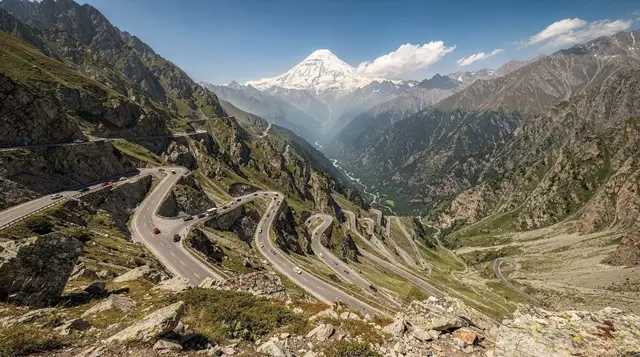
From Tbilisi: Day Trip to Kazbegi covers the full drive north along the Georgian Military Highway, through Ananuri Fortress and Gudauri, to Stepantsminda beneath Mount Kazbek, with a shared 4x4 taxi up to Gergeti Trinity Church included rather than the two-to-three-hour walk that does not fit a day-trip schedule. See Gergeti Trinity Church: how to reach it and Ananuri Fortress and the Zhinvali reservoir for what each stop involves, and treat a clear summit view as a bonus — cloud hides Kazbek often, in every season.
Day 5: Kakheti
Wine Tour to Kakheti Sighnaghi Bodbe Wine Tasting covers Sighnaghi, Bodbe Monastery and one or two wineries with proper time at the tastings rather than a rushed drive-by. See A wine tour of Kakheti: how to plan it for the standard combination and Qvevri wine explained: 8,000 years in a clay pot for the context behind what you are tasting. This is the last full day based in Tbilisi before the route turns south toward the border.
Day 6: Tbilisi to Yerevan
The overland crossing into Armenia runs through Sadakhlo on the Georgian side and Bagratashen on the Armenian side, the main border post used by the shared marshrutkas that run between Tbilisi’s Ortachala bus station and Yerevan several times a day, a journey of roughly five to six hours including the border formalities themselves.
Transfer from Tbilisi to Yerevan covers the same route by private or shared transfer if you would rather not manage the marshrutka connection and border queue yourself, which can add meaningfully to the journey time during busy periods. See Land borders with Armenia, Turkey and Azerbaijan for what to expect at Sadakhlo–Bagratashen specifically, including passport control on both sides and the informal money-changers who work the crossing — best avoided in favour of an ATM once you reach Yerevan. Arrive in Yerevan by early evening and use what is left of the day for a first walk around Republic Square, lit up after dark in a way that makes a good introduction to the city.
Days 7–8: Yerevan
Two days in Yerevan cover the essentials: the Cascade complex and its modern art, the Vernissage market for crafts and Soviet-era ephemera, and the Armenian Genocide Memorial and Museum at Tsitsernakaberd, a sobering but important stop that most visitors treat as close to essential. Mount Ararat, across the border in Turkey but dominating Yerevan’s skyline on a clear day, is worth building a slower morning around simply to catch it before haze or cloud sets in, which happens often enough that a single viewing is not guaranteed. Republic Square’s museums and the covered GUM market for produce and dried fruit round out a second day at an easy pace, closer to Tbilisi’s own unhurried rhythm than a checklist of sights.
Days 9–10: Lake Sevan and Dilijan
Armenia Akhpat Dilijan Sevan Cascad Yerevan from Tbilisi covers a combined route through Armenia’s northern highlights that works equally well booked from Yerevan for these two days as it does from Tbilisi directly — Lake Sevan, a vast high-altitude lake with two hilltop monasteries on its shore, and Dilijan, a forested spa town often compared to a small Alpine village, both a manageable day trip from a Yerevan base. Spending two days rather than rushing both into one lets you add either Haghpat or Sanahin, twin UNESCO-listed monasteries in the north, or simply slow down at Sevan itself, which rewards more than the brief photo stop most single-day tours allow.
Day 11: Geghard and Garni
A short trip from Yerevan reaches two of Armenia’s most distinctive sites: Geghard Monastery, partly carved directly into the cliff face and a UNESCO World Heritage site in its own right, and the Temple of Garni, a reconstructed Hellenistic-era temple that is the only one of its kind in the former Soviet Union. Both sit close enough together to cover comfortably in a single day, and most Yerevan-based tour operators run the combination as a standard half-day or full-day trip, generally with a stop for the flatbread-baking demonstration that several villages along the route offer to passing visitors.
Day 12: Return to Tbilisi
The same marshrutkas and transfer operators used on day six run the Bagratashen–Sadakhlo crossing in reverse, the same five-to-six-hour journey. Treat this as a travel day rather than planning activities either end, and consider timing it for a morning departure from Yerevan so you arrive in Tbilisi with enough daylight left for a relaxed dinner rather than a late, tired arrival. Overnight sleeper trains between the two capitals also run on some routes and dates — see Land borders with Armenia, Turkey and Azerbaijan for how that option compares to the daytime road crossing if an overnight journey suits your schedule better.
Day 13: A slower day in Tbilisi
With one day left before departure, resist the urge to add another day trip and instead revisit whichever part of Tbilisi appealed most on days one to three, or catch anything missed the first time — Fabrika’s courtyards, the National Museum, or simply a long lunch somewhere unhurried. See Tbilisi wine bars worth a second glass for a relaxed way to spend a final evening comparing what a fortnight of Georgian and Armenian wine has actually taught you about the difference between the two traditions.
Day 14: Departure
Budget the same airport transfer time from central Tbilisi as any other itinerary in this series, and treat the morning as free rather than trying to fit in one more sight before a flight — two weeks of near-daily travel and border crossings makes a genuinely unhurried final morning worth more than a rushed extra stop.
Where to stay along the route
Tbilisi’s Old Town or Sololaki suit the two Tbilisi stays for the same reasons they suit every other itinerary in this series — walkable to the sights and to Ortachala for the Yerevan marshrutka. See Where to stay in Tbilisi, neighbourhood by neighbourhood for the comparison against Vera and Vake. In Yerevan, the area around Republic Square and the Cascade holds most of the mid-range hotels and guesthouses that suit a four-night stay, generally similar in price to equivalent Tbilisi accommodation.
A detailed budget for the two weeks
Tbilisi’s costs track the standard mid-range week closely: 100–150 ₾ for the baths, 40–60 ₾ per dinner for two, and modest local transport. The Kazbegi and Kakheti tour days each run 60–90 € per person all-inclusive. The Tbilisi–Yerevan and return transfers cost 15–25 € per person each way if booked as a shared transfer, or considerably less on the standard marshrutka. Yerevan’s four nights of mid-range accommodation and food run comparably to Tbilisi, and the Sevan-Dilijan and Geghard-Garni day trips each cost 40–60 € per person. Altogether, 900–1,300 € per person for the full fourteen days is a realistic mid-range total, including both border crossings, five organised day trips and accommodation throughout.
What to drop with fewer days
If twelve days is all you have, the day to cut is day 13, the slower final Tbilisi day — fly out a day earlier and treat day 12’s return from Yerevan as the effective end of active sightseeing. If ten days is genuinely the limit, cut the Geghard and Garni day instead of shortening Yerevan itself, since the capital rewards two full days more than a rushed single one does; Geghard and Garni, while worthwhile, are the most skippable single day on the Armenian half of this route.
Money, language and mobile data across the border
Georgia uses the lari (₾) and Armenia the dram (֏), and neither currency is generally accepted in the other country, so plan to withdraw dram from an ATM shortly after crossing rather than carrying lari into Armenia expecting to spend it. Card payments are widely accepted in both Tbilisi and Yerevan, though cash remains more useful in smaller towns like Sighnaghi, Dilijan and Sevan’s lakeside villages.
Georgian and Armenian are unrelated languages with their own distinct alphabets, mkhedruli and the Armenian script respectively, so English or basic phrasebook Russian tend to be the more useful fallback in both countries away from tourist-facing businesses. A Georgian SIM or eSIM generally does not carry roaming into Armenia, so budget for a second local SIM or an eSIM that covers both countries — see SIM cards, eSIM and mobile data for the Georgian side of that comparison before you leave Tbilisi.
Food across the two countries
Georgian and Armenian cuisine share some common ground — grilled meats, flatbreads, a similar reliance on fresh herbs — but diverge enough to be worth paying attention to rather than assuming one trip’s food experience covers both. Khinkali and khachapuri give way to Armenian staples like lavash, the flatbread that is itself UNESCO-recognised for its role in Armenian culture, and dolma, grape leaves stuffed with rice and meat, distinct in preparation from anything served across the border.
Wine culture also shifts: Georgia’s qvevri tradition is well known, but Armenia has its own, older brandy tradition, and a proper brandy tasting in Yerevan is worth building into one of the two Yerevan days if that interests you more than another wine stop. See The supra and the tamada explained for what the Georgian half of the trip involves at the table, since nothing quite like the formal toasting structure of a supra exists on the Armenian side of the border in the same form.
Frequently asked questions about combining Georgia and Armenia
Do I need a separate visa for Armenia if I already have one for Georgia?
Check current requirements for your nationality before travelling — the two countries have separate visa policies, and a Georgian entry does not automatically cover Armenia. Most nationalities that get visa-free access to Georgia also get visa-free or visa-on-arrival access to Armenia, but confirm rather than assume.
Is the Sadakhlo–Bagratashen border crossing straightforward?
Generally yes for tourists — passport control on both sides, a walk or short transfer across the crossing itself, and onward transport waiting on the other side. Queues can build during peak summer weekends, which is worth factoring into a tight schedule.
Should I book the Tbilisi–Yerevan leg as a marshrutka or a private transfer?
The marshrutka is considerably cheaper and runs several times daily from Ortachala, and is the standard choice for budget-conscious travellers. A private or shared transfer costs more but removes the need to find the right departure and manage your own border-crossing logistics, which some travellers prefer on a first visit.
Is two weeks enough to see both countries properly?
For the highlights covered in this itinerary, yes — a full week each for Georgia’s main route and Armenia’s Yerevan-based highlights is a realistic, unhurried split. Adding Svaneti, Batumi or Armenia’s southern regions like Tatev would each need extra days beyond this fourteen-day route.
Can this itinerary be reversed, starting in Armenia?
Yes, and it works equally well flipped if your flight lands in Yerevan rather than Tbilisi — simply start with the Armenian week and finish with Georgia’s route, crossing the same Bagratashen–Sadakhlo border in the opposite direction partway through.
Is it safe to cross this particular land border as a tourist?
Yes — it is a well-used, standard border crossing for travellers moving between the two countries, with no particular safety concerns beyond the usual precautions of any international border crossing. It is worth noting this is entirely separate from Georgia’s closed and occupied borders elsewhere in the country; Sadakhlo–Bagratashen is a normal, functioning international crossing used daily by tourists and locals alike.
What is the biggest planning mistake people make combining these two countries?
Treating Armenia as a two- or three-day add-on rather than giving it a proper week. Yerevan alone rewards two full days, and Sevan, Dilijan and the Geghard–Garni route each deserve their own time rather than being compressed into a single rushed day trip squeezed in before flying home.
Are Georgia and Armenia easy to compare culturally, or genuinely quite different?
Genuinely different, despite the shared border and some overlapping food. Georgia is Orthodox Christian with its own distinct liturgical tradition and alphabet; Armenia has its own separate Apostolic Church, also ancient but doctrinally and architecturally distinct, and its own alphabet unrelated to Georgian’s. Travellers who expect one culture to simply continue into the other are usually surprised by how different the two feel within a day of crossing the border.
Is it worth renting a car for the Armenian half of this itinerary even though the Georgian half is car-free?
Not really necessary — Yerevan-based tours cover Sevan, Dilijan and Geghard-Garni efficiently without a rental, and Yerevan itself is compact enough to walk or use the metro. A car adds flexibility but is not the practical advantage in Armenia that it can be on some of the more remote Georgian routes in this series.
Trip-planning essentials on GetYourGuide
Verified deep-linked GetYourGuide tours. Book through these links and we earn a small commission at no cost to you.
Photo: our own image of the location, not the operator’s product photo.