Kobuleti: the quieter coast
Is Kobuleti better than Batumi for a beach holiday?
For quiet, space and a beach shore closer to sand than Batumi's shingle, yes. For restaurants, nightlife, sights beyond the beach and general infrastructure, no. Kobuleti works best as a calmer base with day trips into Batumi, or as a single day out from there, rather than a full replacement for it.
The coast that Batumi’s crowds skip past
Most visitors to Georgia’s Black Sea coast see Kobuleti only through a marshrutka window, on the way between Batumi and Ureki or further north toward Poti, and rarely stop. That is a reasonable default if your priority is sights and nightlife, both of which belong squarely to Batumi, but it skips over the one thing Kobuleti genuinely does better: space.
Its beach runs longer than Batumi’s central shore and carries a fraction of the crowd even in August, with a shoreline texture that splits the difference between Ureki’s fine sand and Batumi’s coarse shingle — closer to a true sand beach than Batumi’s, closer to pebble than Ureki’s, and workable for most visitors regardless of which extreme they prefer. This guide covers what that actually looks like on the ground, what fills a day beyond swimming, and how Kobuleti fits into a wider coastal trip rather than standing entirely alone.
What the shore actually feels like
Kobuleti’s beach stretches for several kilometres along the town’s seafront, considerably longer than the developed section of Batumi’s Boulevard, and the crowd thins out fast the further you walk from the town centre in either direction. The texture underfoot is a genuine mix: coarser and darker than Ureki’s fine sand, but smaller and more even than the fist-sized stones found at the southern end of Batumi’s shore.
Most visitors find it comfortable to walk barefoot here, unlike Batumi, though water shoes still help near the waterline where the mix runs coarser. The water shelves more gently than Batumi’s fast drop-off, closer to Ureki’s gradient, which again makes it a workable middle ground for families who want easier wading without giving up entirely on a coastal-town base with some infrastructure around it.
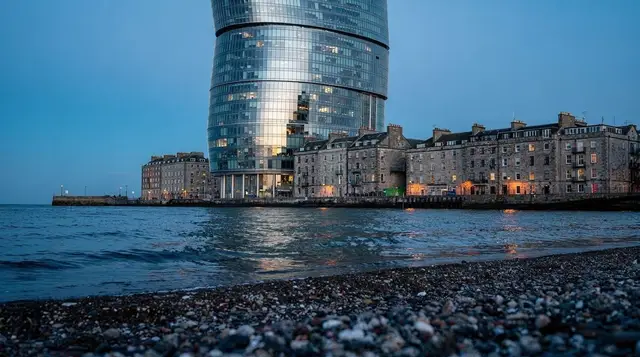
Development along the front is lighter than Batumi’s — a run of guesthouses, small hotels and seasonal cafés rather than a purpose-built promenade with sculpture and fountains — and outside the main summer months a large share of it closes down, leaving a genuinely quiet, slightly worn seaside town rather than a resort in the polished sense Batumi has become since its 2010s redevelopment. There is no equivalent of the Alphabetic Tower or a casino strip here, and the absence of a defined tourist centre is part of what keeps prices, and expectations, a step below Batumi’s.
Day to day, Kobuleti reads less like a resort putting on a show for visitors and more like an ordinary Adjaran coastal town that happens to have a long beach attached, which is its own kind of appeal for travellers who have already had their fill of purpose-built seafronts elsewhere on this trip.
Getting there from Batumi or Tbilisi
Kobuleti sits about 20-25 km north of Batumi, a straightforward 30-40 minute run by the marshrutkas that shuttle along the coast road all day in season, or by taxi for a faster, pricier option. It is close enough that many visitors treat it as a half-day trip from a Batumi base rather than a place to actually sleep, and the transport link is frequent enough that this works well without pre-planning — you can simply walk to the marshrutka stand and wait rather than booking anything in advance.
From Tbilisi, Kobuleti follows the same route as Tbilisi to Batumi: plane, train or road, a 5-6 hour drive or a flight into Batumi followed by the short coastal hop, which again makes it impractical as a standalone day trip from the capital.
Batumi: to Kobuleti Black Sea Coast Private Tour with Guide covers exactly this half-day pattern, with a guide and driver handling the coast road run from Batumi rather than working out marshrutka timings yourself.
The Botanical Garden, just up the coast
The Batumi Botanical Garden, despite its name, sits considerably closer to Kobuleti than to central Batumi, spread across a hillside overlooking the sea with plant collections organised by world region — a Himalayan section, a Mexican one, stands of bamboo and eucalyptus among them — laid out along several kilometres of shaded paths. It is one of the better rainy-day or midday-heat options on this stretch of coast, offering genuine shade and a change of pace from beach time, and pairs naturally with a Kobuleti beach morning followed by a garden afternoon once the sun gets too strong for comfortable swimming.
Batumi: Botanical Garden Petra Fortress and Miniatures Park combines the garden with the nearby Petra Fortress and a smaller miniatures park, a reasonable way to fill a full day away from the beach if the weather turns or the shingle simply loses its appeal after a morning.
Petra Fortress and the Byzantine ruins nearby
A short drive from Kobuleti sits the Petra Fortress, a partially reconstructed Byzantine-era fortification with a genuinely striking clifftop position above the coast, built under Emperor Justinian in the 6th century as part of the empire’s Black Sea defences and fought over repeatedly by Byzantine and Persian forces.
What survives is a mix of excavated foundations and a modern reconstruction of the fortress walls and church, which divides opinion the way similar restoration projects elsewhere in Georgia — Rabati Fortress in Akhaltsikhe among them — tend to: some visitors find the reconstruction gives a genuinely useful sense of the original structure, others feel it overwrites the archaeological site with something closer to a modern build. Either way it is a worthwhile short excursion from Kobuleti, easily combined with the Botanical Garden in a single outing.
Kobuleti: Reserve Petra Fortress Garden Tour pairs the fortress with a stop at the nearby Kobuleti nature reserve, a protected wetland strip along this part of the coast distinct from the larger Kolkheti reserve further south.
Close to the wetlands, without the detour
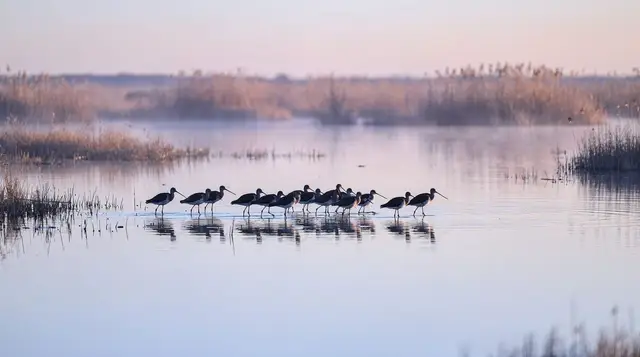
Unlike Batumi, Kobuleti sits within easy reach of the Kolkheti wetland system that runs down the coast toward Poti, sometimes marketed as Georgia’s “Amazon” for its dense lowland forest, reed beds and boat-accessible channels. A Kobuleti base cuts a meaningful chunk off the drive compared with starting from Batumi, which matters if a wetland boat trip is on your list alongside a beach stay. The full picture of what the reserve actually offers, and where the birdwatching genuinely delivers versus where it is oversold, is in Birdwatching at Kolkheti National Park.
From Kobuleti: Georgian Amazon Kolkheti Park Tour runs the wetland boat trip directly from Kobuleti, shaving real time off the equivalent tour departing Batumi.
A resort town with older roots than it looks
Kobuleti’s identity as a beach resort predates Georgian independence, much like Ureki and Tskaltubo, though it never developed the specific mineral-cure reputation either of those towns built for themselves. Under Soviet administration it functioned as a more general-purpose seaside holiday town for workers from across the union, a role reflected today in the somewhat utilitarian architecture of its older sanatorium-style buildings, several of which have been converted into modern guesthouses with the original structure still visible underneath newer paint and balconies.
It has not undergone anything like Batumi’s post-independence redevelopment push, and the result is a town that reads as genuinely lived-in rather than purpose-built for tourists — a difference visitors either appreciate for its authenticity or find simply underwhelming next to Batumi’s polish, depending on what they came for.
Where to stay and what it costs
Guesthouses and small family-run hotels dominate Kobuleti’s accommodation, generally priced a notch below equivalent options in central Batumi — expect roughly 40-80 lari a night for a simple double in season, rising toward the upper end for properties directly on the beachfront.
A handful of larger hotels have appeared along the seafront in recent years, aimed at the same domestic and regional market that fills Batumi’s mid-range hotels, but nothing on the scale of Batumi’s high-rise skyline. Restaurants lean toward simple grilled fish, khachapuri and Adjarian staples served at guesthouse-attached dining rooms or seasonal beachfront shacks, with far fewer options than Batumi and almost nothing resembling the international or fine-dining choices found there.
Kobuleti with children
The gentler gradient into the water, closer to Ureki’s than to Batumi’s fast drop-off, is the main practical reason families choose Kobuleti over the capital of the coast. It is not as shallow or as sheltered as Ureki specifically, but it comes with more infrastructure than Ureki does — a longer run of guesthouses and small shops, and easier onward transport if a change of plan is needed.
Lifeguard presence follows the same seasonal pattern as elsewhere on this coast, concentrated on the busiest central stretch in July and August and thin or absent outside it and away from the main access points, so supervising children in the water matters just as much here as anywhere else on this coast regardless of how gentle the sand looks. For a broader look at travelling Georgia with children beyond this one stretch of coast, see Batumi with children and Zoo, aquarium and dolphinarium, both a short trip away in Batumi itself if a rainy or overheated afternoon calls for an indoor alternative.
Getting around once you are there
Kobuleti’s own centre is small enough to cover on foot, with the beachfront guesthouses strung along a single main road roughly parallel to the shore. For the Botanical Garden, Petra Fortress or the Kolkheti wetlands, a taxi or a booked tour is the practical choice, since public transport options thin out once you step off the main Batumi-Poti coast road that the marshrutkas run along; see Taxis, Bolt and Yandex Go for how ride-hailing works in smaller Georgian towns, where coverage is less reliable than in Tbilisi or Batumi itself and a short wait for a car is normal rather than a sign something has gone wrong.
Wind, weather and the shoulder seasons
Kobuleti sits on the same stretch of coast as Batumi and shares its weather patterns closely, including the occasional strong onshore wind in spring and autumn that can make swimming uncomfortable or unsafe for a day or two at a time. Because the town’s beach is longer and less enclosed than Batumi’s bay, wind tends to be more noticeable here on an exposed day, which is worth factoring in if you are choosing between the two towns for a specific date rather than a flexible week. Outside the June-to-September swimming window, Kobuleti quiets down dramatically, with most guesthouses and virtually all the seasonal beach cafés closing for the winter, leaving the Botanical Garden as close to a year-round reason to visit as the area offers.
A two-day pattern that actually works
For visitors trying to decide how to actually spend time here rather than simply arriving and improvising, a reasonable pattern runs: a first morning on the beach before the heat peaks, followed by an afternoon at the Botanical Garden or Petra Fortress once direct sun makes the shore uncomfortable, then a second morning either back on the sand or on a short wetland boat trip toward Kolkheti before heading back to Batumi or on toward Ureki. This avoids the common mistake of trying to cram the garden, the fortress and the wetlands into a single rushed day, which tends to leave too little time at any one stop to be worthwhile — better to pick two of the three and do them properly than rush all three in one trip.
When to visit
Sea temperatures track the rest of this coast closely — see When the Black Sea is warm enough to swim for specific monthly ranges — with the same July-August peak and the same June and early-September sweet spot for warm water without the crowds. Kobuleti’s relative quiet holds up even in peak season compared with Batumi’s Boulevard, but Georgian domestic tourism still fills much of its guesthouse capacity during the school summer holidays, so booking ahead in August still matters here more than it might outside Georgia’s own peak travel weeks.
Kobuleti as a base versus a day trip
Whether Kobuleti deserves an overnight stay or works better as a stop from Batumi depends mostly on how much you value quiet over convenience. As a base, it offers a genuinely calmer beach experience and easy access to the Botanical Garden, Petra Fortress and the Kolkheti wetlands, at the cost of Batumi’s restaurants, nightlife and the Boulevard’s evening atmosphere covered in Batumi Boulevard end to end.
As a day trip from a Batumi base — the more common choice — it delivers a half-day of quieter sand and a look at the garden or fortress without giving up any of Batumi’s evening options. For most visitors staying three days or fewer on this coast, the day-trip pattern makes more sense; for a longer coastal stay built specifically around beach time rather than sightseeing, basing in Kobuleti for a couple of nights is a reasonable, less crowded alternative to Batumi.
Kobuleti, Ureki and Batumi side by side
It helps to line the three towns up directly rather than treat each guide in isolation. Batumi wins on infrastructure, restaurants, nightlife and sights, but loses on beach comfort with its shingle shore, covered fully in Batumi’s beaches: pebbles, not sand. Ureki wins decisively on sand quality and the gentlest water for small children, but offers almost nothing beyond the beach itself, as detailed in Ureki and its magnetic black sand.
Kobuleti sits between both on every axis: better sand than Batumi, better infrastructure than Ureki, longer and quieter shore than either, but the clear leader in nothing specific. That middle position is exactly why it suits travellers who cannot decide, or who want one calm day away from wherever else they are staying on this coast, more than it suits anyone chasing a single standout experience.
Coastal erosion and the reserve next door
Like Ureki, Kobuleti’s shoreline sits within a stretch of the Georgian coast affected by long-term erosion, driven by reduced sediment supply from rivers altered upstream and construction that has, in places, pushed closer to the waterline than is sustainable.
The Kobuleti nature reserve, a protected wetland strip just inland from parts of the beach, exists partly because this section of coast retained more of its original marsh and forest cover than the more heavily built-up stretches around central Batumi, and it is one of the reasons a Kobuleti-based wetland or birdwatching trip can start closer to the action than an equivalent one from Batumi. None of this is likely to be visible to a visitor simply spending a day on the sand, but it is part of why conservation and tourism authorities treat this particular stretch of coast with more caution than Batumi’s fully developed Boulevard.
The honest verdict
Kobuleti will not impress anyone looking for landmarks, nightlife or restaurant variety, and it knows it — nothing about the town oversells itself in that direction. What it delivers instead is a long, comfortable, uncrowded stretch of shore within easy striking distance of Batumi’s Botanical Garden and the Kolkheti wetlands, at guesthouse prices a step below the city. For a quiet beach afternoon away from the Boulevard’s crowds, or as the calmer half of a two-centre coastal stay, it earns its place on this coast; as a destination to build a whole trip around, it does not have enough on its own to justify the choice over Batumi.
Frequently asked questions about Kobuleti
How far is Kobuleti from Batumi?
About 20-25 km, roughly 30-40 minutes by marshrutka, taxi or transfer along the coast road — close enough for a half-day trip.
Is Kobuleti’s beach sand or pebbles?
A mix, coarser than Ureki’s fine sand but noticeably less stony than Batumi’s shingle — a reasonable middle ground between the two.
What is there to do in Kobuleti besides the beach?
The Batumi Botanical Garden sits just north of town, and the Kolkheti wetlands and Petra Fortress are both a short drive away.
Is Kobuleti crowded in summer?
Less so than Batumi, though Georgian domestic tourism still fills much of its guesthouse capacity in July and August.
Can you day-trip to Kobuleti from Batumi without a car?
Yes, easily — marshrutkas run frequently along the coast road and the ride takes well under an hour.
Does Kobuleti have an airport?
No. The nearest airport is Batumi’s, about 25-30 km south.
Black Sea coast trips on GetYourGuide
Verified deep-linked GetYourGuide tours. Book through these links and we earn a small commission at no cost to you.
Photo: our own image of the location, not the operator’s product photo.