A city that doesn’t look like the rest of Georgia
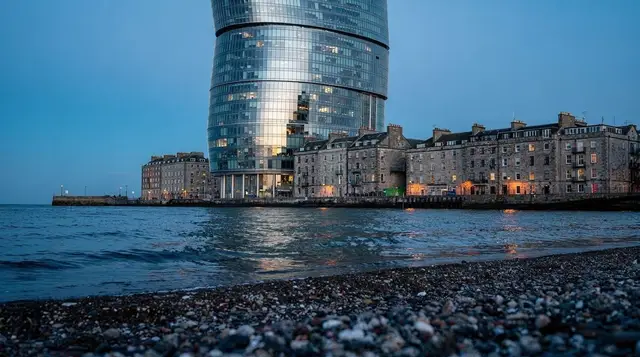
Batumi is Adjara’s capital and Georgia’s main Black Sea resort city, and its skyline makes clear immediately that it’s a different kind of place from Tbilisi, Kutaisi or any of the country’s mountain towns — glass towers, an Alphabet Tower spelling out the Georgian script in illuminated letters, a Ferris wheel, and a stretch of casinos that has earned Batumi comparisons to Las Vegas or Macau on a regional scale.
Much of this modern development dates to the 2000s and 2010s, a deliberate push to rebrand Batumi as an international resort and gambling destination, drawing heavily on visitors from Turkey and neighbouring countries where casino gambling is restricted or banned. Underneath the newer skyline, an older Batumi survives too — a compact historic centre with balconied 19th-century buildings, a legacy of the city’s earlier life as an Ottoman and then Russian imperial port.
That mix — resort glitz, casino nightlife, a genuine beach, and an old town with its own separate charm — makes Batumi worth a deliberate stop rather than a rushed pass-through, provided the five-to-six-hour drive from Tbilisi (or the roughly one-hour flight) is built into the itinerary properly rather than treated as an afterthought.
Batumi Boulevard: the city’s spine
Batumi Boulevard runs along the seafront for several kilometres, Georgia’s oldest and longest promenade, first laid out in the 1880s and steadily extended since — a mix of palm-lined paths, cycling lanes, fountains, sculptures (including the moving “Ali and Nino” statue depicting two figures that merge and separate on a cycle) and a long run of cafés and bars facing the water.
It’s the natural centre of Batumi evenings, when the heat of the day breaks and the boulevard fills with locals and visitors alike for the same slow evening walk that defines coastal cities everywhere, with a distinctly Georgian backdrop of Black Sea sunsets and the illuminated modern skyline behind it. A guided walking tour along the boulevard and city highlights is a useful orientation on arrival, particularly for a short stay. Full detail on what to see along its length is in the Batumi Boulevard guide.
The beaches: pebbles, not sand
Batumi’s beaches are pebble, not sand, a genuine adjustment for visitors expecting the sandy shores common elsewhere in the Black Sea and Mediterranean — worth knowing before arriving with the wrong footwear or expectations. The main city beach fills with sunbeds and beach bars in summer, while Kobuleti and Ureki, both a short drive up the coast, offer sandier or quieter alternatives depending on what a visitor wants. Full detail on the pebble reality and where the better stretches are is in the Batumi beaches guide.
Casinos and nightlife
Batumi’s casino scene is a genuine draw for a specific kind of visitor, concentrated in the large hotel-casino complexes along and near the boulevard — a legal, licensed industry that operates more openly and at a larger scale than almost anywhere else in the wider region, catering heavily to cross-border visitors from Turkey. Beyond the casinos, Batumi’s nightlife runs from boulevard cocktail bars to a small but real club scene, and it’s a noticeably different evening character from Tbilisi’s more underground techno reputation.
A chacha-focused pub crawl through Batumi is a lighter, more sociable way into the city’s evening scene than the casino floor. Full detail on both sides of Batumi after dark is in Batumi after dark: casinos and clubs.
Gonio Fortress, and the Roman-to-Ottoman layers beneath it
A short drive south of Batumi towards the Turkish border, Gonio Fortress sits on a site with genuinely deep layered history — originally a Roman fort, later held by Byzantines, Genoese, Georgians and finally Ottomans in succession, with the fortress walls visible today dating mostly to that long Ottoman-era use. Local tradition holds that the apostle Matthias is buried within the fortress grounds, a claim that draws its own pilgrim interest alongside the archaeological one.
A private tour covering Gonio Fortress and the Makhuntseti waterfall combines the fortress with one of Adjara’s better short waterfall stops in a single half-day trip. Full visiting detail is in the Gonio and Kvariati guide.
Mtirala National Park, and the wettest corner of Georgia
Mtirala National Park, inland from Batumi, sits in one of the highest-rainfall areas in the country — its name translates roughly to “crying,” a fitting description of the near-constant mist and rain that keeps its Colchic rainforest genuinely lush year-round. Marked hiking trails through the forest lead past waterfalls, and a treetop canopy walkway adds a different vantage over the forest floor for visitors wanting something more than a straightforward walking trail.
A guided hike through Mtirala with the treetop walkway included is the standard way to see the park’s main features in a single outing. Full trail and access detail is in the Mtirala National Park guide.
Makhuntseti Waterfall and the old arched bridge
Makhuntseti Waterfall, a broad curtain of water dropping over a wide rock ledge, sits close to a well-preserved 19th-century Ottoman-era arched bridge, and the pairing of the two makes for one of Adjara’s more straightforward, rewarding short stops for visitors with limited time inland from Batumi.
Getting to Batumi
Batumi is roughly five to six hours from Tbilisi by road, or about an hour by domestic flight into Batumi International Airport, which also handles a meaningful volume of flights to and from Turkey given the city’s proximity to the border. The overland drive can be broken up with stops at Kutaisi or Borjomi depending on the route chosen, turning what would otherwise be a long single push into a more varied multi-day journey.
Full route and transport comparisons are in Tbilisi to Batumi: plane, train or road and Batumi airport and the Turkish alternative for travellers considering Trabzon as an alternative gateway.
Batumi as a base for the wider coast and Svaneti
Batumi works as a practical base for exploring Adjara’s coastline — Kobuleti and Ureki to the north, Poti further along, and Bakhmaro inland in the mountains above — and for travellers heading onward into Svaneti by road rather than via Zugdidi and the Tbilisi night train. See the beaches and coast theme for how Batumi compares against the smaller towns nearby, and day trips from Batumi for the fuller set of half-day and full-day options beyond Gonio and Mtirala.
Adjarian food, distinct from the rest of Georgia
Adjara’s cuisine has its own regional identity within Georgian food more broadly, most famously the boat-shaped Adjarian khachapuri, filled with cheese, butter and a raw egg cracked in at the table — but the region’s food goes well beyond that one well-known dish, with its own bread styles and preparations shaped by the coastal, historically Ottoman-influenced culture distinct from inland Georgia. Full detail on what to look for beyond the khachapuri is in the Adjarian food in Batumi guide.
When to visit
June through September brings the warmest sea and the fullest beach and nightlife scene, along with the largest crowds and highest hotel prices of the year. Spring and autumn offer a genuinely pleasant, quieter alternative for sightseeing and the boulevard without swimming being the main draw, and Batumi’s casinos and restaurants operate year-round regardless of beach season. Winter is quiet, mild by Georgian standards, and a legitimate off-season option for travellers more interested in the city itself than the coast.
Batumi’s old town, away from the boulevard glitz
Behind the modern skyline, Batumi’s old town preserves a genuinely different character — narrow streets lined with 19th-century buildings from the city’s earlier life as an Ottoman port and then, after 1878, a Russian imperial one, their balconies and facades showing a European architectural influence distinct from Tbilisi’s own old town.
Piazza Square, built more recently in an Italianate style as a deliberate nod to that European heritage, has become one of the more popular gathering spots for both locals and visitors, its cafés spilling onto the square in the evening in a manner closer to a Mediterranean piazza than a typical Georgian streetscape. Wandering the old town’s quieter side streets away from the boulevard gives a useful counterpoint to the resort-city image most visitors arrive expecting.
A short history of the city’s two eras
Batumi’s modern identity was shaped by two distinct waves of investment separated by roughly a century. The first came after 1878, when the Russian Empire, having taken the city from Ottoman control, developed it into a major oil-export port connected by pipeline to Baku — a boom period that funded much of the old town’s surviving 19th-century architecture and briefly made Batumi one of the wealthier port cities on the Black Sea.
That prosperity faded through the Soviet period, when Batumi functioned as a more modest regional resort rather than an international one. The second wave began in the 2000s, driven by a deliberate state push to rebuild Batumi as an international tourism and gambling destination, funding the glass towers, casinos and boulevard extensions that define the skyline today. Both eras remain visible side by side, which is part of what gives the city its slightly disjointed, layered character.
What a Batumi trip actually costs
Batumi’s costs vary more by neighbourhood and season than almost anywhere else in Georgia. A boulevard-facing hotel room in peak summer runs considerably more than an equivalent room a few streets back or visited in shoulder season; budget guesthouses away from the seafront remain reasonably priced year-round, typically 40-80 ₾ per night.
A casino visit itself carries no entry fee at most venues, though minimum bets and the general atmosphere skew toward a higher-spending crowd than a casual visitor might expect. A beachfront sunbed rental runs a modest daily fee, while the free sections of the main beach cost nothing beyond the pebbles underfoot. A seafood dinner on the boulevard costs meaningfully more than an equivalent meal a few blocks inland, a markup pattern familiar from any resort city.
Family travel in Batumi
Batumi works well for families in a way inland Georgia’s more history-and-hiking-focused destinations sometimes don’t — the boulevard’s parks, the dolphinarium, and the beach itself (pebbles notwithstanding) give children genuine things to do without a full day of walking tours or driving. The Ferris wheel and Alphabet Tower’s viewing platform add a couple of easy, short activities that break up a day without demanding much stamina. See Batumi with children for a fuller breakdown of what specifically works well for younger visitors.
The Batumi Botanical Garden
A short drive north of the city centre, Batumi’s Botanical Garden sits across a dramatic stretch of coastal hillside, first established in the early 20th century by a Russian botanist who deliberately organised the collection by climatic zone — a Mediterranean section, a Himalayan section, a Mexican section and more, each planted with species suited to that specific origin’s conditions along a winding coastal path.
It’s a genuinely substantial site, large enough to fill two to three hours of unhurried walking, and the sea views from its higher paths rank among the best in the city, away from the boulevard’s crowds. It’s an easy half-day add-on for visitors who’ve already covered the boulevard and old town and want a quieter, greener alternative for a second or third day in the city.
Comparing Batumi to Georgia’s other coastal towns
Batumi anchors a stretch of coast that includes several smaller, quieter alternatives, and it’s worth being clear about how they differ before assuming Batumi alone represents the full Black Sea experience. Kobuleti, a short drive north, offers a calmer, more budget-oriented beach scene without Batumi’s casino and nightlife infrastructure. Ureki further along is known specifically for its dark, reputedly magnetic sand and a more low-key holiday-town character.
Poti, Georgia’s main cargo port, is more functional than scenic but useful for travellers with a specific interest in the country’s shipping industry or birdwatching at the nearby Kolkheti wetlands. For most visitors wanting the fullest single coastal stop with the most to do, Batumi remains the obvious choice, but a day or two spent at one of the quieter towns nearby offers a genuinely different, calmer version of the same coastline.
Getting around once you’re there
Central Batumi is compact enough to cover mostly on foot, with the boulevard and old town within easy walking distance of most hotels along the seafront. For sights further out — the botanical garden, Gonio Fortress, Mtirala National Park — a taxi, Bolt or an organised half-day tour is the practical choice, since public marshrutka routes to these destinations run less frequently than the equivalent routes around Tbilisi. Bolt operates reliably in Batumi and is generally the cheapest way to cover short distances beyond walking range without arranging a driver for the day.
Frequently asked questions about visiting Batumi
How do I get from Tbilisi to Batumi?
By road, roughly five to six hours; by domestic flight, about an hour. Both options are covered in detail in the dedicated Tbilisi to Batumi transport guide.
Are Batumi’s beaches sandy?
No — they’re pebble beaches, a genuine difference from sandy Black Sea resorts elsewhere. Kobuleti and Ureki, a short drive up the coast, offer some sandier or darker volcanic-sand alternatives.
Is Batumi’s casino scene open to tourists, or locals only?
Open to everyone of legal gambling age; the casinos are a major draw for cross-border visitors, particularly from Turkey, and operate as a mainstream, licensed part of the city’s economy.
How many days does Batumi need?
Two to three days covers the boulevard, old town, a beach day and one or two of the nearby sights like Gonio Fortress or Mtirala National Park.
Is Gonio Fortress worth the trip from Batumi?
Yes for anyone interested in layered ancient and Ottoman-era history — it’s a short drive south of the city and easily combined with the Makhuntseti waterfall on the same half-day.
What is Adjarian khachapuri, and is it different from other Georgian khachapuri?
It’s the boat-shaped version filled with cheese, butter and a raw egg cracked in at the table, distinct from the round or filled versions found elsewhere in Georgia and specific to the Adjara region.
Is Batumi worth visiting outside the summer beach season?
Yes — spring and autumn give more comfortable sightseeing weather, and the casinos, restaurants and boulevard operate year-round independent of beach season.
Can Batumi be combined with a Svaneti trip?
Yes — some travellers use Batumi as an alternative overland gateway into Svaneti rather than routing through Zugdidi and the Tbilisi night train, though it adds a longer road transfer.