A port city that isn’t trying to be a beach town
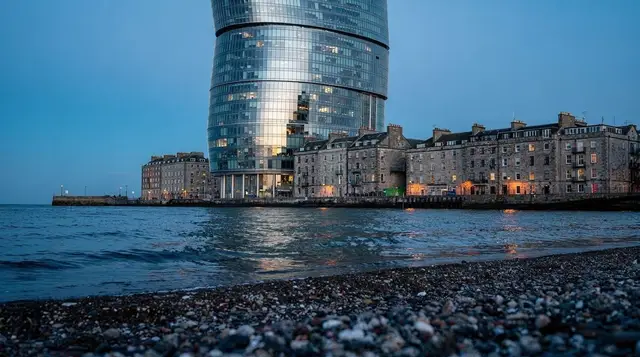
Poti sits on the Black Sea coast where the Rioni River meets the sea, and unlike every other coastal stop covered on this site, it makes no real effort to be a beach resort. This is Georgia’s principal Black Sea port, built around cargo shipping, a naval base and a genuinely unglamorous mix of Soviet-era apartment blocks and industrial infrastructure.
Visitors expecting a smaller version of Batumi or Kobuleti will be disappointed by the town itself — there’s a modest lighthouse, a central cathedral, and not much beyond that to hold attention for more than an hour or two of walking. The contrast with the polished resort towns further down the coast is genuinely stark, and it’s worth arriving with that expectation reset in advance rather than being caught off guard by it.
What makes Poti worth the detour is entirely on its outskirts: Kolkheti National Park, Lake Paliastomi, and a wetland ecosystem that ranks among the more ecologically significant, and least visited, protected areas in the country. This page is really about that wetland, with the port town as the access point rather than the attraction.
Kolkheti National Park: Georgia’s Ramsar wetland
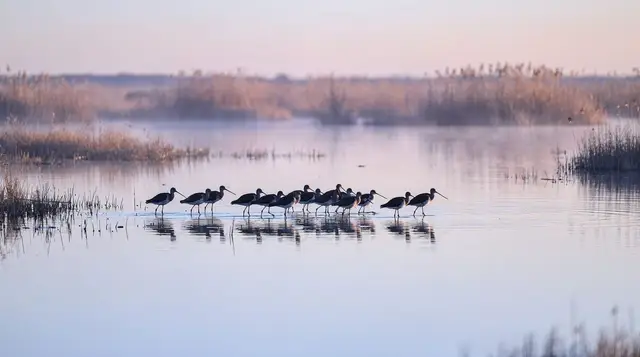
Kolkheti National Park protects one of the largest surviving lowland wetland systems on the eastern Black Sea coast, recognised under the international Ramsar Convention for its ecological importance. The park covers marshland, reed beds, riverine forest and the open water of Lake Paliastomi itself, and it supports a substantial population of resident and migratory birds — herons, pelicans, cormorants and a wide range of waterfowl pass through or nest here, drawing a specialist but growing base of birdwatchers, particularly during the spring and autumn migration windows.
Boat trips through the park’s channels are the standard way to see it, gliding through the reed beds and open lake water with a guide pointing out wildlife along the way — a genuinely different, quieter experience from the road-trip-and-viewpoint pattern of most Georgian day trips. A boat trip through Poti’s wetlands, sometimes marketed locally as “Georgia’s Amazon” is the most direct way to experience the park, and the comparison to the Amazon, while a stretch, does capture the sense of a lush, water-based landscape unlike anywhere else on the Georgian coast.
Lake Paliastomi
Lake Paliastomi, a brackish lagoon connected to the Black Sea by a narrow channel, sits at the heart of the park and forms the centrepiece of most boat excursions. It’s a working ecosystem rather than a scenic postcard lake — expect reed-lined shores, working fishing activity, and a genuinely different pace from the coastal beach towns further south. Anglers and birdwatchers get the most out of a Paliastomi visit; a traveller purely after photogenic scenery may find it more subdued than expected.
A guided hike combining the wetland area with a walk to a nearby “Golden Lake” viewpoint, typically run from Kutaisi, is a land-based alternative for visitors who’d rather walk than take a boat, and it pairs the wetland scenery with a longer countryside walk than the boat trips offer.
How much time the wetland visit actually needs
A single boat trip through the more accessible channels of Kolkheti National Park, combined with a short stop at Lake Paliastomi, comfortably fits into two to three hours, making it genuinely feasible as a half-day add-on to a longer day that also includes central Poti’s modest sights or an onward drive toward Batumi or Kutaisi.
Visitors with a deeper interest in birdwatching specifically should allow considerably longer — a full morning or afternoon dedicated to the park, ideally with an early start when bird activity is highest, gets meaningfully more out of the site than a rushed midday visit squeezed between other stops. There’s no need to build an entire day purely around Poti unless birdwatching or wetland ecology is the specific draw; for most general travellers, the half-day version delivers the genuine highlight without the extra time commitment.
Getting there
Poti sits on the coastal road and rail line, roughly midway between Batumi and Kutaisi’s western reaches, and most visitors reach it either as a stop on a longer coastal itinerary or as a specific day trip from Batumi or Kutaisi. From Batumi, the drive takes a little over an hour along the coast, passing through or near Kobuleti.
From Tbilisi directly, Poti is a long trip — broadly comparable to reaching Batumi, five to six hours by road, since there’s no meaningfully faster route — and most travellers coming from the capital do better basing the wetland visit from Batumi or Kutaisi rather than attempting Poti as a direct Tbilisi day trip. A day tour to the Kolkheti wetlands departing from Batumi is the more practical option for most itineraries.
There is no passenger airport at Poti; the nearest useful airports are Batumi and Kutaisi, both roughly similar driving distances away.
What else is in Poti itself
Poti’s small city centre has a handful of things worth a short walk if you’re passing through: the Poti Lighthouse, a working navigation structure with a long history dating to the 19th century; the Cathedral of the Nativity of the Virgin, a Byzantine-revival building from the Soviet-restoration era rather than an ancient structure despite its style; and the port itself, which offers an unpolished, genuine look at Georgia’s maritime trade that beach towns further along the coast don’t provide. None of this amounts to more than an hour or two, and the honest recommendation is to treat central Poti as a brief add-on to the wetland visit, not the reason to come.
Where to stay and what it costs
Poti has limited accommodation compared with the resort towns further south, mostly modest hotels and guesthouses serving business travel connected to the port rather than tourism, priced accordingly lower — a basic room typically runs 40-80 ₾ a night. Most visitors treat Poti as a day trip rather than an overnight stop, basing instead in Batumi, Kobuleti or Kutaisi, and that’s the more practical approach for anyone without a specific reason to sleep in Poti itself.
Restaurant options in central Poti are similarly limited compared with the resort towns, oriented more toward local working life than visitor turnover — a straightforward Georgian meal runs in the same 25-40 ₾ range found across the country, but the specific choice and quality of restaurants is narrower here than in Batumi or even Kobuleti, another reason most visitors treat the town itself as a brief stop rather than a place to linger over a long dinner.
Poti’s port and its place in Georgian trade
Poti’s port is not a sideshow to the wetland visit — it is genuinely one of the most important pieces of infrastructure in the country, handling a large share of Georgia’s maritime trade and functioning as a key link in transport corridors connecting the Caucasus with Europe and beyond. A free industrial zone established near the port has drawn manufacturing and logistics investment over the past decade, part of a broader Georgian push to position itself as a transit hub between the Black Sea and Central Asia.
None of this is set up for visitor access in any formal way — there’s no port tour or viewing platform aimed at tourists — but understanding that Poti’s identity is fundamentally about shipping and trade, not tourism, explains why the town looks and feels so different from every other stop on this coast.
Birdwatching in more detail
For visitors who do come specifically for the birds, Kolkheti’s wetlands support an unusually wide range of species across the seasons: herons and egrets working the shallows, cormorants diving in the open lake water, and, during migration windows, a broader mix of waders and waterfowl using the Black Sea coast as a stopover on longer journeys between breeding and wintering grounds.
A pair of binoculars and a local guide familiar with the specific channels where birds concentrate makes a substantial difference here compared with an unguided boat trip, since the birds themselves aren’t always visible from the main tourist routes through the reed beds. Early morning departures generally produce better sightings than a midday boat trip, when birds are less active and boat traffic on the more popular channels is higher.
Combining Poti with a wider western Georgia trip
Because Poti sits at the western edge of the country near Kutaisi and the Black Sea coast, it fits naturally into a broader western Georgia itinerary that might also take in Martvili Canyon, Tskaltubo’s abandoned sanatoriums, or a coastal run down to Batumi. Few travellers build an itinerary around Poti alone — it works far better as one stop among several in a western-Georgia loop that treats Kutaisi as its natural base, given Kutaisi’s airport, reasonable transport links, and closer proximity to most of the region’s other attractions than Tbilisi offers.
When to visit
Spring (April to June) and autumn (September to October) are the strongest windows for the wetland visit specifically, coinciding with bird migration through the Black Sea flyway and offering more comfortable temperatures for a boat trip than peak summer. Midsummer brings heat and humidity that make the marshland less pleasant to explore, along with more mosquitoes than the shoulder seasons — worth factoring in if the wetland boat trip is the main reason for the visit.
What to bring on a wetland visit
A boat trip through Kolkheti’s channels is a slower, more exposed outing than most of the driving-and-viewpoint day trips common elsewhere in Georgia, and it’s worth packing accordingly. Insect repellent matters more here than almost anywhere else on this site’s coverage — the combination of standing water, reed beds and summer heat makes mosquitoes a genuine nuisance in the warmer months, considerably more so than at any beach town further down the coast.
A hat and sun protection are equally important, since the open lake sections offer no shade at all, and a light rain layer is worth having regardless of season, since Georgia’s western, coastal regions see meaningfully more rainfall through the year than the drier east around Tbilisi and Kakheti. Comfortable, closed footwear suits the boardwalk sections better than sandals, particularly after rain when the ground softens.
Poti’s Soviet and post-Soviet history
Poti’s development as Georgia’s main port dates back to the Russian imperial era, when the town was built up specifically to give the empire a functioning Black Sea harbour on this stretch of coast, and it continued as a major Soviet port and naval facility through the 20th century.
The town saw real disruption during Georgia’s turbulent post-independence decades, including damage during the 2008 war with Russia, when Russian forces briefly occupied and partially destroyed port infrastructure here — a less-discussed chapter of that conflict compared with the fighting around Gori and South Ossetia, but a genuine part of the town’s recent history. Rebuilding and continued investment since then have restored the port to its role as Georgia’s key maritime trade link, though the visible mix of older Soviet-era buildings and newer industrial development still reflects that disrupted, uneven recent past.
Is Poti worth the detour on a first Georgia trip?
For a first-time visitor with roughly a week to ten days in Georgia, Poti is genuinely optional — the wetland experience it offers, while real and distinctive, competes for time against higher-priority stops like Mestia, Sighnaghi or Vardzia, all of which deliver a more immediately striking experience for a similar time investment.
For a second-time visitor to Georgia, or one with a specific interest in birdwatching, wetland ecosystems or Georgia’s less-visited corners generally, Poti earns its place as a genuinely worthwhile, under-touristed stop that most itineraries skip entirely. It rewards travellers who’ve already covered Georgia’s headline sights and are looking for something quieter and less polished. Framed that way, Poti earns a place on this site’s coverage precisely because so few competing guides mention it at all — a genuine gap in most Georgia itineraries that a curious, unhurried traveller can fill with real reward.
Frequently asked questions about visiting Poti
Is Poti worth visiting for the town itself?
Not really — the town is a working port with limited sights. The wetlands of Kolkheti National Park on its outskirts are the genuine reason to come.
What is Kolkheti National Park known for?
It’s one of Georgia’s most significant wetland ecosystems, recognised under the Ramsar Convention, known for birdwatching, boat trips through reed-lined channels, and Lake Paliastomi.
Is Poti a beach destination like Kobuleti or Ureki?
No — Poti is not marketed or used as a beach resort. Its draw is the wetland and boat trips, not sand or sunbeds.
How do you get to Poti’s wetlands without a car?
Guided day tours run from both Batumi and Kutaisi and are the most practical option for visitors without their own transport.
When is the best time for birdwatching at Kolkheti?
Spring and autumn migration periods, roughly April to June and September to October, offer the widest variety of species passing through.
Can you visit Poti as a day trip from Tbilisi?
It’s possible but long — treat it as a full-day undertaking comparable to a Batumi day trip, and consider basing the visit from Batumi or Kutaisi instead if time is limited.
Is Poti safe to visit?
Yes — day-to-day safety in Poti is no different from other Georgian towns of similar size. The town’s port and industrial character make it feel less polished than the coastal resorts, but that’s a matter of atmosphere, not safety.
Should first-time visitors to Georgia prioritise Poti?
Generally no — it’s a better fit for a second visit or for travellers with a specific interest in wetlands and birdwatching, given how much it competes for time against higher-impact stops elsewhere in the country.