Rustavi and industrial Georgia
What is Rustavi?
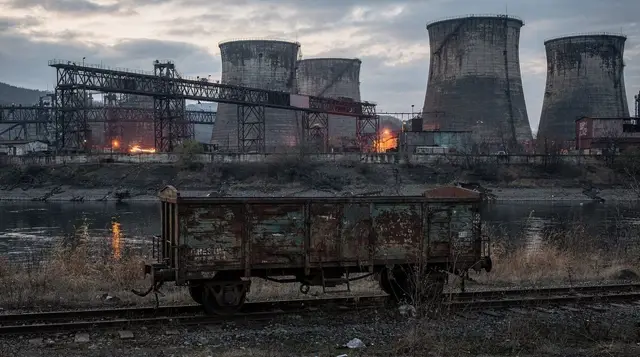
Rustavi is an industrial city around 25 km south of Tbilisi, built up almost entirely from the late 1940s around a large Soviet metallurgical (steel) plant. It grew rapidly under Soviet planning as a model industrial city, declined sharply after independence as the plant's output collapsed, and today functions as a satellite city of Tbilisi with a Free Industrial Zone aimed at reviving manufacturing.
A city built to a five-year plan rather than grown over centuries
Rustavi rarely appears in Georgia guidebooks at all, and when it does, it is usually as a passing reference to industrial statistics rather than a place worth a visitor’s actual time.
That gap is part of why this guide exists: not because Rustavi competes with Georgia’s monasteries, wine regions or mountain villages for a place on a first-time itinerary, but because understanding it fills in a piece of the twentieth-century picture that the rest of this soviet-history series, built around dramatic single sites, does not otherwise cover — the unglamorous, day-to-day machinery of Soviet industrial planning, applied at city scale, close enough to the capital that its rise and fall have been hard for Tbilisi to ignore even as most visitors drive straight past the turn-off.
Almost every town covered elsewhere in this guide predates the Soviet period by centuries, sometimes millennia, with the twentieth century arriving as one chapter layered onto a much older place. Rustavi is the exception: a city that essentially did not exist in its current form before Soviet planners decided, in the late 1940s, that Georgia needed a large-scale metallurgical works and that this particular stretch of land south of Tbilisi was where it should go.
Everything that followed — housing blocks, schools, a stadium, cultural institutions, a population numbering well into six figures at its peak — grew up around that single industrial decision, making Rustavi one of the purest examples in Georgia of a genuinely Soviet-built city rather than a Soviet-era layer added to somewhere older.
Why a steel town, and why here
Soviet industrial planning in the postwar period placed enormous emphasis on heavy industry, and a metallurgical plant of genuine scale was seen as a priority for the Georgian Soviet Socialist Republic’s contribution to the wider union’s steel output.
The chosen site, on the Mtkvari river a short distance south of Tbilisi, offered practical advantages central planners valued: proximity to the capital and its rail and road links, access to river water needed for industrial cooling and processing, and open land available for construction on a scale that an established city could not easily have accommodated. Construction began in the late 1940s, and the Rustavi Metallurgical Plant grew, over the following decades, into one of the largest industrial employers in Soviet Georgia, pulling in workers from across the republic and beyond to staff it.
Part of a wider network of industrial Georgia
Rustavi was never the only piece of Soviet Georgia’s industrial ambitions, even if it became the most visible one given its proximity to the capital. Zestaponi, in Imereti, grew up around a large ferroalloy plant with its own significant Soviet-era industrial history, drawing on manganese from the same mining tradition that built Chiatura’s cable car network a short distance away.
Kutaisi carried its own mix of Soviet-era factories alongside its much older monastic and cathedral heritage, and Batumi’s port and oil-handling infrastructure, with roots reaching back to late nineteenth-century Rothschild and Nobel-backed oil export operations connected by pipeline and rail to Baku, continued and expanded under Soviet control into a major hub for the wider union’s oil trade. Set against this wider picture, Rustavi was one node, albeit an unusually large and centrally located one, in a network of industrial towns that Soviet planning built or expanded across Georgia over several decades, most of which receive even less visitor attention than Rustavi does today.
A model Soviet city, briefly
For a period, Rustavi functioned as something close to a showcase Soviet industrial city: purpose-built housing laid out on a rational grid, civic amenities — schools, a stadium, cultural venues — provided as part of a coordinated urban plan rather than growing organically, and a population that expanded rapidly as the plant’s workforce and their families settled the new city. This kind of planned industrial urbanism was common across the Soviet Union, but Rustavi’s scale and its closeness to the capital gave it particular visibility within Georgia specifically, a symbol of Soviet industrial ambition applied close enough to Tbilisi that the achievement, and later the decline, was hard for the capital to ignore.
Collapse after independence
Rustavi’s fortunes tracked the wider collapse of Soviet-era heavy industry across the former union after 1991 with particular severity. The economic disruption of Georgian independence, the loss of guaranteed Soviet-wide supply chains and markets, and years of broader national economic crisis through the 1990s hit the metallurgical plant hard, and output fell dramatically from Soviet-era peaks.
The city’s population, closely tied to the plant’s employment, declined as jobs disappeared and residents left for Tbilisi or emigrated abroad in search of work, leaving Rustavi with a noticeably reduced and ageing population relative to its Soviet-era high point, along with housing stock and infrastructure built for a considerably larger city than the one now living in it.
What Rustavi looks like today
Present-day Rustavi is a working, if diminished, industrial city rather than an abandoned one. Steel production continues, at a fraction of Soviet-era output and under different ownership structures since independence, and the city has pursued a Free Industrial Zone development aimed at attracting new manufacturing investment with tax incentives, part of a wider Georgian strategy of using such zones to rebuild industrial employment lost after the Soviet collapse.
Walking through Rustavi today means seeing a city genuinely still organised around its original industrial purpose — worker housing blocks, civic buildings from the planned-city era, and the plant itself still dominating the skyline — rather than a preserved museum piece or a fully abandoned ghost town.
Soviet public art in an industrial setting
As a purpose-built Soviet city, Rustavi carries its own, considerably less documented, share of the public art tradition covered in more depth in Soviet mosaics and monuments across Georgia. Factory-facing reliefs celebrating industrial labour, civic murals in public buildings, and monuments tied to the plant’s workforce reflect the same state-sponsored decorative tradition found in Tbilisi and the resort towns, but oriented specifically around industrial rather than civic or leisure themes.
This material is genuinely under-visited and under-photographed compared with Tbilisi’s better-known examples, worth a mention here for anyone specifically pursuing this theme across the country rather than only its most accessible capital-city examples.
Rustavi in the context of Georgia’s wider Soviet history
Rustavi complements the other sites in this guide by showing a side of the Soviet period that Gori’s personality cult, Tskaltubo’s leisure architecture and Chiatura’s mining town do not: the ordinary, worker-facing industrial urbanism that Soviet planning applied across the wider union, largely without the drama or distinctive character that makes those other sites more immediately compelling to visitors.
The Stalin Museum in Gori shows the cult of personality built around one man; Chiatura’s cable cars show industrial infrastructure adapted to difficult terrain; Rustavi shows industrial planning applied to comparatively easy, deliberately chosen terrain, at a scale and with an ordinariness that is, in its own way, just as revealing about how the Soviet system built and organised entire cities around a single economic function.
A Soviet heritage day trip from Tbilisi does not currently route through Rustavi given its distance from the other more visitor-oriented sites, but it is a reasonable half-day addition for anyone with a specific interest in this less-visited industrial side of the story.
For visitors already covering the Museum of Soviet Occupation and Brutalist Tbilisi within the capital, Rustavi offers a logical next step outward: from ideology and architecture in Tbilisi itself, to the industrial base that underpinned the wider Soviet Georgian economy a short drive south.
Read alongside Soviet mosaics and monuments across Georgia and the Chronicle of Georgia, Rustavi rounds out a picture of Soviet-era Georgia that spans political cult, monumental art, architecture and industry rather than any single one of those threads in isolation, even if it remains, by a clear margin, the least visited and least documented of the sites this wider guide covers.
Budgeting time and money for a visit
A half-day is realistic for Rustavi: enough time to walk through the planned residential districts, see the plant from a respectful distance, and get a genuine sense of the city’s layout and scale without needing a full day. Costs are minimal by Georgian standards — a marshrutka fare each way, plus whatever you choose to spend on food locally, since there is no admission fee for anything covered in this guide and no tour cost to factor in given the absence of any organised product. This makes Rustavi one of the cheapest possible additions to a Georgia itinerary in pure financial terms, even if its return in conventional sightseeing value is modest compared with almost anywhere else in this guide.
Population decline and what it looks like on the ground
The gap between Rustavi’s Soviet-era peak population and its present-day figure is visible in ways that go beyond statistics: housing blocks built for a considerably larger workforce than the city now employs, civic buildings sized for a population the city no longer has, and infrastructure that in places outpaces current demand.
This is a common pattern across former Soviet industrial cities that lost their core economic function after 1991, and Rustavi’s relatively short distance from Tbilisi has softened the effect somewhat compared with more remote industrial towns, since commuting to the capital has given some residents an alternative to relying on local industrial employment. It has not, however, reversed the underlying decline, and the city’s built environment still reflects ambitions from a period when its population and economic role were considerably larger than they are today.
A football club that outlasted the boom years
Rustavi’s football club has had periods of genuine prominence in Georgian domestic football over the decades, and the city’s stadium and sporting infrastructure date to the same era of coordinated civic investment that built its housing and cultural institutions. Sport, in this sense, functions as another visible layer of the planned-city era’s ambitions — infrastructure built not just for industrial production but for the kind of civic completeness Soviet urban planning aimed for in a model city, sport included alongside housing, schools and cultural venues as part of a single coordinated project.
Getting there and what to expect
Rustavi sits around 25 km south of Tbilisi, reachable in roughly thirty to forty minutes by road or marshrutka. Marshrutkas connecting the two cities run frequently and cheaply, in line with the ordinary fares covered in How marshrutkas actually work, making Rustavi one of the more straightforward independent day trips from Tbilisi in purely logistical terms, even without any dedicated tourist infrastructure once you arrive.
There is no museum, guided tour circuit or English-language signage explaining the city’s history on site, so a visit here is closer to independent urban exploration than a conventional sightseeing stop. This is not, in the ordinary sense, a place set up to be visited, and it is worth going with that expectation firmly in mind.
No organised tours currently cover this
Unlike every other site in this guide, Rustavi does not currently appear on any organised tour itinerary from Tbilisi, and no specific GetYourGuide or similar catalogue listing exists for the city as a standalone destination. That absence is itself informative: Rustavi has not yet been packaged as a visitor attraction in the way Gori, Chiatura and Tskaltubo have, which means anyone visiting does so essentially as an independent explorer rather than as part of an established tourism product. This guide exists as background reading for that kind of visit rather than as a lead-in to a bookable tour, and that is a deliberate, honest reflection of where this particular site currently sits in Georgia’s tourism landscape rather than an oversight.
Practical notes and etiquette
As with any working city rather than a curated attraction, ordinary courtesy matters more here than in more touristed parts of Georgia — Rustavi’s residents are not accustomed to visitors treating their neighbourhoods as a sightseeing backdrop, and photographing people or their homes without asking is as inappropriate here as it would be anywhere else. Is Georgia safe? covers general safety considerations that apply equally in Rustavi as elsewhere in the country; there is nothing about the city that presents unusual risk, but it is also not an area with any specific visitor safety infrastructure, so ordinary common sense and awareness of your surroundings apply as they would in any unfamiliar working city.
Seeing Soviet Georgia without leaving the capital
If a half-day of independent wandering in Rustavi sounds like too much effort for too little reward, Tbilisi itself holds plenty of the same story in a more digestible form. Some visitors prefer to have the Soviet period explained on the spot, and a guided walk through a residential district built in that era, such as a Soviet district tour with a local family visit, gives context that Rustavi, with its absence of signage, simply does not. A tour built around Soviet architecture and a water reservoir visit pairs naturally with this guide, because the planning logic behind the capital’s apartment blocks is the same logic that laid out Rustavi.
For the industrial side specifically, a Soviet-era food walk through a once-notorious industrial district is the closest organised product to what this page describes: working-class neighbourhoods, ordinary canteen food and the stories of people who lived through the plant-and-factory economy. It is not a Rustavi tour, and it does not claim to be, but it speaks to the same world.
Anyone who wants the longer arc, from the Russian Empire through to the Soviet republic, can look at a guided history tour tracing Georgia from imperial rule into the Soviet period, which gives the political backdrop to the decisions that created Rustavi in the first place. Pairing a day like that with the independent exploration described above makes for a coherent theme rather than two unrelated outings.
A few ways to build the rest of the trip around it:
- Start in the capital with a one-day Tbilisi plan and keep Rustavi for a flexible half-day.
- Fold it into three days in Tbilisi if the Soviet theme is a priority.
- Read Tbilisi’s changing neighbourhoods for how the capital absorbed the same economic shifts.
- Use Tbilisi’s metro and buses to reach the departure points for southbound marshrutkas.
- Add the Soviet ruins ethics piece to your reading before photographing industrial sites.
- If the theme grabs you, continue to Tskaltubo’s abandoned sanatoriums or the Gori day trip for the more dramatic chapters.
- Compare it with Tbilisi’s street art and Fabrika, for a contrast in how Soviet-era buildings get reused.
Should you go?
For the overwhelming majority of visitors to Georgia, Rustavi has no place on the itinerary, and that is a reasonable conclusion to reach: it has no major monuments, no guided infrastructure, and nothing resembling the more immediately striking sites covered elsewhere in this guide.
For anyone with a genuine, specific interest in Soviet industrial planning, post-industrial decline, or simply wanting to see a side of Georgia that essentially no other visitor bothers with, it is a legitimate half-day curiosity, close enough to Tbilisi to add on without disrupting the rest of a trip. Go with realistic expectations, treat it as a piece of social and economic history rather than a sightseeing stop, and do not expect anyone else you meet to have been there.
If your Georgia trip is built around wine, mountains and old towns, skip it without a second thought — nothing here competes with Kakheti’s vineyards or the Georgian Military Highway for a memorable day out. But for readers who have made it this far through a guide specifically about Soviet history, industrial planning and how a state builds and then loses an entire city’s worth of purpose, Rustavi is the one stop on this list that shows that story in its most unadorned, unglamorous form — no propaganda museum, no dramatic ruin, no monumental sculpture, just an ordinary planned city quietly living out the long aftermath of an economic decision made in the late 1940s.
Frequently asked questions about Rustavi and industrial Georgia
Is Rustavi worth visiting as a tourist?
Honestly, only for a specific interest in Soviet industrial planning and post-industrial urban decline. Rustavi has no major tourist attractions in the conventional sense, and most visitors to Georgia have no reason to go there unless this particular history interests them.
How far is Rustavi from Tbilisi?
Around 25 km, roughly a 30 to 40 minute drive or marshrutka ride depending on traffic, making it easily reachable as a half-day curiosity from the capital rather than requiring an overnight stay.
Is the Rustavi steel plant still operating?
Steel production continues at reduced scale compared with Soviet-era output, under different ownership and management since Georgian independence, alongside a wider Free Industrial Zone development aimed at attracting new manufacturing investment to the city.
Why was Rustavi built where it was?
The site was chosen for its proximity to Tbilisi, access to rail and road transport, and access to water from the Mtkvari river, all practical requirements for a large-scale metallurgical plant under Soviet industrial planning in the late 1940s.
Are there any Soviet-era mosaics or monuments in Rustavi?
Yes, as a purpose-built Soviet industrial city, Rustavi carries its own share of the public art typical of the era — factory-facing reliefs, civic murals and monuments tied to industrial labour — though it is considerably less documented and less visited than Tbilisi’s own examples.
Does Rustavi have any relevance to Georgian football?
Rustavi’s football club has had periods of prominence in Georgian domestic football, and the city’s stadium and sporting facilities were part of the same era of civic investment that built its housing blocks and cultural institutions.
Soviet history tours on GetYourGuide
Verified deep-linked GetYourGuide tours. Book through these links and we earn a small commission at no cost to you.
Photo: our own image of the location, not the operator’s product photo.