Soviet mosaics and monuments across Georgia
Where can you see Soviet mosaics in Georgia?
Surviving Soviet-era mosaics turn up on bus stations, former factories, schools, sanatorium facades and public buildings across the country, with concentrations in Tbilisi's older districts, the sanatorium town of Tskaltubo, and along stretches of the old Soviet road network. Few are protected as heritage, so what survives is largely a matter of what has not yet been demolished or renovated over.
Public art that was never meant to be admired for itself
Soviet Georgia produced an enormous amount of public art without ever calling it art in the way a gallery would use the word. Mosaics covered bus stations, factory facades, school gymnasiums and sanatorium lobbies, not as standalone commissions but as standard-issue decoration for everyday Soviet infrastructure, produced by trained monumental artists working within a state system that treated public buildings as a canvas for ideology, local culture, and, occasionally, genuine artistic ambition that outran its brief.
Decades later, with the state and the ideology both gone, what remains is an accidental open-air archive scattered across the country — some pieces well known and photographed, most unmarked, unprotected and quietly deteriorating on buildings nobody is specifically maintaining for their sake.
Why Soviet Georgia produced so much of it
Georgia held an unusually strong position within the Soviet Union’s tradition of monumental art. Georgian artists trained in mosaic, mural and relief work were active across the wider Soviet Union, and the republic’s own public buildings — bus stations, resort towns, sports complexes, schools — received a correspondingly high concentration of ambitious commissions relative to their practical function.
The most internationally famous figure to emerge from this tradition, Zurab Tsereteli, became one of the most prolific and, later, most divisive monumental artists of the late Soviet and post-Soviet period, working at a scale — his Georgian centrepiece, the Chronicle of Georgia near Tbilisi, runs to dozens of metres of carved bronze relief on towering stone pillars — that individual mosaic artists working on a single bus station could never match, but which grew from the same state-sponsored tradition of public monumental art.
Tbilisi: Empire Soviet Architecture and Ideology Walk sets this tradition in its wider architectural and ideological context, useful background before hunting down individual mosaics around the city.
Where to find surviving mosaics in Tbilisi
Tbilisi’s older, less-renovated districts hold the highest concentration of surviving Soviet-era public art, on buildings that have not yet been demolished, sold for redevelopment, or restored in a way that erased the original decoration. Former bus stops, school buildings, sports facilities and administrative blocks across the city carry mosaic and mural work in varying states of preservation, much of it unmarked and easy to walk past without knowing what you are looking at or why a particular building was chosen for such elaborate decoration in the first place.
This is one of the clearest cases in Georgian travel where local knowledge genuinely changes what you see: a guided walk covering specific addresses will show you work that a self-guided wander, however observant, is likely to miss entirely.
Tbilisi: Soviet Suburbs and Murals Exhibition Guided Tour is built specifically around this — locating and explaining surviving murals and mosaics in Tbilisi’s outer districts, an area most first-time visitors never have a reason to walk through otherwise.
The Soviet bus stop phenomenon
One specific category of Georgian Soviet-era public art earned international attention well beyond what its modest function would suggest: bus stops. Photographer Christopher Herwig spent years documenting Soviet-era bus shelters across the former USSR, publishing the results as the widely circulated “Soviet Bus Stops” books, and Georgian examples feature prominently among the most architecturally ambitious in the entire collection — small roadside structures given wave-shaped concrete canopies, full mosaic cladding, or sculptural forms that owe nothing to their basic function of keeping rain off a handful of waiting passengers.
Many of these structures survive today along provincial roads precisely because they are too small and functionally unremarkable to be worth demolishing, even as the grander civic buildings around them get redeveloped — a reminder that scale is not a reliable predictor of what actually lasts.
Reading the style: early, mid and late Soviet decoration
Georgian Soviet-era public art shifted noticeably in style across the decades, and learning to read those shifts turns a scattered collection of unrelated images into a rough visual timeline. Work from the 1950s and early 1960s tends toward more literal, figurative socialist-realist imagery — workers, agricultural scenes, historical figures rendered in a relatively conservative style.
From the mid-1960s through the 1970s, Georgian mosaic artists increasingly moved toward abstraction, folk motifs and stylised natural forms, a shift visible across the wider Soviet Union but pursued with particular confidence in Georgian work of the period. By the late 1970s and into the 1980s, some public commissions edge toward genuinely experimental abstraction, decoration that reads more as independent artistic statement than state messaging, evidence of how much latitude individual artists had earned within an ostensibly rigid system by the later Soviet decades.
Beyond Tbilisi: Tskaltubo, sanatoriums and the resort towns
Georgia’s Soviet-era resort towns hold some of the country’s most elaborate surviving decorative work, because they were built specifically to impress. Tskaltubo’s abandoned sanatoriums, near Kutaisi, include lobbies and facades with mosaic and tilework of a quality and scale that would be genuinely expensive to reproduce today, now decaying alongside the buildings that house them rather than being preserved separately.
Other spa and resort towns across the country carry similar, smaller examples, generally in poorer condition the further they sit from any ongoing use or maintenance — Tskaltubo’s mix of still-functioning bathhouses and fully abandoned sanatoriums makes it one of the few places where you can compare maintained and unmaintained examples of the same decorative tradition within a short walk of each other.
Modernist and brutalist buildings as a canvas
Several of Tbilisi’s best-known Soviet-era modernist and brutalist buildings incorporated mosaic or relief work directly into their design rather than treating decoration as separate from architecture, part of why brutalist Tbilisi and this guide overlap so closely as subjects.
Large-scale relief panels, geometric tile patterns and sculptural concrete detailing appear on institutional buildings from the same decades that produced the city’s most striking brutalist structures, and reading the two traditions together — architecture and applied art commissioned as a single package — gives a fuller picture of how ambitious Soviet-era public building projects actually were than looking at either in isolation.
Tbilisi: Photo Walk Tour with Soviet Modernism combines both strands directly, aimed at photographers wanting the architecture and its integrated decorative work in the same outing rather than treating them as separate subjects.
Photographing mosaics well
Mosaic surfaces respond very differently to light than flat painted murals, since the texture of individual tesserae catches and scatters light depending on angle, which makes raking, low-angle light — early morning or late afternoon — considerably more flattering than the flat overhead light of midday, when detail tends to wash out into a uniform glare.
Overcast conditions, counterintuitively, often produce more even and legible photographs of a mosaic’s actual colour palette than bright sunshine, which throws hard shadows across raised sections of the tilework. For interior mosaics, particularly the sanatorium lobbies around Tskaltubo, a wider lens and a tripod earn their keep given how dim many of these spaces are decades after any working electrical lighting.
Practical tips for a self-guided search
Independent mosaic-hunting in Tbilisi rewards patience over a fixed checklist, since so much of what survives is unmarked and undocumented in any single central source. Walking through the city’s older, less-renovated residential districts rather than its polished central streets is the single most useful strategy, since renovation and redevelopment have already erased most of what survived in the most commercially valuable parts of the city.
A local guide with specific addresses saves considerable time over wandering blind, but for anyone determined to search independently, treating it as a slow walk through ordinary neighbourhoods — rather than a checklist of famous sites — matches how this material actually survives: scattered, uncelebrated, and easy to miss if you are moving quickly.
What has been lost, and what is disappearing now
The honest picture is one of ongoing loss rather than stable survival. Buildings get demolished for redevelopment, renovated in ways that strip original decoration in favour of modern cladding, or simply collapse from decades of neglect, and because almost none of this material carries formal heritage protection, there is no systematic mechanism slowing the process down.
What survives today is, in large part, a matter of accident — buildings in less commercially valuable locations, or ones tied up in ownership disputes that have stalled redevelopment, rather than any deliberate preservation effort. Anyone specifically interested in this material should treat “still there” as a temporary status rather than a permanent one, and visit sooner rather than assuming a particular mosaic or mural will still exist on a return trip years later.
International attention, and what it has and has not changed
Interest from outside Georgia — photographers, architecture writers, the wider online documentation of Soviet-era design that grew significantly through the 2010s — has raised the profile of this material considerably, turning what was once a niche local curiosity into a recognisable strand of Georgian travel content. What that attention has not reliably produced is protection.
A building becoming well known online or in a photography book does not, by itself, grant it any legal heritage status, and several structures that gained real recognition through international documentation have still been demolished, sold, or stripped of their original decoration in the years since. Treat online popularity as evidence that something is worth seeing, not as evidence that it will still be there when you arrive.
Why this matters beyond aesthetics
It is worth being honest about why this subject earns a place in a Georgia guide beyond its visual appeal. These buildings and their decoration are physical evidence of a specific ideological project — public art commissioned by a state that wanted its infrastructure to communicate confidence, progress and cultural continuity, even in a bus shelter on a rural road.
Reading them purely as striking photographs, without any of that context, misses what makes them genuinely interesting: they are a kind of accidental archive of what the Soviet state wanted ordinary Georgians to see and feel every day, surviving now mostly by chance rather than by design, in a country that has spent over three decades since independence deciding, unevenly and still not entirely, how to feel about that inheritance.
A tradition still visible in Batumi and beyond
The Black Sea coast around Batumi holds its own scattered examples of the same decorative tradition, generally on a smaller scale than Tbilisi’s civic commissions but worth noting for anyone extending this interest beyond the capital. As with the rest of the country, survival is patchy and unmarked rather than curated, and finding specific examples generally rewards asking a local guide over searching independently.
Industrial towns as an overlooked source
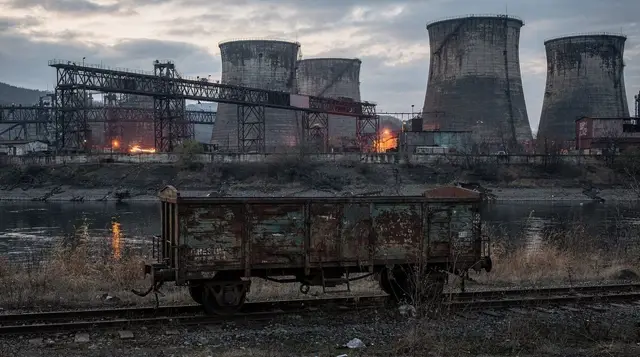
Georgia’s Soviet-era industrial towns hold their own, less-photographed layer of this tradition, generally in poorer condition and less documented than the civic commissions of Tbilisi or the resort architecture of Tskaltubo. Rustavi, built up almost entirely around a Soviet steelworks a short drive south of Tbilisi, carries the kind of worker-facing decorative art — factory-gate reliefs, canteen and clubhouse mosaics — that rarely makes it into guidebooks focused on the capital’s more accessible examples. It is a genuinely under-visited angle on the same broader subject, worth a mention here even though it demands more effort to seek out than anything in central Tbilisi.
How Georgia compares to its neighbours
Georgia is not unique in holding this kind of material — Armenia, Ukraine and the Central Asian former Soviet republics all carry their own stock of surviving mosaics, murals and monumental sculpture from the same decades, and international documentation projects have covered several of these countries alongside Georgia.
What sets Georgia apart within that wider picture is less the quantity of surviving work than its concentration and quality: the republic’s strong tradition of trained monumental artists produced an unusually high proportion of genuinely ambitious pieces rather than standardised, mass-produced decoration, which is part of why Georgian examples feature so prominently in international photography books and documentation projects relative to the country’s modest size.
Fitting this into a wider Soviet heritage trip
Soviet mosaics and monuments work best as a thread running through a wider look at twentieth-century Georgia rather than a destination in their own right. The Stalin Museum in Gori covers the personality cult side of the same period, the Museum of Soviet Occupation in Tbilisi supplies the political counter-narrative largely absent from public decoration itself, and Chiatura’s cable cars show the industrial infrastructure of the same decades from an entirely different angle.
A Soviet heritage day trip from Tbilisi lays out how to combine two or three of these threads without an unreasonably long day, and April 1989 and August 2008: how Georgia remembers covers the more recent history that sits just beyond where this decorative tradition ends. For the architecture specifically, read Brutalist Tbilisi alongside this guide, since the two subjects were, in many cases, commissioned and built as a single project rather than two separate ones.
Is this worth building a day around?
For most visitors, Soviet mosaics and monuments are a layer to notice along the way rather than a dedicated day’s itinerary — a mosaic spotted on an old bus stop while walking to something else, or a lobby glimpsed inside a Tskaltubo sanatorium visited primarily for its history. For anyone with a specific interest in Soviet-era public art or design history, though, a guided walk through Tbilisi’s outer districts, paired with a visit to Tskaltubo, gives a genuinely rich and largely under-visited side of Georgian travel — provided you go in understanding that most of what you are looking at is unmarked, unprotected, and, in a meaningful sense, disappearing while you look at it.
If you only have time for one dedicated stop on this theme, weigh up whether you would rather see the material concentrated and explained — a guided Tbilisi walk covering several confirmed addresses in a morning — or encountered incidentally, woven into a longer day trip to Gori, Chiatura or Tskaltubo where the mosaics and murals are a bonus alongside a bigger historical subject rather than the main event. Neither approach is wrong, and combining both across a longer stay in Georgia is the only way to get a genuinely rounded sense of how thoroughly this decorative tradition once covered the country’s everyday infrastructure, and how much of it has already quietly gone.
Frequently asked questions about Soviet mosaics and monuments across Georgia
Why does Georgia have so many Soviet mosaics?
Public mosaic art was heavily promoted across the Soviet Union from the 1960s through the 1980s as a way of decorating everyday infrastructure with socialist and cultural imagery, and Soviet Georgia had an unusually strong tradition of monumental artists working in the form, producing a higher concentration of ambitious civic mosaics than many other Soviet republics.
Are Georgia’s Soviet mosaics protected as heritage?
Very few have formal protection. Most survive by accident, on buildings that happen not to have been demolished, sold for redevelopment, or renovated over, rather than through any systematic heritage listing, which means the surviving stock genuinely shrinks year by year.
What is the difference between a mosaic and a mural in this context?
A mosaic is built from small pieces of tile, glass or stone (smalta) set into cement or plaster, giving it a distinctive textured surface and long outdoor durability. A mural is painted directly onto a wall. Soviet Georgia produced large amounts of both, often on the same buildings, and both are covered by guided tours built around this theme.
Where in Tbilisi can you see Soviet-era public art?
Scattered examples survive on old bus stops, former Soviet administrative buildings, schools and sports facilities across the city’s older districts, with several dedicated walking tours built specifically around locating and explaining them, since many are unmarked and easy to walk past without knowing what you are looking at.
Is Zurab Tsereteli connected to Georgia’s Soviet monuments?
Yes. Tsereteli, a Georgian-born sculptor and monumental artist who became one of the most prominent public artists of the late Soviet period, produced large-scale work across the USSR, and his most famous Georgian project, the Chronicle of Georgia near Tbilisi, was begun in the Soviet era and never officially completed.
Can you visit Soviet mosaics as part of a guided tour?
Yes, several operators run walking tours in Tbilisi built specifically around Soviet-era murals, mosaics and architecture, generally more useful than self-guided searching since many surviving pieces are unmarked, on private property, or otherwise easy to miss without local knowledge of where to look.
Soviet history tours on GetYourGuide
Verified deep-linked GetYourGuide tours. Book through these links and we earn a small commission at no cost to you.
Photo: our own image of the location, not the operator’s product photo.