Batumi’s overflow valve, not its rival
Kobuleti sits on the Black Sea coast roughly 25 kilometres north of Batumi, close enough that most visitors experience it as a day trip or a cheaper place to sleep rather than a destination in its own right. The pebble beach here runs for kilometres, considerably longer and less packed than Batumi’s, and prices for a room, a meal or a sunbed drop noticeably once you’re out of Batumi’s city limits.
What Kobuleti does not have is Batumi’s boulevard architecture, its restaurant scene or its nightlife — this is a functional beach town built mostly for Georgian and regional package tourism, and it looks the part: a strip of mid-rise hotels and guesthouses along the shore road, unevenly maintained, with genuinely good stretches of beach and unremarkable ones sitting side by side.
The honest pitch for Kobuleti is budget and space, not polish. A family that wants a week on the Black Sea without Batumi’s prices, or a traveller basing in Batumi who wants a quieter afternoon away from its crowded central beach, gets real value here. A traveller expecting a scaled-down Batumi with the same restaurant quality and evening atmosphere will be disappointed.
Kobuleti also has a longer domestic tourism history than its current construction boom suggests — Georgian and Soviet-era holidaymakers were coming here for the sea air and sanatorium treatments decades before Batumi’s modern boulevard existed, and that older identity as a health and rest resort, rather than a nightlife destination, still shapes the town’s character even as new apartment towers change its skyline.
The beach itself, and why it’s better than it sounds
Kobuleti’s beach is pebble, like nearly the entire Georgian Black Sea coast — there is no sand beach comparable to Ureki’s further south. What it has instead is length: the built-up shore road runs for several kilometres, and unlike Batumi’s central beach, which is genuinely cramped by midsummer, Kobuleti’s stretch rarely feels overrun even in August, because the town spreads visitors along a much longer strip. Sunbeds and umbrellas are available for rent at the hotels and cafés lining the promenade, typically a few lari cheaper than the equivalent in Batumi, and a public, unmanaged stretch of beach exists for anyone who doesn’t want to pay for a spot.
Water quality is comparable to Batumi’s — swimmable and generally clean by Black Sea standards, though neither approaches Mediterranean clarity, and after heavy rain the coastal current can bring in visible sediment for a day or two. Late June through early September is when the sea is genuinely warm enough for a long swim; outside that window the water turns uncomfortably cold well before the air does.
Petra Fortress: real Byzantine walls, and a debate about dates
The fortress ruins at Petra, a short distance north of central Kobuleti near the village of Tsikhisdziri, are the town’s one genuinely historic attraction. Byzantine sources describe a fortress called Petra built here in the 6th century under Emperor Justinian, contested repeatedly between Byzantine and Persian forces during the Lazic War — and the surviving walls and cistern foundations on the headland are old enough and substantial enough to be worth the stop for anyone interested in the period.
What’s less settled is how much of what’s visible today is original Byzantine construction versus later Ottoman-era rebuilding on the same strategic point, a question the site’s on-location signage doesn’t fully resolve. Come for the setting — a genuinely dramatic clifftop position over the sea — and treat the specific dating with some scepticism rather than as certain fact.
A guided tour combining the Petra fortress site with the Mtirala foothill scenery and a botanical stop is the easiest way to see the ruins with context, since public transport to the exact headland is inconvenient without a car.
Kobuleti Nature Reserve and the wetlands behind the town
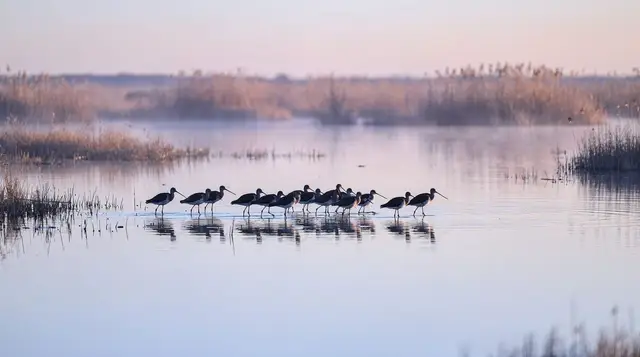
Inland from the beach strip, the Kobuleti Managed Reserve protects one of Georgia’s few surviving raised peat bogs, a wetland type that’s become rare across the wider Black Sea region and is recognised under the Ramsar Convention on wetlands of international importance.
It sits alongside the better-known Kolkheti National Park further north as one of two protected wetland systems on this stretch of coast, and it draws a genuine specialist crowd of birdwatchers during spring and autumn migration, when the reed beds and open water attract waders and waterfowl passing along the Black Sea flyway. Casual visitors get less out of it than birders do — there’s a boardwalk section but no dramatic single view — and it’s a stop worth making specifically if wetland ecology or migratory birds are already an interest, not a generic add-on to a beach day.
Where to stay and what it actually costs
Kobuleti’s accommodation is overwhelmingly mid-rise hotels and family-run guesthouses strung along the coast road, built for volume rather than character. A basic guesthouse room runs roughly 40-70 ₾ a night outside peak season, climbing meaningfully in July and August when Georgian, Armenian and Azerbaijani families fill the town; a mid-range hotel room with sea views or a pool sits closer to 150-250 ₾ in season. The gap with Batumi is real but not enormous once you’re comparing similar quality — Kobuleti’s advantage is more about having a genuinely wide range of no-frills options than about dramatically undercutting Batumi at every tier.
Eating out follows the same pattern: taverna-style Georgian meals run 25-40 ₾ a head, khinkali around 1-1.5 ₾ each, and khachapuri 8-15 ₾, broadly in line with prices elsewhere in Adjara, though the specific Adjarian boat-shaped khachapuri is better and more reliably made in Batumi’s established restaurants than in Kobuleti’s more tourist-turnover kitchens.
Food beyond the standard taverna menu
Kobuleti’s restaurant scene runs mostly on standard Georgian and Adjarian staples rather than the more varied dining that’s developed in Batumi over the past decade — khachapuri, mtsvadi grilled meats, and simple fish dishes reflecting the coastal setting, though the fish here tends to be more freshwater or farmed than a genuinely notable Black Sea catch.
Corn on the cob and churchkhela sold along the promenade make for a cheap, casual snack between beach sessions, in the same tradition found up and down this coast. Anyone wanting Adjara’s specific boat-shaped khachapuri cooked to a genuinely high standard is better served making the short trip into Batumi, where competition among restaurants has pushed quality noticeably higher than what most of Kobuleti’s turnover-focused beachfront kitchens deliver.
Getting there and getting around
Kobuleti sits directly on the coastal road and rail line between Batumi and the rest of western Georgia, so reaching it from Batumi is a short marshrutka or taxi ride — typically 30-40 minutes and a handful of lari by marshrutka, more by Bolt. From Tbilisi, the trip mirrors the journey to Batumi itself: a long road transfer of five to six hours, the overnight or day train to the coast, or a one-hour flight into Batumi followed by the short onward hop to Kobuleti.
There is no separate airport serving Kobuleti directly, and nearly every visitor arrives via Batumi first. See the Tbilisi to Batumi transport guide for the full comparison of plane, train and road, and Batumi airport for arrival logistics.
Within Kobuleti itself, the town is walkable along its coast road, and marshrutkas run frequently up and down the shore for anyone staying at the edges. A private guided day trip from Batumi to the Kobuleti coast is a reasonable option for visitors who’d rather not manage the marshrutka timetable themselves, particularly for a single-day visit that also wants to take in Petra.
Kobuleti as a base for the wider Adjara coast
Because it sits roughly midway between Batumi and the Kolkheti wetlands further north, Kobuleti works as a base for exploring the whole stretch of coast without committing to Batumi’s prices every night. A day trip from Kobuleti into Kolkheti National Park’s wetlands covers the birdwatching and boat side of the coast, while Batumi remains a short hop away for anyone who wants an evening out with better restaurant options.
See Batumi’s beaches, Kobuleti: the quieter coast and when the Black Sea is warm enough to swim for the seasonal picture across the whole coastline, and the beaches and coast category for everything else along this shore. For the wetland side specifically, see birdwatching at Kolkheti National Park.
What Kobuleti isn’t, and who should skip it
Visitors expecting Batumi’s boulevard, its casinos and its restaurant density will find Kobuleti flat by comparison — this is not a nightlife or dining destination, and after dark there’s genuinely little happening beyond the hotel bars. It also isn’t the place for Ureki’s specific draw, the magnetic black sand, which is a different beach further south with its own distinct mineral composition. Travellers with limited time on the coast are usually better served spending the extra nights in Batumi itself and treating Kobuleti as a half-day out rather than a base, unless budget is the deciding factor.
A realistic day in Kobuleti
A first visit works best structured around the cooler hours. Mornings are for the beach itself, before the midday sun turns the shadeless pebble strip uncomfortable — an early swim followed by breakfast at one of the small cafés along the shore road is the standard local rhythm. Petra fortress is a better midday stop than a morning one, since the drive up the coast road takes the edge off peak beach hours and the ruins themselves offer some shade from surrounding vegetation.
Late afternoon and early evening are when the promenade genuinely comes alive, with families out walking, corn and churchkhela sellers along the shore, and the beach itself noticeably more comfortable once the sun drops. A single full day covers the beach and Petra comfortably; a second day is only worth adding for the Kolkheti wetland side trip or a slower, more relaxed pace.
Development, high-rises and what’s changing
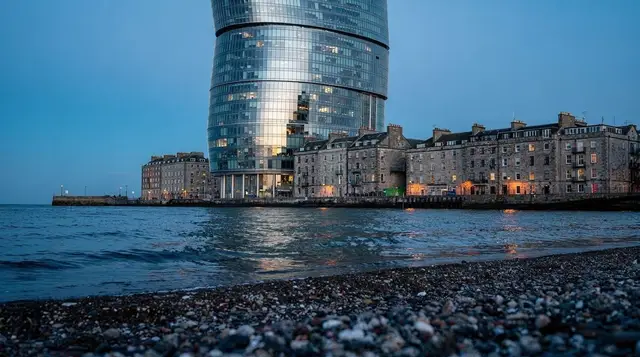
Kobuleti has been building upward for the past decade or so, following a pattern visible across much of the Adjara coast: mid-rise and, increasingly, higher apartment towers going up along and behind the shore road, aimed partly at the same domestic and regional buyers who fuel Batumi’s own construction boom.
The result is a town in visible transition — older, low-rise guesthouses and Soviet-era sanatorium buildings sitting alongside newer concrete towers, with construction sites a common sight along the approach roads. This isn’t unique to Kobuleti and mirrors what’s happened at pace in Batumi itself, but it’s worth setting expectations: this is not a preserved, historic seaside town, and the skyline is actively changing year to year rather than settled.
Kobuleti’s older Soviet sanatorium heritage
Before the current wave of private hotel and apartment construction, Kobuleti was a Soviet-era sanatorium town, part of the same network of state-run health resorts that made Tskaltubo famous, built around the idea that sea air and mineral-rich local springs offered genuine therapeutic value for workers sent here on state vouchers.
Some of these older sanatorium buildings still stand along the town’s back streets, in varying states of repair — a handful renovated and repurposed, others left empty and decaying in a milder echo of Tskaltubo’s more dramatic abandoned complexes. They’re not a formal attraction and there’s no organised way to visit them, but they’re visible walking the streets a block or two back from the beach, for anyone curious about the town’s history beyond its current beach-resort identity.
Practical costs beyond accommodation
Getting around town costs little: a local marshrutka ride along the coast road runs close to the 1 ₾ urban fare typical across Georgia, and Bolt is available and reasonably priced for anyone not wanting to wait on marshrutka timing, typically similar to the 5-12 ₾ range Bolt charges within most Georgian towns of this size. Beach sunbeds and umbrellas, where a fee applies, are usually a handful of lari for a full day, though the free, unmanaged stretches of beach mean paying is genuinely optional here in a way it often isn’t on more developed stretches of the Batumi shore. Bottled water, snacks and corn from beachfront vendors are priced modestly, and haggling isn’t the norm at these small stalls the way it might be at a market.
Frequently asked questions about visiting Kobuleti
Is Kobuleti cheaper than Batumi?
Generally yes, for accommodation and sunbeds, though the gap narrows once you compare similar quality tiers. Restaurant prices are broadly similar.
How do you get from Batumi to Kobuleti?
By marshrutka or taxi along the coastal road, roughly 30-40 minutes and a low fare by shared transport, more by private taxi or Bolt.
Is the Petra fortress worth visiting?
Yes for anyone interested in Byzantine-era history or a dramatic clifftop ruin — it’s a short, specific stop rather than a half-day attraction, and easiest reached with a car or a guided tour.
Does Kobuleti have a sand beach?
No — like nearly the whole Georgian coast, it’s pebble. Ureki further south is the sand and magnetic-sand exception.
Is Kobuleti worth an overnight stay, or just a day trip?
For most visitors coming from Batumi, a day trip covers what matters. An overnight makes more sense for travellers prioritising budget over nightlife and restaurant variety.
When is Kobuleti busiest?
July and August, when Georgian and regional families fill the guesthouses; outside those two months the town is markedly quieter and cheaper.
Are there Soviet-era buildings still visible in Kobuleti?
Yes — a number of former sanatorium buildings from the town’s Soviet health-resort era survive a block or two back from the beach, some renovated, others left empty, though none are set up as formal visitor sites.
Is Kobuleti a good base for exploring the whole Adjara coast?
It can work well for that specifically, sitting roughly midway between Batumi and the Kolkheti wetlands further north, with lower accommodation costs than staying in Batumi throughout.