What things cost in Georgia in 2026
The currency itself, and why it matters more than you might expect
These figures come from prices actually reported by recent visitors and cross-checked against multiple 2026 sources rather than extrapolated from older, outdated budget breakdowns still circulating online.
Georgia uses the lari (₾, GEL), its own currency, not the euro — worth stating plainly because Georgia is sometimes mistakenly assumed to be a eurozone country given its EU candidacy status. As of 2026 the exchange rate sits around 2.9 to 3.0 lari per euro, close enough to 3 that a rough mental conversion (divide by three, or divide by three and knock a bit more off for a quick approximation) works reasonably well for on-the-spot decisions. Lari, ATMs and paying by card covers the mechanics of getting cash and paying by card; this piece is about what things actually cost once you have lari in hand.
Everyday food and drink prices
A single khinkali dumpling runs roughly ₾1 to ₾1.5 depending on the filling and the venue, with a full portion of five or six coming to around ₾6 to ₾9 — plenty for one person alongside something else. Khinkali: how to order and how to eat them has the ordering etiquette that goes with the price. Khachapuri, the cheese-filled bread that comes in several regional forms, runs ₾8 to ₾15 depending on style and size, with the boat-shaped Adjarian version at the upper end given the extra egg and butter. Every kind of khachapuri, region by region breaks down which is which.
A full sit-down meal in an ordinary Tbilisi taverna, with wine, generally lands around ₾25 to ₾40 per person — considerably less than the equivalent meal in most Western European capitals, and one of the more consistently reported bargains of a Georgia trip. Street food and bakery items (lobiani, khachapuri slices, pastries) run ₾2 to ₾6 and make for a genuinely cheap lunch on the move. Tbilisi street food and bakery windows has specific spots and prices. A specialty coffee in one of Tbilisi’s better cafés costs ₾6 to ₾10, broadly in line with Western European café prices rather than a bargain by comparison — one of the few categories where Georgia does not undercut Western Europe meaningfully.
Transport, day to day
The Tbilisi metro costs a flat ₾1 per journey via a rechargeable Metromoney card, and the same card covers city buses at the same flat rate. A marshrutka — the shared minibus that connects Tbilisi to towns and regions across the country — costs roughly ₾1 within the city and scales up modestly for longer regional routes, still cheap by any international comparison; a Tbilisi to Telavi run, for instance, typically costs a small multiple of the in-city fare rather than anything approaching a private transfer price. How marshrutkas actually work has route-specific detail.
Bolt, the ride-hailing app most visitors default to over street taxis, runs roughly ₾5 to ₾12 for an in-city trip depending on distance and time of day, rising for airport runs or longer cross-town journeys during peak traffic. Taxis, Bolt and Yandex Go covers how the apps compare and where street taxis still make sense.
Accommodation across the range
A dorm bed in a Tbilisi hostel runs roughly ₾25 to ₾40 a night; a private room in a family-run guesthouse, the dominant accommodation type outside the capital, typically runs ₾40 to ₾70 depending on region and season, often breakfast included. A mid-range hotel room in Tbilisi or Batumi generally lands between ₾150 and ₾300 a night, with genuine variation by neighbourhood and season — Old Town Tbilisi and central Batumi command a premium over Vera or the outer districts. Guesthouses, hostels and hotels: what you get has the fuller comparison, and where to stay in Tbilisi, neighbourhood by neighbourhood adds the geography.
Activities and the sulphur baths specifically
A private room at one of Abanotubani’s sulphur bathhouses runs roughly ₾60 to ₾150 an hour depending on the room’s size and the time of day, cheaper midweek and before early evening than on a Friday or Saturday night. Tbilisi’s sulphur baths: prices, private rooms and what to expect has the fuller breakdown by bathhouse.
A guided day trip out of Tbilisi — Kazbegi, Kakheti wine country, Mtskheta and Gori combined — typically runs somewhere in the range of a modest multiple of a full day’s food budget, varying considerably by group size, season and whether the tour is shared or private. From Tbilisi: Day Trip to Kazbegi and Tbilisi: Kakheti Wine Tour with Tastings Lunch give a concrete sense of the going rate for the two most popular day trips from Tbilisi, both bookable well ahead of a peak-season date when prices and availability tighten together.
Shopping and souvenirs
Wine to take home runs a wide range depending on quality — a decent bottle of Saperavi or Rkatsiteli from a supermarket or wine shop starts around ₾15 to ₾20, while a well-regarded producer’s reserve bottling can run ₾40 to ₾100 or more. Buying Georgian wine to take home has specifics on what to look for at different price points.
Churchkhela, the candle-shaped nut-and-grape-must sweet sold at markets and roadside stalls everywhere, costs roughly ₾3 to ₾6 per string depending on length and the nuts used. Minankari enamel jewellery, one of Georgia’s more distinctive craft souvenirs, ranges enormously by piece — small pendants start around ₾30 to ₾50, with larger, more intricate pieces running considerably higher, and the wider spread of craft, wine and food souvenirs follows broadly similar tiers.
SIM cards and staying connected
A local SIM or eSIM with a generous data allowance typically costs ₾15 to ₾30 for a package covering a week or two of normal use, available at the airport on arrival or from a Magti, Silknet or Beeline outlet in central Tbilisi. This is one of the more consistently cheap categories for visitors compared with home-country roaming charges, and worth sorting on day one rather than relying on patchy guesthouse wifi throughout a trip that includes rural regions. SIM cards, eSIM and mobile data has the specific providers and current package details.
What has actually changed compared with a few years ago
Georgia’s prices have risen meaningfully since the early 2020s — inflation, a weaker lari against some currencies at points, and simple demand growth as tourist numbers have climbed have all pushed prices up from the figures that circulated in older, widely shared budget breakdowns. A trip that cost a certain amount in lari terms five years ago costs noticeably more in lari now, even before accounting for exchange rate shifts, and older blog posts quoting khinkali at ₾0.5 or a guesthouse night at ₾25 are simply out of date.
The figures in this article reflect 2026 pricing and are worth cross-checking against what a week in Georgia actually costs, which builds a fuller daily budget from these individual line items, and against a week in Georgia: the real receipts, which shows an actual itemised trip rather than category averages.
Tipping, and where it is and is not expected
Tipping is not deeply embedded the way it is in the US, but it has grown more common in Tbilisi’s restaurants, particularly ones with an international clientele, where 10 percent is a reasonable and appreciated amount if service was good and no charge is already included. Many restaurant bills now add a service charge automatically, worth checking before tipping on top of it. Restaurant etiquette, service charges and tipping covers this in more detail, including the guesthouse and driver tipping conventions that work differently from restaurant tipping.
Car rental and fuel, if you are driving yourself
A small rental car runs roughly ₾80 to ₾150 a day depending on the company, insurance level and season, cheaper for a longer rental period than a short one- or two-day hire. Fuel costs sit close to Western European levels rather than being a bargain category — petrol runs around ₾2.7 to ₾3 a litre, which makes fuel one of the few things in Georgia that does not feel dramatically cheaper than home for most European visitors.
Parking in central Tbilisi is metered and inexpensive by international standards but genuinely scarce, one of the reasons renting a car in Georgia is generally recommended for regional trips rather than city use, where marshrutkas, the metro and Bolt cover most needs more cheaply and without the parking hassle.
The gap between a package tour and independent travel
It is worth being clear-eyed about one thing: the prices in this article assume independent travel, booking accommodation, transport and activities separately as you go. A pre-packaged multi-day tour booked through an international operator, with everything bundled, frequently costs meaningfully more than the sum of independently booked equivalent parts, sometimes by a wide margin, because of the added convenience and the operator’s own margin. This is not a criticism of packaged tours, which suit travellers who value not managing the logistics themselves, simply a note that the lari figures above will not match a bundled package price, and comparing the two directly is not really an apples-to-apples comparison.
A rough daily total, put together
Combining the categories above, a reasonably comfortable but not extravagant day — guesthouse accommodation, three meals including one sit-down taverna dinner, some local transport, one paid activity — lands somewhere in a moderate range that comfortably beats most Western European destinations at equivalent comfort levels, even after the price rises of recent years. A tighter budget trip, leaning on hostels, marshrutkas and street food, comes in well below that; a trip built around private drivers, hotels and daily guided tours climbs considerably higher. What a week in Georgia actually costs works through all three tiers with specific weekly totals.
Frequently asked questions about Georgia prices in 2026
Is Georgia still cheap compared with Western Europe?
Yes, meaningfully so, particularly for food, local transport and guesthouse accommodation, though prices have risen noticeably since the early 2020s and older budget breakdowns online understate current costs.
What is the euro to lari exchange rate in 2026?
Roughly 2.9 to 3.0 lari per euro, which makes a rough divide-by-three mental conversion reasonably accurate for everyday spending decisions.
How much does a private sulphur bath room cost?
Roughly ₾60 to ₾150 an hour depending on room size and time of day, cheaper midweek and earlier in the evening than on weekend nights.
Should I carry cash or rely on cards in Georgia?
Both — cards work fine in Tbilisi restaurants, hotels and most Batumi and Kutaisi businesses, but marshrutkas, small guesthouses and rural vendors are frequently cash-only, so carrying a reasonable amount of lari matters outside the capital.
Has Georgia gotten more expensive recently?
Yes. Inflation and rising visitor demand have pushed prices up noticeably since the early 2020s, and figures from older articles — particularly for khinkali, guesthouse nights and marshrutka fares — tend to understate current 2026 costs.
Best day trips from Tbilisi on GetYourGuide
Verified deep-linked GetYourGuide tours. Book through these links and we earn a small commission at no cost to you.
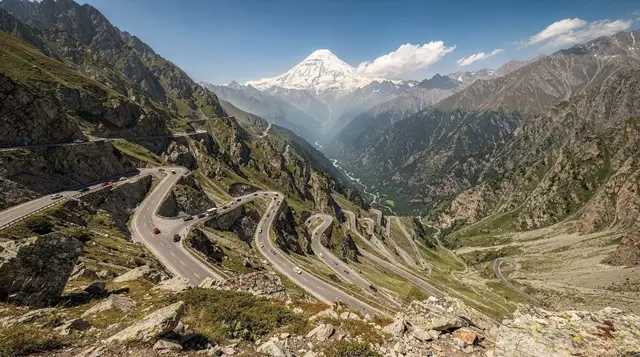
Photo: our own image of the location, not the operator’s product photo.