Ziplines and rope parks in Georgia
Where are the best ziplines in Georgia?
The main tourist ziplines run near Sighnaghi in Kakheti (paired with Bodbe Monastery), at Dashbashi Canyon south of Tbilisi (paired with a mountain bike descent), and near the Sairme spa resort in western Georgia. All three are short, guided adventure-park style courses rather than long zipline networks, best treated as an add-on to a wider day trip rather than a destination in themselves.
A smaller scene than you might expect
Georgia does not have the dense network of dedicated adventure and rope parks found in some parts of Western Europe, and it is worth resetting expectations before booking: what exists here is a handful of short, well-run guided zipline courses attached to specific scenic locations, rather than a multi-level, self-guided rope adventure park you could spend a whole day working through. The three worth knowing about sit near Sighnaghi in Kakheti, at Dashbashi Canyon south of Tbilisi, and near the Sairme spa resort in the west - each best treated as an add-on to a day already built around the surrounding sight, not a reason to travel somewhere on its own.
Tbilisi: Sighnaghi Bodbe Monastery Zipline Tour is the most accessible of the three for Tbilisi-based visitors, combining the zipline with a stop at Bodbe Monastery on the same day out to Kakheti’s hilltop wine town.
Sighnaghi and Bodbe: the easiest to fit into a Tbilisi day
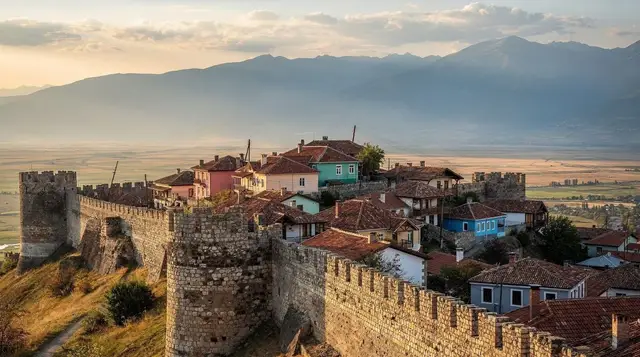
Sighnaghi’s zipline runs near Bodbe Monastery, just outside the walled hill town itself, and pairs naturally with a day trip that already includes Sighnaghi’s Old Town and at least a stop or two for wine tasting nearby. The course itself is short - a handful of lines across a wooded valley rather than an extended network - but the setting, with views back toward Sighnaghi’s town walls and the Alazani valley beyond, makes it a worthwhile half-hour detour for anyone already in the area rather than a destination to plan a trip around specifically. See Sighnaghi and Bodbe in a day for how this fits into a wider Kakheti day out from Tbilisi.
What a day at any of these courses actually looks like
Arrival typically involves a short check-in and equipment fitting - harness, helmet and any gloves provided - followed by a group safety briefing covering how to sit in the harness, how braking works on the specific system installed, and what to do if you come to a stop partway along a line, which happens occasionally and is handled by staff rather than something riders need to solve themselves.
Groups are usually kept small, both for safety supervision and because these are modest-sized courses rather than high-throughput attractions built to move large numbers of visitors quickly. Photos are sometimes offered by on-site staff for an extra fee, worth asking about in advance if a record of the activity matters to you, since not every course has this built in as standard.
Weather and the best time to go
Like most of Georgia’s outdoor adventure activities, ziplining runs a spring-to-autumn season, roughly April through October, with courses typically closed or unavailable through the coldest winter months. Wind and rain can also cause a same-day closure or delay at any of these locations, since safety protocols at responsibly run courses prioritise conditions over keeping to a fixed schedule - worth knowing if you have built a tight day around a specific slot, and worth having a backup plan (the surrounding sight itself, without the zipline) in case conditions do not cooperate.
Dashbashi Canyon: ziplines paired with a bike descent
South of Tbilisi, Dashbashi Canyon has become one of the newer adventure spots to open up near the capital, and one operator runs a combined zipline and mountain bike descent through the canyon, pairing two different adrenaline activities into a single outing.
From Tbilisi: Tsalka Canyon Diamond Bridge Zip Bike Tour covers this combination, along with a stop at the canyon’s Diamond Bridge, a striking natural rock arch that has become one of the canyon’s signature photo points. This is a reasonable pick for visitors who want more than a single zipline run and are comfortable adding a bike descent to the day - see Dashbashi Canyon and the Diamond Bridge for the wider canyon beyond the adventure activities themselves.
What to wear and bring
Closed-toe shoes are essential at every course - sandals and flip-flops are generally not permitted in the harness system for safety reasons, and turning up in them can mean being turned away regardless of booking confirmation. Trousers or longer shorts sit more comfortably in a harness over a full session than very short shorts, and a light jacket is worth carrying even in summer, since canyon and forest settings can be noticeably cooler and windier than the surrounding open countryside. Loose items - hats, sunglasses without a strap, phones in open pockets - are best secured or left with a non-riding companion, since a drop from height on a zipline course is not recoverable in the way a dropped phone on a hiking trail usually is.
Booking tips and group sizes
Because these are modest-capacity courses rather than high-throughput attractions, booking ahead matters more in peak summer months and at weekends than it would for a larger, purpose-built facility. Group bookings are generally accommodated, but very large groups may be split into smaller batches for safety supervision, which is worth factoring into a group itinerary’s timing. Combining the zipline booking with transport and the paired sight - Bodbe Monastery, the Diamond Bridge, or the Sairme resort - through a single organised tour, rather than arranging each piece separately, tends to be the simpler approach for visitors without their own vehicle.
Sairme: a quieter option in the west
Near the Sairme spa resort in western Georgia, a smaller zipline course runs through forested terrain close to the resort itself, a low-key option for visitors already spending time in this part of the country around Kutaisi rather than a reason to travel west specifically.
Kutaisi: Sairme Spa Resort Zipline Aventure Tour combines the zipline with time at the spa resort itself, a gentler pairing than the more adrenaline-focused Dashbashi combination, suited to travellers looking for a relaxed day with a short adventure element rather than a full activity day. Sairme sits in a forested valley in the Lesser Caucasus, known primarily for its mineral springs and quiet setting rather than as an adventure hub, which makes the zipline here feel more like an unexpected extra than the day’s main event - a reasonable way to break up a spa-focused stay with a short burst of activity rather than a reason to choose Sairme over the other two locations if ziplining specifically is your priority.
Dashbashi Canyon beyond the zipline
Dashbashi Canyon itself, a deep gorge cut by the Khrami river south of Tbilisi, has become increasingly well known over the past few years as a day-trip destination in its own right, with walking paths along the canyon rim and down toward the river, and the Diamond Bridge rock arch as its most photographed feature.
The zipline and bike descent covered above are a relatively recent addition to what the canyon offers rather than the original reason it draws visitors, and travellers with more time can combine the adventure activities with a longer walk along the canyon’s trails. The area also sits within reach of Birtvisi, Georgia’s own stone labyrinth of a canyon, for visitors wanting to extend an adventure-focused day south of Tbilisi beyond Dashbashi alone.
Why Georgia’s rope park scene remains modest
Georgia’s adventure tourism industry has grown quickly over the past decade, but investment has concentrated more heavily on paragliding, rafting, off-road touring and hiking infrastructure than on the kind of purpose-built, multi-obstacle rope park common in parts of Western Europe, where the model has existed and matured for considerably longer. This is worth setting expectations around rather than treating as a shortcoming specific to any one course - the three locations covered here represent genuinely the current state of Georgia’s dedicated zipline offering for visitors, and each does what it does well within that modest scope, even if none matches the scale of a major established rope park elsewhere.
What a zipline course actually involves
Every course covered here is guided and fully harnessed, with staff clipping participants in at each platform rather than expecting riders to manage their own equipment. A safety briefing at the start covers body position and braking, and the actual riding time across a course is generally brief - well under an hour across most of these smaller Georgian courses - which is exactly why they work better as an add-on to a longer day than as a standalone booking. No prior experience is expected or needed at any of the three locations above.
Age, weight and who can take part
Most operators set a minimum age, commonly somewhere in the six-to-ten range, and a maximum weight limit for safety harness compatibility, both of which vary by course and are worth checking directly before booking a family visit. Pregnant travellers and anyone with a condition affecting grip strength or balance should discuss this with the operator before booking rather than assuming a zipline is automatically low-risk simply because it looks like a short, guided activity.
Rope parks: the honest picture
Travellers arriving with expectations set by rope adventure parks elsewhere in Europe - multi-level courses with dozens of obstacles, self-guided progression through difficulty tiers, a full day’s worth of activity - should recalibrate for Georgia.
Tbilisi’s Mtatsminda Park, reached by the funicular above the city, has amusement rides and some activities for children, but it is not a rope adventure course in the international sense, and travellers specifically seeking that kind of extended, multi-obstacle course will not find a close equivalent currently operating at scale in Georgia. See Mtatsminda Park and the funicular for what the park actually offers, distinct from the ziplines covered in this guide.
Combining ziplines with a wider adventure day
None of Georgia’s zipline courses justify a dedicated trip on their own, but they slot naturally into a day that already includes other outdoor activities in the same area. Visitors building a broader adventure-focused Georgia trip, mixing ziplines with climbing, cycling or other outdoor activities across the country, may find Rock climbing near Tbilisi and Chiatura and Cycling and bikepacking in Georgia useful for what else is available within a similar radius of the capital.
See An adventure calendar: what is open when for how these activities line up through the year, since most of Georgia’s outdoor adventure scene, ziplines included, runs on a spring-to-autumn calendar rather than year-round.
Families with a mix of ages
Because these courses are short and guided rather than physically demanding, they work reasonably well for family groups spanning a wide age range, provided younger children clear the minimum age and weight thresholds noted above. Pairing a zipline with a gentler nearby activity - a walk around Sighnaghi’s Old Town, or time at Bodbe Monastery’s gardens - gives a family day some genuine variety without asking young children to sustain a full day of physical activity. See Georgia with children for a wider view of what works well for families travelling with a mixed-age group beyond adventure activities specifically.
Frequently asked questions about ziplines and rope parks in Georgia
Are ziplines in Georgia suitable for children?
Most courses set a minimum age and weight requirement, commonly around six to ten years old depending on the operator, with full safety harnessing and staff supervision throughout. Check the specific requirements before booking a family visit, since they vary by course.
How much does zip lining cost in Georgia?
A guided zipline session, often bundled with a nearby sight such as Bodbe Monastery or Dashbashi Canyon, is generally an affordable add-on to a day trip rather than an expensive standalone activity, with combined tours costing somewhat more than a zipline-only ticket where that option exists.
Are there dedicated rope parks in Georgia?
Georgia has a smaller and less developed rope park scene than some neighbouring countries, with most zipline-style activities run as single guided courses rather than the multi-level, self-guided rope park networks common in parts of Western Europe. Tbilisi’s Mtatsminda Park has some rides and attractions but is not a rope adventure course in the international sense.
Is zip lining at Dashbashi Canyon safe?
Yes, when run by an established operator with proper harnessing, briefing and staff at each platform
- standard practice at the courses covered here. As with any height-based activity, following the guide’s instructions and using equipment exactly as briefed matters more than any other single safety factor.
Can beginners with no experience try zip lining in Georgia?
Yes, every course covered here is designed for first-timers, with staff clipping and unclipping harnesses at each stage rather than expecting participants to manage equipment independently.
How long does a zipline tour take?
The zipline portion itself is usually brief, generally well under an hour of actual riding time across a short course, so most tours bundle it with a nearby sight or activity to fill out a half or full day rather than standing alone.
What should I wear for zip lining in Georgia?
Closed-toe shoes are required at every course, along with trousers or longer shorts that sit comfortably in a harness. A light jacket is worth carrying even in summer, since forest and canyon settings tend to run cooler than open countryside nearby.
Do I need to book ziplining in Georgia in advance?
It is worth booking ahead in peak summer and at weekends, since these are small-capacity courses rather than high-throughput attractions. Combining the zipline with transport and the paired sight through a single organised tour is the simplest approach for visitors without their own vehicle.
Adventure and outdoor activities on GetYourGuide
Verified deep-linked GetYourGuide tours. Book through these links and we earn a small commission at no cost to you.
Photo: our own image of the location, not the operator’s product photo.