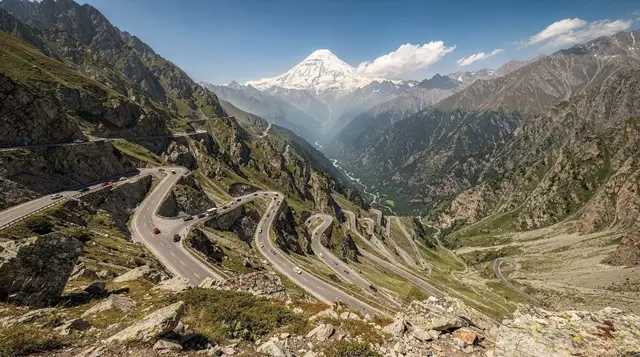
Remote work and long stays in Tbilisi
Is Tbilisi good for digital nomads and remote workers?
Yes, and it has been for several years — a 365-day visa-free stay for over 95 nationalities, low living costs relative to Western Europe, reliable internet, a genuine café-working culture, and a growing community of long-term foreign residents all make it one of the more established remote-work bases in the wider Caucasus and Eastern Europe region.
Who this guide is for
This is written for someone weighing weeks or months in Tbilisi rather than a single holiday week — a remote employee testing a change of scenery, a freelancer between projects, or anyone curious whether the “cheap, easy, surprisingly liveable” reputation Tbilisi has built among the remote-work community actually holds up on the ground. It assumes you already have income that travels with you (a remote job, freelance clients, a registered business) rather than covering how to find local work in Georgia, which is a different and more specific question this page doesn’t try to answer.
Why Tbilisi became a remote-work destination
Tbilisi’s rise as a remote-work base wasn’t accidental. A 365-day visa-free stay for a very wide list of nationalities, low living costs relative to almost anywhere in Western Europe, a mild climate for much of the year, and a genuinely walkable, café-dense city centre all combined at a moment — starting in earnest during the pandemic years and continuing since — when remote work became normalised across much of the world. The result is a real, if not enormous, community of long-term foreign residents concentrated in a handful of central neighbourhoods, enough critical mass to support coworking spaces, English-friendly cafés and a social scene that doesn’t require fluent Georgian to plug into.
This guide covers what actually matters for someone planning a stay of weeks to a year rather than a week-long holiday: the visa situation, realistic costs, internet and coworking infrastructure, where to live, and the practical admin — banking, insurance, SIM cards — that a longer stay requires beyond what a typical tourist guide covers.
The visa situation: as generous as it sounds
Georgia’s visa-free allowance — 365 days for citizens of more than 95 countries, including the EU, UK, US, Canada, Australia and most of Latin America — is unusually generous by global standards and does not require applying for a specific “digital nomad visa” the way a growing number of countries now do. See Visa and entry rules: 365 days, and the fine print for the exact mechanics, including what happens if you want to stay beyond the year and the handful of nationalities that face different rules.
Tbilisi: Welcome Tour with Optional Airport Pickup Esim is a practical way to handle the first-day logistics — airport pickup and a working eSIM — while you’re still finding your feet on day one of what might be a months-long stay, rather than a one-week holiday where a missed hour or two matters less.
What it actually costs to live in Tbilisi
Living costs in Tbilisi remain meaningfully lower than most Western European capitals, though the gap has narrowed somewhat as the nomad and expat population has grown and pushed up rents in the most popular central neighbourhoods over the past several years. A one-bedroom apartment in Vake or Saburtalo, eating out several times a week, using Bolt or the metro for transport, and a coworking membership together land at a fraction of an equivalent Western European city’s cost — though exact figures shift constantly with the exchange rate and are worth checking against current listings rather than a fixed number in a guide.
See What a week in Georgia actually costs for a shorter-trip cost baseline, and Lari, ATMs and paying by card for the practical mechanics of spending money day to day, including which card fees to avoid on a long stay specifically.
Utilities, groceries at local supermarkets rather than imported-goods stores, and public transport are all genuinely cheap by comparison; imported goods, international brand coffee chains and the more upscale end of Tbilisi’s restaurant scene are priced closer to European levels and are where a nomad’s budget can quietly expand if unchecked.
Internet and coworking: is it actually reliable?
Fixed-line broadband in central Tbilisi apartment buildings is generally fast and reliable, more than sufficient for video calls, large file transfers and typical remote work, and most short-let and long-let apartments marketed to foreigners now advertise their connection speed as a selling point given how central it is to the target tenant. Mobile data through Georgia’s main networks is also strong across the city, useful as backup or for anyone working from a café rather than a fixed desk.
an unlimited-data SIM bundled with your airport transfer solves the connectivity question from the moment you land, useful for anyone whose apartment Wi-Fi setup takes a day or two to sort out on arrival.
Coworking spaces have multiplied over the past several years, concentrated mainly in Vake, Saburtalo and the city centre, ranging from casual day-pass spaces to more corporate membership operations with meeting rooms and better-defined hours. For anyone who doesn’t need a dedicated desk every day, Tbilisi’s café culture is a genuine alternative rather than a fallback — a real, established scene of laptop-friendly cafés with decent Wi-Fi and no pressure to leave after one coffee, distinct from places that discourage lingering. See Cafés in Tbilisi you can actually work from for specific recommendations rather than a general description.
Where to base yourself
Vake and Saburtalo are the two neighbourhoods that have absorbed most of Tbilisi’s long-term foreign resident population, and for good reason: both offer a mix of modern apartment buildings, supermarkets, gyms, cafés and reasonable walkability without the noise and tourist density of Old Tbilisi. Vake skews quieter, greener and slightly more expensive, popular with families and anyone wanting a more residential feel; Saburtalo is a bit more affordable, well connected by metro, and has its own growing café and coworking scene without Vake’s more polished edges.
Old Tbilisi and the areas immediately around Rustaveli Avenue are more atmospheric and closer to the city’s main sights and nightlife, but noisier, pricier for equivalent space, and less practical for someone optimising for a daily work routine rather than a holiday. Where to stay in Tbilisi, neighbourhood by neighbourhood covers the fuller picture across all of the city’s main areas, useful for weighing trade-offs beyond the two most nomad-popular districts. Getting around between neighbourhoods is straightforward via Tbilisi’s metro and buses, which covers the city more comprehensively and cheaply than relying on Bolt for every trip.
Banking, insurance and the practical admin
Opening a Georgian bank account as a foreigner is comparatively straightforward by regional standards — usually possible with a passport and proof of address, though exact requirements and processing time vary between banks and have shifted periodically as regulations change, so checking current requirements at the specific bank you’re considering, rather than relying on older forum posts, is worth the extra step. Many longer-term residents manage well enough on an international travel card for day-to-day spending without a local account at all, particularly for a stay of a few months rather than a full year.
Health insurance deserves specific attention for a long stay, since standard short-trip travel insurance policies frequently cap coverage length well below a full year, leaving a gap for anyone staying the full 365 days visa-free allows. A long-stay international policy, or locally registered private health insurance (increasingly available and reasonably priced given Tbilisi’s growing medical tourism sector), is worth arranging before or shortly after arrival rather than assuming a short-trip policy will simply keep renewing. See Health, pharmacies and insurance for the wider healthcare picture, including what Tbilisi’s private clinics are actually like.
Weekends and downtime: not just a work base
Part of what makes Tbilisi work as a longer-term base rather than just a cheap place to work remotely is how much sits within reach of a normal weekend — Kakheti’s wineries two hours away, Kazbegi’s mountains three hours away, and a genuinely good food and wine scene within the city itself that rewards slow exploration over months rather than a single rushed holiday visit.
Tbilisi: 2 Hour Georgian Food Tour All Inclusive is a manageable first-week orientation to Tbilisi’s food scene that doesn’t eat into a whole weekend, useful for building a mental map of where to actually eat before falling into the same three restaurants out of convenience. Organic Wine Full Day Private Tour with Tastings and Lunch works well a few weeks in, once the initial settling-in admin is done and an actual day off away from a laptop starts to feel earned and worthwhile rather than like time that should be spent on more logistics.
The community and how to plug into it
Tbilisi’s nomad and expat community, while smaller than hubs like Lisbon or Bali, is active enough to support regular meetups, a handful of dedicated online groups, and enough shared infrastructure (coworking spaces doubling as social venues, recurring café meetups) that arriving without an existing network in the city is a manageable starting position rather than a real obstacle.
Tbilisi’s nightlife, covered in A night out in Tbilisi and Tbilisi wine bars worth a second glass, overlaps meaningfully with where the long-term foreign community tends to socialise, which makes the first few weeks of building a social life easier than starting entirely from scratch in a less internationally connected city.
Taxes: a note, not advice
Georgia has attracted attention among remote workers partly because of its relatively simple and, for certain registered small business structures, low tax regime — a specific “individual entrepreneur” status with a reduced tax rate has been used by some freelancers and remote workers who formally base their business activity in Georgia. This is a genuinely complex area that depends heavily on your citizenship, your home country’s tax residency rules, and the specifics of your income and employment structure, and getting it wrong can be expensive.
Nothing in this guide constitutes tax advice, and anyone seriously considering Georgia as a tax base rather than simply a place to live and work remotely for a foreign employer should consult a tax professional familiar with both Georgian regulations and their home country’s rules before making decisions, rather than relying on forum threads or a general travel guide.
After the 365 days: options for staying longer
The visa-free year is generous but not unlimited, and anyone planning to stay in Georgia beyond it has a few established paths, each with its own requirements: a residence permit tied to property ownership (Georgia allows foreign property ownership with relatively few restrictions, and a qualifying purchase can support a residence permit application), a work-based residence permit tied to local employment or registered business activity, or simply leaving and re-entering after a gap, which resets the visa-free clock for most nationalities but isn’t guaranteed and shouldn’t be relied upon as a long-term strategy given that border policy can change.
Visa and entry rules: 365 days, and the fine print covers the entry mechanics in more depth; residence permit applications specifically involve Georgia’s Public Service Hall, a genuinely efficient government services agency by regional standards, though the specific document requirements are worth confirming directly rather than assuming they’ve stayed the same as when an older blog post was written, since procedures here have shifted more than once in recent years.
Everyday logistics: shopping, groceries and daily routine
Daily life logistics in Tbilisi are straightforward once the first couple of weeks of orientation are done. Chain supermarkets — Carrefour, Goodwill, Fresco and Spar — cover most grocery needs with familiar international products alongside Georgian staples, and smaller neighbourhood shops fill in the gaps for fresh bread, produce and the odd item a supermarket doesn’t stock. Dezerter Bazaar is worth a visit even for a long-term resident, both for genuinely good produce prices and as a useful orientation to how Tbilisi’s informal economy operates day to day, beyond the supermarket version of the city that a shorter visit might otherwise show.
Picking up enough conversational courtesy to handle basic daily interactions — greetings, thank you, numbers for a market stall — makes a real difference over months of repeated small interactions in a way it doesn’t over a single week’s holiday; see Georgian words that actually help for exactly this shortlist, aimed specifically at the phrases that earn their keep through repetition rather than a phrasebook’s full vocabulary.
What catches people out
A few things trip up first-time long-stay visitors specifically, distinct from the concerns of a short holiday. Underestimating winter — Tbilisi gets properly cold, and an apartment with poor heating is a much bigger problem over three winter months than a single cold week would be, so checking a rental’s heating setup before committing to a longer lease matters more than it might for a short-term booking.
Overestimating how much English covers day-to-day admin — banking, some government processes, dealing with a landlord directly rather than through an agency — where a translation app or a local friend genuinely helps beyond what’s needed for a typical tourist week. And underestimating how quickly the initial “everything is so cheap” feeling fades once rent, a coworking membership and eating out regularly are all added up together, which is why treating early cost estimates as a starting point to track against actual spending, rather than a fixed promise, avoids an unpleasant surprise a few months in.
Frequently asked questions about remote work in Tbilisi
How long can digital nomads stay in Tbilisi without a visa?
Citizens of more than 95 countries, including the EU, UK, US, Canada and Australia, can stay 365 days without a visa — one of the most generous visa-free allowances aimed at remote workers anywhere, with no separate digital nomad visa application required for most nationalities.
How much does it cost to live in Tbilisi as a digital nomad?
A comfortable monthly budget, including a central one-bedroom apartment, regular eating out and some travel, runs meaningfully below equivalent Western European capitals. Exact figures shift with the exchange rate, so treat any specific number as a rough order of magnitude.
Is the internet fast enough for remote work in Tbilisi?
Yes, generally — fixed-line broadband in central apartments is reliable and fast enough for video calls, and mobile coverage is strong citywide. Rural areas and mountain regions are far less consistent.
Are there good coworking spaces in Tbilisi?
Yes, a growing number, concentrated in Vake, Saburtalo and the city centre, from day passes to monthly memberships. Café-working is also well established as an alternative to a dedicated desk.
Which Tbilisi neighbourhood is best for a long stay?
Vake and Saburtalo are the most popular with long-term foreign residents — Vake quieter and more residential, Saburtalo slightly more affordable and well connected by metro. Old Tbilisi is more atmospheric but noisier and less practical for a daily routine.
Do digital nomads need private health insurance in Tbilisi?
Yes — Georgia has no reciprocal free healthcare arrangement with most Western countries, and standard travel insurance often caps coverage length below a full year, so a long-stay or locally registered policy is worth arranging early.
Can I open a bank account or get a local SIM easily as a foreigner in Tbilisi?
A local SIM or eSIM is simple with just a passport. A Georgian bank account is also comparatively straightforward by regional standards, usually needing a passport and proof of address, though requirements vary by bank and shift periodically.
Trip-planning essentials on GetYourGuide
Verified deep-linked GetYourGuide tours. Book through these links and we earn a small commission at no cost to you.
Photo: our own image of the location, not the operator’s product photo.