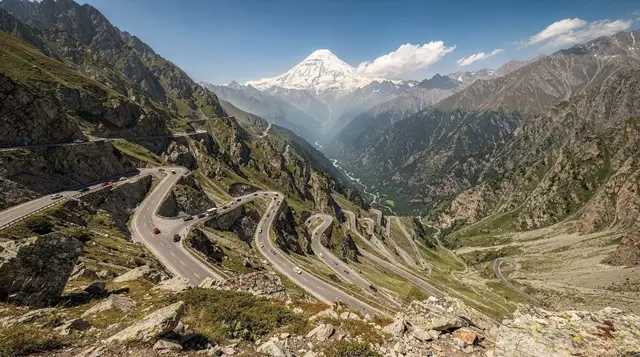
Staying in a Georgian guesthouse
It is a spare room in someone’s actual house, not a boutique hotel with a rustic theme
The word “guesthouse” covers a wide range internationally, and it is worth being precise about what it means in Georgia specifically, because the expectations are different from a European bed and breakfast. A Georgian guesthouse is very often a family’s own home, with two, three or sometimes more rooms set aside for guests, run by whoever is around — a grandmother, a couple, occasionally an adult child home from Tbilisi to help for the season.
Breakfast, sometimes dinner, is cooked in the same kitchen the family uses, and the boundary between “guest area” and “family space” is frequently more porous than a hotel guest would expect. This is the dominant form of accommodation across rural Georgia — Svaneti, Tusheti, Kazbegi, much of Kakheti — and understanding it changes how the whole stay reads. Guesthouses, hostels and hotels: what you get covers the fuller spectrum of options, but the family guesthouse is the one worth a dedicated explanation.
The unplanned supra is real, and it is not an upsell
The single most-reported surprise from first-time guests is being invited, sometimes on the first evening, to an impromptu supra — the traditional Georgian feast, complete with a tamada leading structured toasts — that was not on any booking confirmation and was not framed as a paid extra. This happens often enough in Svaneti and Kakheti specifically that it is worth expecting rather than treating as an anomaly. The supra and the tamada explained covers the structure of the toasts and the etiquette around them, useful to read before rather than during, since the toasting order and the expectation to drink (or at least sip) along with each toast can catch first-timers off guard.
It is genuinely optional to decline, and a polite explanation — driving the next morning, an early start, simply not drinking — is respected without offence in most hosts’ experience. What matters more than accepting every glass is engaging with the ritual itself: staying at the table, listening to the toasts, contributing a toast of your own if invited to, even a short and simple one. Georgian hospitality: what a guest is expected to do goes into this reciprocal side of Georgian hospitality in more depth — it is not a one-way service transaction the way a hotel stay is, and treating it that way misses something real about how these interactions are meant to work.
What is and is not included, and how payment actually works
Breakfast is near-universally included in a Georgian guesthouse rate and tends to be substantial — bread, cheese, eggs, jam, sometimes leftover khachapuri from the day before. Dinner is a separate question: some guesthouses offer it as a fixed-price add-on, arranged the same day rather than pre-booked, and it is worth asking on arrival rather than assuming either way. What breakfast looks like in Georgia sets expectations for the morning meal specifically.
Payment is frequently cash-only, particularly in more remote areas — Svaneti, Tusheti, smaller Kakheti villages — where card readers and reliable connectivity are inconsistent at best. Carrying enough lari to cover the full stay, rather than assuming a card will work on arrival, avoids an awkward conversation at checkout. A modest tip for a host who has clearly gone beyond the basic room-and-breakfast arrangement — extra dinners, driving you somewhere, an evening of hospitality — is appreciated though rarely explicitly expected; there is no fixed percentage convention the way there is in restaurants, and rounding up or leaving a note with a reasonable sum works fine.
Booking further out gets harder than booking closer in, in some regions
Svaneti and Tusheti guesthouses, particularly the well-regarded ones in Mestia, Ushguli and Tusheti’s more remote villages, run on relatively informal booking systems — a phone call, a message through a booking platform that the host may check only occasionally, sometimes simply availability confirmed on arrival in the smaller villages. Booking a few days ahead through a platform generally works fine in peak season; expecting instant, formal confirmation the way a hotel chain provides it does not always match how these places actually operate.
Kutaisi: 3 Day Svaneti Mountains Tour with Guesthouse Stay and Tbilisi: 3 Day Tusheti 4X4 Jeep Tour with Guesthouse Stay both handle this logistics question for you, building confirmed guesthouse nights into a structured multi-day trip, which removes the uncertainty for anyone who would rather not manage the booking themselves — useful specifically because independent guesthouse booking in these two regions is the part of a Georgia trip most likely to go sideways without local knowledge.
The Mestia to Ushguli trek, day by day and trekking in Tusheti both cover the wider logistics of multi-day treks that rely on a string of guesthouses along the route, where booking each night in sequence (rather than all at once from Tbilisi) is often how it actually gets done on the ground.
Kakheti’s version: a working winery with rooms attached
Kakheti’s guesthouses, especially around Telavi’s wineries, skew slightly differently — many are attached to a working family winery rather than being a standalone home, and the “unplanned hospitality” moment there is as likely to be an invitation into the cellar to see the qvevri as it is a full supra. Kaheti Horse Riding with Wine Tasting Tour is one way to combine this kind of family-hosted experience with an activity beyond eating and drinking, useful for a Kakheti stay that runs more than a single overnight.
The language gap, and how little it actually matters
Many guesthouse hosts, particularly older ones in rural areas, speak limited or no English, and this is worth expecting rather than treating as a barrier that derails the stay. Russian remains a more widely shared second language among an older generation than English does, a legacy of the Soviet period, though this varies considerably by region and is fading with each younger generation working in tourism.
In practice, most interactions — checking in, agreeing a breakfast time, sorting out a dinner request — happen fine through gesture, a translation app, or a few of the Georgian phrases covered in Georgian words that actually help, and hosts are, by near-universal account, patient and good-humoured about the gap rather than impatient with it. A translation app with an offline Georgian pack downloaded in advance is worth having for the more isolated guesthouses in Svaneti and Tusheti specifically, where mobile signal is not always reliable enough for a live translation app to work when you actually need it.
Checking out: the goodbye is often longer than the check-in
A pattern several returning visitors note: checking out of a family guesthouse is rarely the brisk, transactional moment it is at a hotel. Hosts frequently want to send guests off properly — a final coffee, a bag of churchkhela or fruit for the road, sometimes a genuinely warm and lengthy goodbye that can run to fifteen or twenty minutes if there is any shared language to have a conversation in.
Building a small buffer into departure timing, rather than planning to leave the moment a taxi arrives, avoids an awkward rush through what is, for many hosts, a meaningful part of the hospitality they are offering. Georgian hospitality: what a guest is expected to do covers the reciprocal side of this in more depth — a guest who receives this kind of warmth graciously, rather than treating it as an unwanted delay, is generally the more welcome kind of guest for a return visit or a recommendation to the next traveller.
Multi-generational households, and who you are actually meeting
It is common for a Georgian guesthouse to be run, in practice, by more than one generation under the same roof — a grandmother handling the cooking and the traditional hospitality side, a middle-aged adult managing bookings and logistics, sometimes a grandchild helping translate or handle the online side of the business. Understanding this structure explains some otherwise-confusing moments: a booking confirmation from one family member, a warm welcome from someone else entirely, and a supra hosted by a third. None of this is disorganisation — it reflects how these businesses are actually run, as extensions of a family home rather than a staffed commercial operation with a single point of contact the way a hotel has.
What to actually bring and expect
A small gift is not expected but is noticed and appreciated in the way it would be visiting any family home — something from your own country works better than anything bought locally on the way. Wifi ranges from excellent (increasingly common even in fairly remote guesthouses, as Georgia’s mobile data coverage has expanded) to non-existent in the more isolated Tusheti villages, worth checking in advance if staying connected matters for a specific night.
Rooms are simple rather than styled — clean, warm, usually with a shared bathroom in the more remote and traditional guesthouses, en suite becoming more common in the better-established ones — and going in with hotel-level expectations on finish and privacy is the most common source of first-time disappointment, almost always avoidable by knowing what the format actually is beforehand.
Frequently asked questions about Georgian guesthouses
Is dinner usually included in a Georgian guesthouse booking?
Not always — breakfast is near-universal, but dinner is frequently a separate, same-day arrangement rather than something pre-booked. Ask on arrival rather than assuming either way.
Do I have to drink at an impromptu supra if I am invited to one?
No. A polite decline — an early start, not drinking, simply preference — is respected by most hosts without offence. Staying at the table and engaging with the toasts matters more than draining every glass.
Can I pay by card at a rural Georgian guesthouse?
Often not, particularly in Svaneti, Tusheti and smaller Kakheti villages, where card readers and connectivity are inconsistent. Carrying enough lari in cash for the full stay is the safer approach.
How far ahead should I book a Svaneti or Tusheti guesthouse?
A few days ahead generally works in peak season through a booking platform, though confirmation can be informal — a message rather than an instant system confirmation. A structured multi-day tour that includes guesthouse nights removes this uncertainty if you would rather not manage it yourself.
Is it rude to decline food at a Georgian guesthouse?
Declining a specific dish is fine and not considered rude, though a host who has clearly prepared extra food out of hospitality rather than a paid arrangement may be visibly pleased if you try at least a little of everything offered.
Do I need to speak Russian or Georgian to stay at a rural guesthouse?
No — most interactions work through gesture, a translation app or a few basic Georgian phrases, and hosts are generally patient about the language gap. An offline translation pack is worth having in Svaneti and Tusheti specifically, where mobile signal can be unreliable.
Best day trips from Tbilisi on GetYourGuide
Verified deep-linked GetYourGuide tours. Book through these links and we earn a small commission at no cost to you.
Photo: our own image of the location, not the operator’s product photo.