A supra vocabulary: twenty words that help
Why the vocabulary matters more than the food
Anyone who reads up on Georgian food before a trip arrives knowing khinkali and khachapuri already. Far fewer arrive knowing the words that actually structure a supra — the words for the toastmaster, for the toast itself, for the specific roles different guests play at the table — and it’s this second vocabulary, not the food, that determines whether an evening feels like being included in something or just watching it happen at close range. The supra and the tamada explained covers the full structure of the event; this is the shorter, more portable version — twenty words worth having ready, roughly grouped by when they come up.
The people at the table
Tamada — the toastmaster, appointed at the start of the evening, whose job is to propose every toast in a specific order and keep the table’s mood moving. A supra without a tamada isn’t really a supra; the role is central enough that it’s worth asking who holds it if it isn’t obvious.
Supra — the feast itself, though the word also describes the tablecloth it’s traditionally laid on, which gives a sense of how tightly food, table and occasion are bound together in the word.
Mravalzhamier — literally “many years,” both a toast and, in its choral form, one of Georgia’s best-known polyphonic songs, often sung spontaneously partway through a long supra. Hearing it live rather than as a recording is one of the better reasons to stay at the table past the point of being full.
Alaverdi — the act of passing a toast on to another guest to add to or respond to, used as both noun and verb. Being told “alaverdi shen” (the toast passes to you) is a request to speak, however briefly, not a formality to wave off.
The toasts themselves
Sadghegrdzelo — the general word for a toast, and one of the harder words on this list to say convincingly after a few glasses, which is itself something of a running joke at Georgian tables.
Gaumarjos — “to victory” or “cheers,” the most commonly heard word at any supra and safe to use even without perfect pronunciation. The order of toasts at a supra sets out roughly where in the evening you’re likely to hear it most.
Msoflio — used loosely around toasts to peace and to the world, part of the more serious opening sequence of toasts that a good tamada takes through slowly, before the evening’s mood lightens.
Mama-shvilishvili — a toast to parents and children, one of the standard early toasts and a good example of how supra toasts move outward from the immediate table to family, ancestors and country before circling back to more personal, lighter subjects later on.
What’s actually on the table
Khinkali — the dumplings, eaten by the twisted knob of dough at the top rather than cut with a knife, which is treated by most hosts as a small betrayal of the dish rather than a neutral choice of cutlery. Khinkali: how to order and how to eat them covers the correct technique in full.
Khachapuri — the cheese-filled bread that comes in several regional forms, most commonly the round Imeruli version at a typical supra, though a special-occasion table might run to the Adjaruli boat with its egg yolk centre. Every kind of khachapuri, region by region is worth reading before assuming every khachapuri on a supra table is the same dish.
Lobio — a bean stew, usually served in a small clay pot, that’s easy to overlook next to the khinkali and khachapuri but worth eating properly; it’s one of the more consistently good dishes regardless of which region’s version turns up.
Mtsvadi — skewered, grilled meat, usually pork, cooked over vine cuttings when done properly rather than plain charcoal, which gives it a distinct flavour worth asking about if the host mentions it.
Pkhali — vegetable pâtés, most often spinach, beetroot or bean, mixed with ground walnuts and often rolled into small balls. Almost always vegetarian and a reliable option at a meat-heavy table for anyone not eating pork or mutton.
Churchkhela — the candle-shaped string of nuts dipped repeatedly in grape must, sold at every roadside stall and often the final sweet thing on the table as a supra winds down. Churchkhela and the sweets sold at every roadside has the full detail on how it’s made.
Drink
Qvevri — the large clay vessel wine is traditionally fermented in underground, a method old enough (roughly 8,000 years) to have earned UNESCO recognition, and the word that appears on most serious wine labels worth ordering.
Saperavi — Georgia’s best-known red grape, deep-coloured and full-bodied, and the safest single name to know if a wine list or a host asks what you’d prefer.
Rkatsiteli — the most widely planted white grape, often made in the qvevri, skin-contact style that produces Georgia’s distinctive amber wines rather than a clear white.
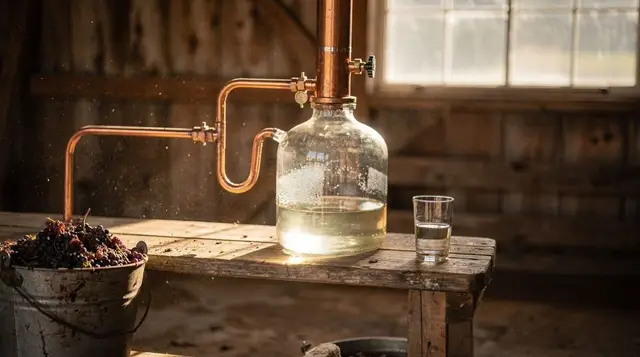
Chacha — the grape pomace spirit, strong enough (40-65%) that it’s worth pacing carefully if it appears as a late-evening toast round, which it usually does.
A phrase or two beyond single words
Gaumarjos sakartvelos — “to Georgia,” a common and safe toast to offer if called on to propose one yourself, combining the toast word above with the country’s own name for itself.
Nakhvamdis — “goodbye,” or more literally “until we see again,” useful for the end of the evening once the last toast has genuinely been the last one, which a long supra can take some time to reach.
Hearing it beyond the table
Several of these words, particularly mravalzhamier, live as much in song as in speech, and Georgian polyphonic singing — three-part harmony passed down through specific regional traditions — often appears spontaneously at a long supra once the formal toasts have given way to a looser mood.
Georgian polyphony: where to hear it properly covers where to find it as a performance in its own right, useful for anyone whose supra didn’t happen to include a table that sang. The vocabulary above also only covers the feast itself; for how these words fit into the rhythm of an ordinary Georgian day rather than a special occasion, How Georgians actually eat, meal by meal is a useful companion piece.
Where these words actually get used
Almost none of this vocabulary is specific to any one region, but Kakheti wine country — where much of Georgia’s wine, and by extension much of its supra culture, originates — is the single place where hearing it in context happens most naturally, whether at a family cellar or a tourist-facing lunch.
Basic table manners around all of this are worth knowing too: how service charges work, when a toast is a good moment to set down a fork rather than keep eating through it, and how bill-splitting norms differ from a Western restaurant, all covered in Restaurant etiquette, service charges and tipping.
Putting it into practice
From Tbilisi: Bodbe and Sighnaghi Tour with Supra Lunch is a reasonable low-pressure setting to try some of this vocabulary out, since a tourist-facing lunch supra tends to move at a gentler pace than a full evening one hosted by a Georgian family. For a more hands-on version that pairs the food vocabulary with actually cooking it, Kutaisi: Khinkali Cooking Class with Wine Tasting covers khinkali specifically, alongside enough wine vocabulary in context to make the Saperavi and Rkatsiteli distinction stick. Kakheti: Wine Bread Supra Private Culinary Experience goes further still, building an entire private supra around teaching the ritual itself rather than just feeding you through it.
For the fuller set of everyday words beyond the supra table — greetings, numbers, basic requests — see Georgian words that actually help, and for the wine terms specifically, Saperavi: how to read a Georgian red and Qvevri wine explained: 8,000 years in a clay pot both go deeper than this list has room for.
A note on pronunciation
Georgian has sounds that don’t map cleanly onto English, and getting every consonant cluster perfect on a first attempt is neither expected nor really possible without practice — “gaumarjos” alone has a stacked opening that trips up most visitors the first several times.
What matters far more than precision is attempting the word at all rather than defaulting to English throughout the evening; a slightly mangled “gaumarjos” delivered with actual effort lands better at most tables than a correctly pronounced “cheers” said instead.
Georgian is written in its own alphabet, mkhedruli, which has no shared letters with the Latin script, so there’s no useful shortcut through spelling — listening to how the tamada and other guests actually say each word over the course of an evening, and repeating it back a few times, works better than trying to sound it out from a phonetic guide in advance.
Writing a few words down before you go
None of this needs to be memorised perfectly in advance. A short list on a phone, glanced at discreetly before or during the meal, causes no offence and is a reasonable way to have gaumarjos, tamada and alaverdi ready without the pressure of recalling them cold in the middle of a toast. What tends to matter most to a host is visible effort and attention rather than flawless delivery — noticing when the tamada is mid-toast and staying quiet, raising a glass at the right moment, and attempting a word or two in Georgian rather than translating everything into English as it happens. That combination, more than any specific vocabulary list, is what actually changes how a supra feels from the guest’s side of the table.
Frequently asked questions about supra vocabulary
What does “tamada” mean and why does it matter?
The tamada is the appointed toastmaster who leads every toast at a supra in a specific order. Knowing who holds the role, and that toasts flow through them, makes the rest of the evening’s structure much easier to follow.
What’s the difference between “gaumarjos” and “sadghegrdzelo”?
“Gaumarjos” is the common cheers or “to victory,” used constantly and easy to say. “Sadghegrdzelo” is the more general word for a toast itself, harder to pronounce but useful to recognise when heard.
Is it rude not to know any Georgian vocabulary at a supra?
Not rude, but knowing even a handful of these words — particularly gaumarjos and tamada — noticeably changes how included a guest feels, and hosts tend to respond warmly to the effort.
What is “alaverdi” at a Georgian table?
The act of passing a toast to another guest, inviting them to add their own words. Being handed the alaverdi is a request to speak, however briefly.
Which Georgian wine word is most useful to know?
Saperavi, for red, and qvevri, which describes the traditional clay-vessel fermentation method behind most serious Georgian wines regardless of grape.
Is chacha the same as wine?
No — chacha is a distilled grape pomace spirit, much stronger than wine, typically appearing as a final round of toasts rather than being drunk throughout the meal.
Food and cooking tours on GetYourGuide
Verified deep-linked GetYourGuide tours. Book through these links and we earn a small commission at no cost to you.
Photo: our own image of the location, not the operator’s product photo.